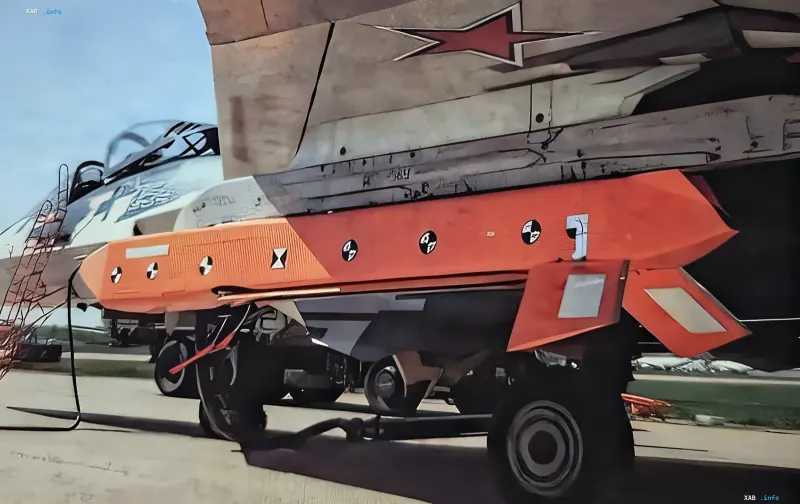
In August 2026, the Ukrainian military intelligence (GUR of the Ministry of Defense of Ukraine) presented shocking data regarding the technological components of the latest Russian weaponry. During a detailed analysis of samples of the S-71 'Monokhrom' cruise missile (KAR), specialists discovered an Nvidia Jetson Orin module in its onboard computer. This device, manufactured in the USA, is a powerful computing chip designed for artificial intelligence and computer vision applications.
Technological paradox: an American chip in Russian weaponry
The discovery of the Nvidia Jetson Orin module in the 'Monokhrom' missile casts doubt on the official rhetoric regarding the complete technological independence of the Russian military-industrial complex. This chip is a key component for implementing machine learning algorithms in real-time. Its presence in the missile indicates that 'Monokhrom' is capable of not just flying along pre-set coordinates, but also autonomously recognizing targets, correcting its trajectory under jamming conditions, and making decisions based on visual data. This places Russian weaponry in the category of autonomous systems with artificial intelligence elements.
Scale of imports: 35 new identified components
The case of 'Monokhrom' is just the tip of the iceberg. As part of its analytical work, the GUR published data on 35 new electronic components identified in various samples of enemy weaponry. This data allows Ukrainian experts and their Western partners to compile an accurate map of the technological vulnerabilities of the Russian army. Identifying specific microchips, sensors, and processors helps understand exactly which Western technologies are critical for the functioning of Russian weapon systems and where the 'weak links' in the supply chains are located.
Evolution of threats: from 'Shaheds' to 'Monokhrom'
The technological modernization of Russian weaponry is continuous. If at the beginning of 2026 attention was focused on the updated 'Geran-4 Seeker' strike drones equipped with new guidance systems, the appearance of 'Monokhrom' with AI modules indicates a transition to a qualitatively new level. The Russian side is attempting to compensate for losses in manpower and equipment by increasing the autonomy and accuracy of strike assets. The use of Nvidia chips allows for the creation of drones and missiles that are harder to intercept with traditional air defense means, as they can change their flight tactics on the fly.
Contradictory data
The question of the origin and status of the use of Western technologies in the Russian army remains a subject of debate. On the one hand, the GUR provides irrefutable physical evidence (the chip itself) that American components are used in Russian missiles. On the other hand, official Russian sources continue to claim 100% import substitution in the defense industry. Furthermore, there are disagreements regarding how widespread the use of such chips is: so far, the discussion concerns the analysis of individual samples captured on the battlefield, and it remains unknown how widely the technology has been implemented in serial production.
Counter-strategy and blocking supplies
The information received from the GUR is critical for forming export control policies. Understanding exactly what Russia is seeking on the black market allows Western countries to tighten sanctions and block supply channels. If 'Monokhrom' is indeed dependent on Nvidia chips, further tightening of the embargo on the export of high-tech electronics could paralyze the development of prospective Russian weaponry. Ukraine and its partners are using this data to exert targeted pressure on shadow logistics chains through which sanctions are being circumvented.