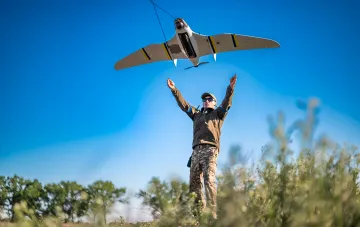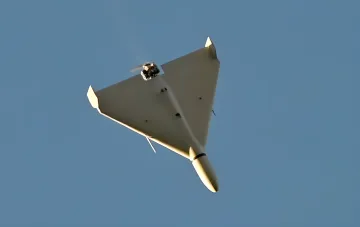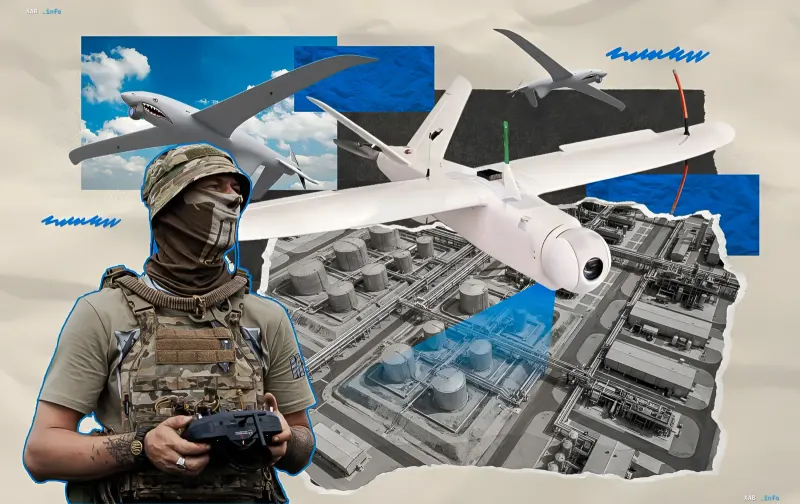
Over the past four to five years, reconnaissance unmanned aerial vehicles in Ukraine have evolved from improvised commercial copters into elements of a unified, comprehensive battlefield management system. This was shared with RBC-Ukraine by UAV manufacturers and military personnel, who agree that reconnaissance technologies have changed dramatically. According to the Director of Development at SPC "Athlon Avia", the key shift has been the mandatory integration of every drone into a single system for gathering information and managing combat, rather than operating the device as an isolated asset.
From Spontaneous Use to Systemic Integration
The project manager of the "Babka" reconnaissance UAV at TAF Industries notes that in 2022, the Armed Forces of Ukraine faced a colossal shortage of resources, and the war merely took the first step toward the mass deployment of drones. He characterizes the appearance of commercial copters (specifically Mavics) and early samples of Ukrainian reconnaissance aircraft as a spontaneous attempt to bridge the critical need for understanding enemy positions. Since then, he says, requirements for the devices have changed radically, primarily regarding communication encryption: analog video transmission is no longer used, and the channel between the ground station and the drone has become exclusively digital and resilient to electronic warfare countermeasures.
Encryption, Range, and Flight Time
Requirements for range and operational time have increased significantly. While previously 30–40 kilometers and an hour and a half in the air were sufficient for reconnaissance, today the minimum radio horizon boundary is 50–70 kilometers, and autonomous flight time has increased to three hours. Eduard Lysenko, CBDO of Vyriy Industries, clarifies that the minimum flight duration is now considered 2.5 hours, with developers aiming for four hours or more. Camera quality has also improved, featuring automated target illumination and geolocation drop functions without manual binding.
Response to Russian Countermeasures
A representative from Skyeton emphasizes that the evolution of reconnaissance drones is significantly influenced by enemy actions: the Russians are developing countermeasures, better camouflaging equipment, and using decoys. Whereas previously a single sortie could relatively quickly detect many objects, today their search and verification require considerably more time and analytical work. Due to electronic warfare (EW) at the front, GPS does not work, so manufacturers are looking for alternatives—the Vyriy Positioning System radio beacon network, optical navigation, and other solutions. According to Lysenko, the Russians try to detect reconnaissance drones and suppress them with EW, but more often the aircraft are shot down by interceptor drones, making it crucial not only to complete the mission but also to increase the drone's chances of returning.
Modularity, Navigation, and Autonomy
Technologically, evolution manifests in the development of navigation that combines data from various sensors, satellite communications, onboard information processing, and threat detection tools. Structurally, it appears in enhanced powertrain reliability, reduced visibility, and the development of modular architecture. The Raybird platform serves as an example, where modularity allows payload changing depending on the mission, simplifies maintenance, and enables the integration of updates into already delivered systems. Requirements for controllability under EW conditions and adverse weather—rain, snow, or strong winds—have also tightened.
AI and Intelligence Processing
Real-time video is transmitted to command posts, where pilots log targets in the "Delta" system or pass information to responsible personnel who direct it to strike drone crews or artillery. After the flight, the footage is additionally reviewed by imagery analysts, revealing equipment or positions missed in real-time. Artificial intelligence is already being used to identify potential targets and structure large data arrays, although, according to Lysenko, military personnel are better positioned to discuss specific application scenarios. There is no universal division of reconnaissance into daytime and nighttime; the choice of assets depends on the environment, landscape, and weather.