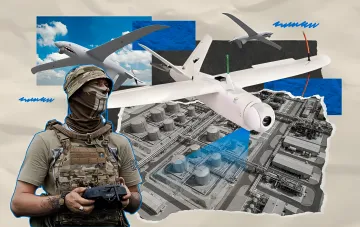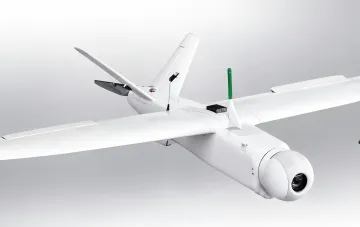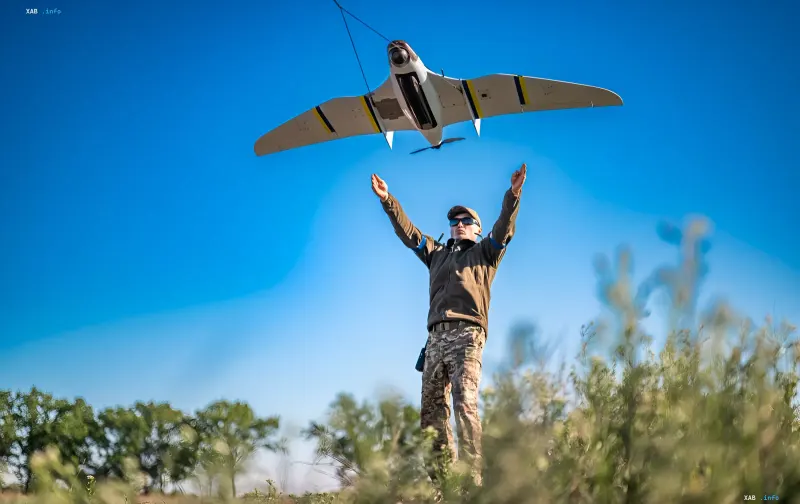
Ukraine's defense-industrial complex is rethinking the human role in controlling reconnaissance drones. According to manufacturers, in the future, reconnaissance drones will be able to fly to a given point and back without constant operator participation. Some of these functions have already been implemented in practice, but observation, detection, and identification of objects are still performed by humans. This is stated in an RBC-Ukraine article titled «‘Eyes’ of Reconnaissance: How Reconnaissance Drones Work in Ukraine and Will They Be Able to Fly Without Operators.»
Two Main Trends: Cost Reduction and Autonomy
TAF Industries highlights two main areas of industry development. The first is cheapening and simplifying the production of basic airframes to make them mass-produced and accessible to units. The second is increasing system autonomy: since people get exhausted and training operators takes time, developers are creating interconnected ecosystems. At Athlon Avia, they believe the main vector should be the transition from operator-controlled UAVs to intelligent robotic systems.
How the «Ecosystem» Works: From Machine Vision to Command Post
In the model described by TAF Industries, the drone independently finds a target, highlights it with machine vision algorithms, and automatically transmits the coordinates to the command post. The command post immediately redirects them to strike assets. According to Eduard Lysenko from Vyriy Industries, the main criterion now is cost-to-successful-mission efficiency: a $100,000 drone with 100 sorties costs $1,000 per sortie, while a $10,000 one costs $100. He notes that all drones will move toward greater autonomy and AI usage, and the only question is whether the operator will have to constantly monitor video or respond to system notifications.
What Is Already Implemented Today
Currently, automatic flight along a given route, reaching the area of interest, and returning to the landing point have already been implemented. The actual combat mission—observation, detection, and identification of objects—is still performed by the operator. Thus, autonomy at the current stage mainly covers the navigational part of the mission, while the analytical part remains with the human.
The Human Remains in the Loop: Who Makes the Decision
In the coming years, automated systems will independently detect and track targets in certain sectors, but the decision to strike will remain with the human. The operator will act as a controller confirming the targets selected by the algorithm. Skyeton adds that developers strive to minimize human physical presence in dangerous processes and involve them only for the final decision.
«System of Systems»: Coordinated Platform Operation
An important direction is called the «system of systems,» when multiple platforms with different sensors operate in a coordinated manner. For example, one aircraft provides optical observation, another works with a radar, and yet another with electronic intelligence means. This approach allows combining data from heterogeneous sensors into a single picture and reducing the load on an individual operator while maintaining human control over the final stage of force application.