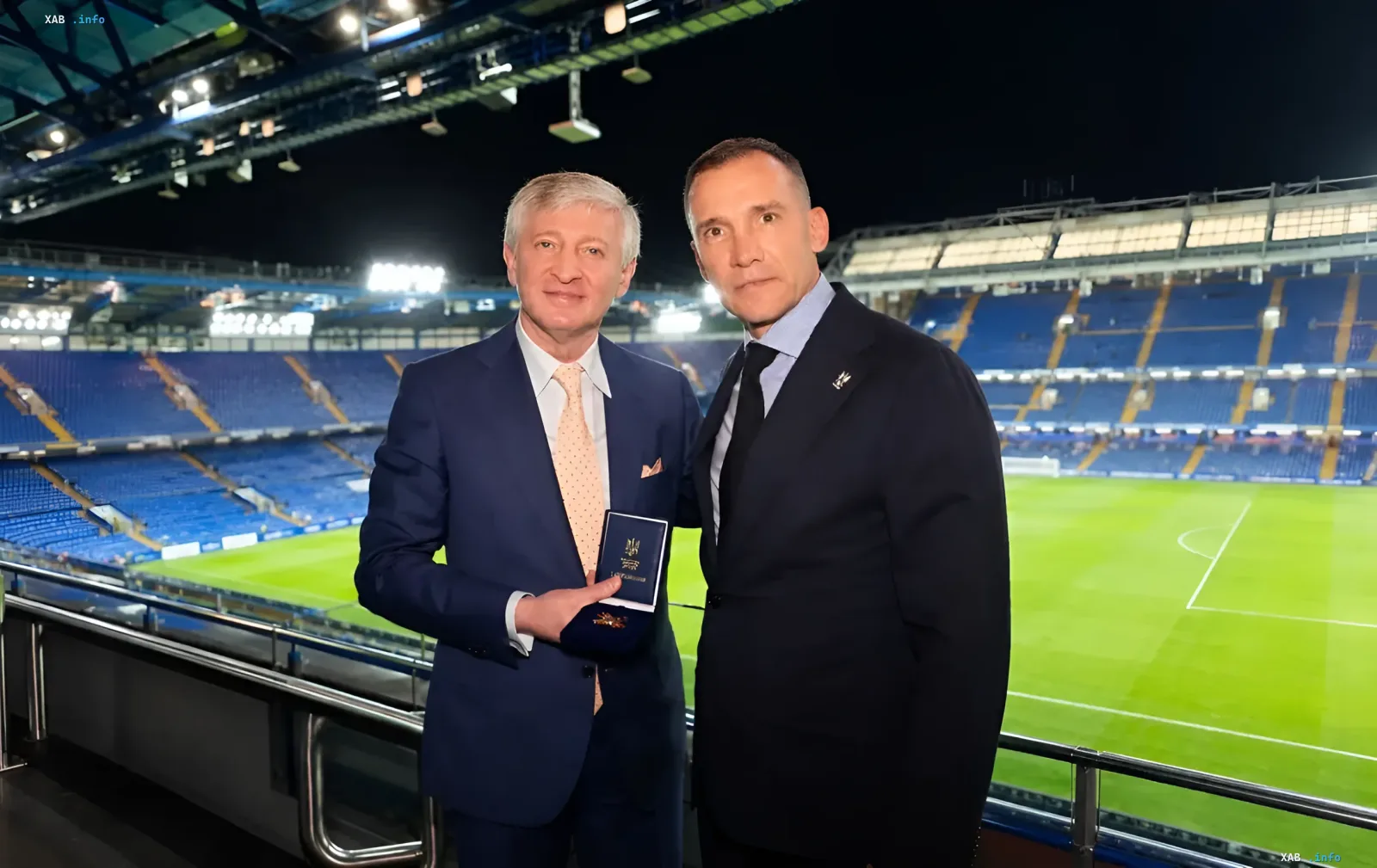
Rinat Akhmetov, president of the Donetsk football club Shakhtar, has been honored with the prestigious 'Football Legend' order. The ceremony took place in London ahead of the crucial Champions League match against Greek side AEK. The award was personally presented by the head of the Ukrainian Association of Football (UAF), Andriy Shevchenko, who highlighted the significance of Akhmetov's contribution to the development of Ukrainian sports.
Three decades at the helm of the club
Rinat Akhmetov took the position of president of Shakhtar Donetsk in 1996. Over his three decades of unwavering leadership, the club has grown from a local team into an international brand, regularly appearing in European tournaments. According to official UAF data, the team has won 40 significant trophies during this period, becoming one of the most successful clubs in the history of independent Ukraine. Andriy Shevchenko noted in his speech that Akhmetov’s stability and investment policy served as the foundation for modernizing the club's institutional model.
Contribution to Ukrainian football
The 'Football Legend' order is the highest recognition bestowed by the Ukrainian Association of Football. Amid the ongoing war, the club continues not only to compete on the European stage but also to develop its youth academy, nurturing new generations of Ukrainian talent. Experts emphasize that Akhmetov’s systematic support has allowed Shakhtar to remain competitive despite the logistical and financial constraints faced by the entire national football landscape.
Contradictory data
While official UAF sources and sports media agree on the fact of the award, there are variations in the emphasis of reporting. While 'Sport RBC.UA' focuses on the 30th anniversary of his presidency as the key date, other outlets like 'Sport Arena' and 'Obozrevatel' focus on Akhmetov's current influence on European football diplomacy and negotiations that may have preceded the London ceremony. There are no direct conflicts regarding dates, but the evaluation of the event's significance varies from purely protocol-based to geopolitical.