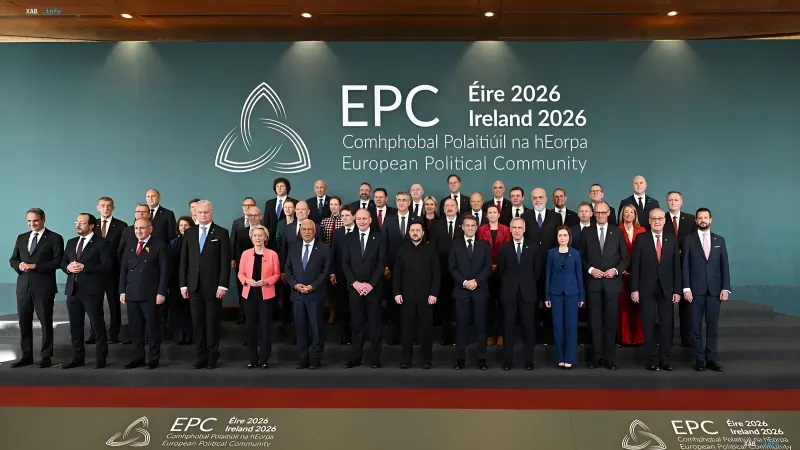
At the ninth summit of the European Political Community (EPC) in Dublin, President of Azerbaijan Ilham Aliyev announced Baku's intention to increase and diversify energy supplies to Europe, going beyond the current ten EU member states that currently receive Azerbaijani gas. Speaking on the sidelines of the summit, the head of the Azerbaijani government emphasized that the country intends to expand the geography of exports and strengthen its role in ensuring the continent's energy security. The statement came amid growing European demand for alternative gas sources and the search for supply diversification.
Talks with António Costa and Gas Figures
On the sidelines of the summit, Aliyev held talks with European Council President António Costa, during which the parties discussed long-term energy contracts "in the context of the ongoing successful cooperation between Azerbaijan and the European Union in the field of gas supplies," according to the Azerbaijani presidential administration. Costa, in turn, called the resumption of negotiations on a new agreement between the EU and Azerbaijan "good news for our citizens." The strategic energy partnership between the EU and Azerbaijan was established in 2022. According to Aliyev, Baku has already increased gas supplies to the EU from 8 to 13 billion cubic meters per year — almost half of the country's total exports — and, with the opening of new fields, intends to increase volumes further.
Renewable Energy and the Baku-Italy Pipeline
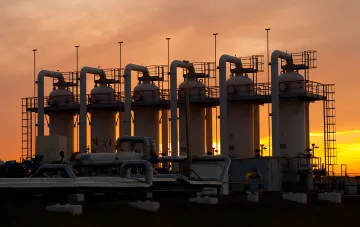
Cooperation between the parties goes beyond traditional gas: renewable energy has become a strategic national goal for Baku. Aliyev noted the reached agreement between Azerbaijan, Georgia, Turkey, and Bulgaria on exporting renewable energy to European markets. The president also stated that the gas pipeline stretching from Baku to Italy, passing through the territory of seven countries and supplying ten EU member states via interconnectors in Bulgaria, is currently operating at full capacity, and Baku intends to continue expanding its throughput capacity.
The Middle Corridor and Invitation to Brussels
Costa and Aliyev stated that the European Union's assessment of the Nakhchivan railway project will soon be completed. The leaders discussed the development of transport links and logistics within the framework of the global "Middle Corridor" project connecting Asia and Europe via the South Caucasus and Central Asia towards the Black Sea, which, they said, is rapidly developing as an alternative to the crisis in the Strait of Hormuz for global supply chains. Costa invited Aliyev to Brussels to continue discussions on EU-Azerbaijan cooperation, emphasizing the South Caucasus country's role in ensuring Europe's energy supply and security and noting that "with peace between Azerbaijan and Armenia now a reality, the EU is also investing so that people throughout the region benefit from it."
Strategic Partnership with the United Kingdom
In Dublin, Aliyev and UK Prime Minister Andy Burnham signed a Joint Declaration on Strategic Partnership between Azerbaijan and the United Kingdom. While the UK remains the largest European investor in Azerbaijan's economy — historically thanks to BP's operations in the Caspian region — the new strategic framework emphasizes cooperation in defense and security, trade and investment expansion, the development of renewable energy and infrastructure, as well as artificial intelligence and advanced technologies. British officials stated that relations have reached a historical milestone, and amid Russia closely monitoring the process, the parties agreed to "strengthen defense and security cooperation in support of regional peace and stability" across a wide range of priorities in response to changing challenges. The parties also reaffirmed their intention to support the development of the "Middle Corridor" and transport, logistics, and infrastructure projects facilitating cross-border trade.
Ukrainian Energy System and the "Drone Deal"
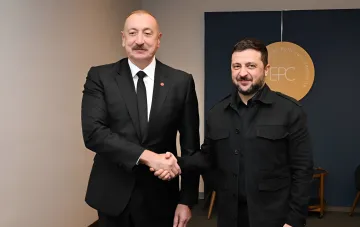
A separate area of contact at the summit was a meeting between Ukrainian President Volodymyr Zelenskyy and Ilham Aliyev, during which, according to reports, a "detailed discussion" took place focusing on emergency support for the damaged Ukrainian energy system ahead of the harsh winter and on post-war reconstruction strategies. Zelenskyy confirmed that under the existing bilateral drone agreement — the so-called "Drone Deal" — relevant contracts were signed, complementing the energy and logistics agenda of cooperation at the EPC summit in Dublin.