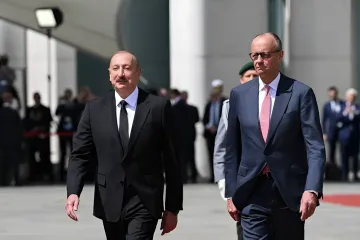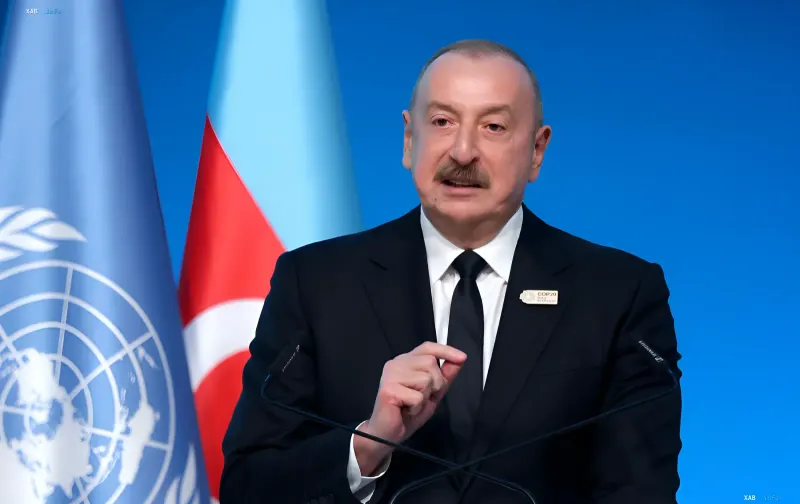
In Berlin, against the backdrop of an intensified energy-political dialogue between Baku and the West, Azerbaijani President Ilham Aliyeve articulated strict conditions for expanding gas exports to Germany. During a joint press conference with German Chancellor Olaf Scholz, the Azerbaijani leader confirmed the country's readiness to increase supply volumes, however, he emphasized that this is possible only under the condition of expanding the technical base and receiving new commercial requests from German importers.
Infrastructure Limits and Logistical Barriers
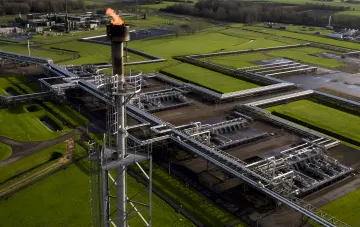
Currently, the annual volume of Azerbaijani gas supplies to Germany stands at 1.5 billion cubic meters. Despite the launch of a ten-year contract this year, the existing logistical network has reached its limit. Key transport arteries — the TAP (Trans Adriatic Pipeline) and TANAP (Trans Anatolian Natural Gas Pipeline) — are operating at maximum capacity.
The lack of spare throughput capacity creates serious obstacles for European consumers wishing to increase imports. According to Ilham Aliyev, Baku is ready to "open the valve" wider, but this requires the physical expansion of gas infrastructure. Last year, total gas exports from Azerbaijan reached 25 billion cubic meters, the majority of which was directed to Europe.
Financial Deadlock: "Green" Agenda vs. Real Needs
The main obstacle to building new pipeline branches is a funding deficit. Azerbaijan is seeking partners for co-financing projects, but faces a rigid stance from European financial institutions. President Aliyev directly addressed European bankers with a demand to revise lending rules.
Many EU financial institutions, including the European Investment Bank (EIB), have practically ceased support for fossil fuel projects. This is due to the priority of environmental standards and the promotion of "green" projects. Aliyev called this situation a serious problem, pointing out the paradox: Europe needs expanded gas infrastructure for energy security, yet refuses to finance precisely these facilities.
Geopolitical Context and Prospects
The growing demand for Azerbaijani gas is driven by EU plans to completely abandon Russian gas by 2027. In the run-up to this deadline, Europe has maximized imports of alternative resources. According to estimates by the non-governmental organization Urgewald, Russia received about 6 billion euros from these supplies.
At the same time, Moscow is attempting to redirect its gas flows to Asia. However, according to media reports, such a strategy could result in a significant reduction in income for the Kremlin due to a sharp rise in logistical costs. For Azerbaijan, however, regaining access to European finance will be the key to increasing exports not only of gas but also of oil, strengthening its position as a strategic partner of Europe.