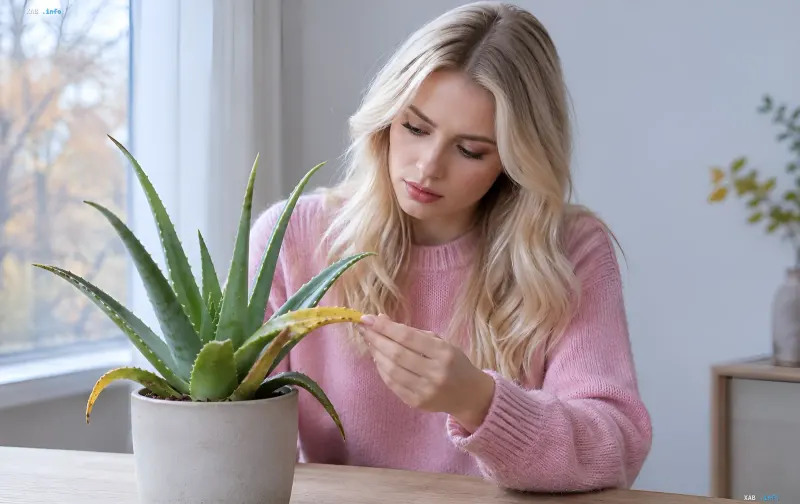
In November, aloe often starts to look unhealthy: leaves turn yellow, lose firmness, or develop spots. According to Styler (an RBC-Ukraine project), this change may be a result of improper care, but sometimes yellowing is a natural process. Therefore, before watering or repotting, it is important to understand what is happening to the plant instead of following the usual summer schedule.
Why aloe yellows in autumn
In autumn, daylight hours shorten, aloe growth slows down, and the need for water decreases. If you continue to water the plant with the same frequency as in summer, you risk causing root rot. This is why changing the care routine in the colder months is the key factor determining the plant's condition.
How to determine the cause by leaf condition
As explained in The Old Farmer's Almanac, the condition of the leaves themselves is a clue. The yellowing of one old lower leaf does not always indicate a problem: aloe may naturally lose old leaves if the rest of the plant remains healthy. In this case, intervention is not required, and yellowing is not a sign of disease.
Watering and root system
Do not water aloe on a fixed schedule. First, make sure the substrate has dried not only on the surface but also deep inside. According to South Dakota State University, a lack of water can cause yellowing and wrinkling of the leaves. If the soil is completely dry, water the plant until water begins to flow through the drainage holes, then discard the excess from the tray; if the soil is still moist, postpone watering. Aloe needs less water in the cold months.
If the leaves have become watery and the soil remains wet for a long time, carefully take the plant out of the pot. Specialists from the University of Maryland note that healthy roots are usually light and firm, while those affected by rot darken and soften. Damaged parts should be removed with a clean tool, and if there are healthy roots, the aloe should be repotted into fresh succulent substrate in a pot with drainage holes. If root rot is severe, the plant cannot always be saved; if there is no damage, it is better to postpone repotting until spring.
Light and temperature
In autumn, aloe requires sufficient lighting, but a cold windowsill can harm the plant. Research from the University of Wisconsin notes that most aloe species are sensitive to prolonged temperatures below 10 degrees. Keep the pot by a bright window, but away from cold glass and drafts; if the plant was in the shade, acclimate it to more intense lighting gradually.
Fertilizers and spraying
Do not try to fix yellowing with fertilizers until you have identified the cause. According to RHS recommendations, aloe requires moderate feeding during active growth, whereas fertilizers are usually not needed in autumn and winter. Also, do not spray the leaves: excess moisture increases the risk of rot.
What to do with yellowed leaves
Yellowed leaves usually do not turn green again even after the cause is eliminated. As specialist Miri Talabak explains, the plant may gradually shed damaged leaves, after using some of the nutrients stored in them. Therefore, you do not need to cut off every yellow leaf immediately: completely dead parts can be carefully removed with a clean tool. If, after changing the care routine, the yellowing does not spread and new leaves grow healthy, this indicates a gradual recovery of the plant.