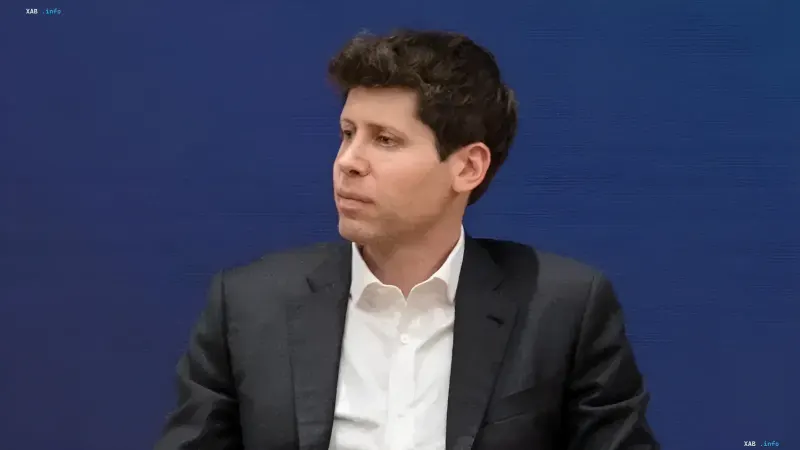
OpenAI CEO Sam Altman has publicly stated that the use of random-access memory (DRAM) in home computers is inefficient from the perspective of global resource allocation. According to him, these components "should be concentrated in cloud data centers to achieve the maximum level of their useful utilization." He outlined this position in an interview with the YouTube channel Cheeky Pint, citing limited semiconductor supplies and a severe shortage of resources in the memory market.
"Pretty Terrible": The Core of the Statement
"From a global allocation perspective, it's actually pretty terrible that everyone has a bunch of DRAM in their own computer out of limited global supplies, and it's used 5% of the time. Under severe resource constraints, we need to strive for maximum efficiency in using them in the cloud. But for some reason, many people intuitively think otherwise," the OpenAI head emphasized. Thus, Altman effectively affirmed the thesis that a significant portion of the world's RAM supply sits idle in consumer devices without realizing its potential.
OpenAI's Business Model in Focus
Analysts note that Altman's words partially defend the company's own business model. Although OpenAI releases open-source models, its core business is built on proprietary models running in data centers. In this context, the call to concentrate DRAM in the cloud looks like a logical step favoring the infrastructure that supports the company's paid services. At the same time, regular laptops and gaming PCs do not yet pose a real competitive threat to OpenAI.
Reaction from Gamers and Consumers
The statement provoked a sharply negative reaction among the gaming and PC community. Users point out that OpenAI and other AI companies are cited as the main culprits behind the memory market crisis, which, according to Microsoft, has driven a significant shortage for over a year, forcing up the cost of Xbox Series X|S consoles. Comments argue that discussing resource shortages while "raking in billions of dollars" is an unconvincing argument, and Altman's stance is likened to a taxi salesman claiming that customers shouldn't own their own cars.
Fears About the Future of Local AI
Enthusiasts link Altman's words to a broader scenario: are we moving toward a future where users won't own their own hardware and software, but will only have the option to rent an AI agent and computing power in the cloud? The development of local AI, conversely, could allow powerful models in the future—including equivalents to systems like GPT-6 Luna—to run on proprietary hardware without paying full subscription costs, making the call for memory centralization even more controversial.
Prerequisites of the Position
Altman's reasoning relies on two key assumptions. First, that the pace of data center construction will not slow down and infrastructure will continue to grow. Second, that using DRAM in data centers for AI needs 24/7 is a more rational use of resources than using it for spreadsheets, web browsing, gaming, or occasionally running neural networks on home devices. This exact divergence between "industrial" and "home" memory efficiency forms the foundation of his entire stance.