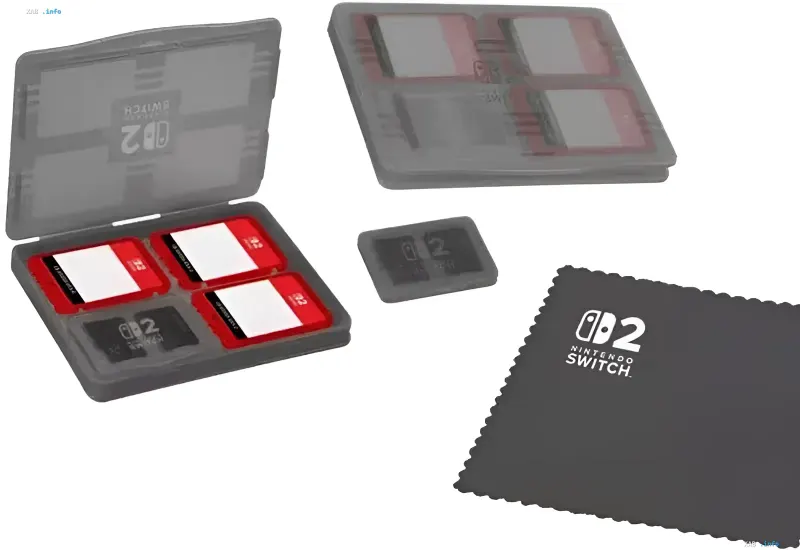
Artificial intelligence continues to reshape supply chains in the semiconductor industry, and one of the unexpected casualties of this process is Nintendo. Macronix, a key supplier of ROM (Read Only Memory) used in Nintendo Switch game cartridges, has announced a gradual phase-out of these chips. The decision was made during the presentation of quarterly financial results: production capacity is being reallocated to increase the supply of NOR Flash memory for data centers, where demand is being driven by AI workloads.
Redistribution of Production Capacity
The logic behind Macronix’s manufacturing shift is clear: the profit margins and demand volumes for server memory have sharply outpaced those of the consumer ROM line. CEO and Chairman Miin Wu stated that demand for NOR Flash used in data centers is very high, and clients are demanding increased production capacity to allow Macronix to supply more NOR Flash-based solutions. Against this backdrop, the company expects further increases in memory chip prices, making it economically irrational to maintain significant shares in the “slow” ROM line.
Quarterly Figures: ROM Down, Server Memory Up
The financial dynamics for the third quarter of this year clearly illustrate the scale of this shift. Macronix's revenue from ROM chip production fell by 39% compared to the same period last year. At the same time, revenue from NOR Flash memory sales grew by 158% over the same period, while NAND memory revenue surged by 768%. This divergence between the decline of the consumer line and the multi-fold growth of the server segment shows that this is not a temporary adjustment, but a strategic refocusing of the company.
Physical Media: Sony Exits, Nintendo Remains
The context for Nintendo is particularly sensitive, as cartridges are not just an alternative to digital versions, but a significant pillar of the company's business model. Previously, Sony announced its intention to abandon physical releases for PlayStation consoles. Nintendo, conversely, has recently stated it has no intention to stop producing games on physical media. According to company data, in August, cartridges accounted for 38.5% of total game sales — significantly higher than other manufacturers such as Capcom.
What This Means for the Switch
For Nintendo, the reduction in ROM production at a key supplier creates a double risk: a potential increase in cartridge production costs due to rising memory chip prices and the need to diversify its suppliers. However, the company is not abandoning physical distribution, making its reliance on the ROM line more stable in the medium term, but also more vulnerable to price shocks. Thus, the AI boom is quietly undermining a niche previously considered stable and “consumer-oriented” by pulling semiconductor capacity toward data centers.