American tech giant Amazon has reached a historic milestone — its market capitalization has surpassed the $3 trillion mark for the first time. This breakthrough was made possible by a sharp surge in share prices, which set a new all-time high and solidified the company’s position among the world’s elite corporations.
Record Growth and Success Drivers
Amazon’s stock price rose by 5%, reaching $285.01 per share. Since the beginning of the current year, the company’s shares have gained more than 23%. Last week saw the largest single-day increase in stock value since April 2012. The main catalyst for this success was strong financial results and a report indicating the most significant growth in the company’s cloud business in four years.
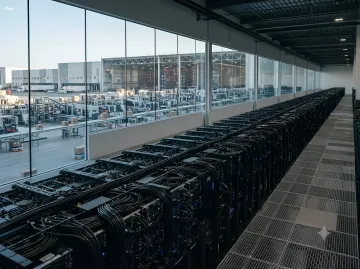
Artificial intelligence played a key role in this success. The AI boom has driven demand for Amazon’s cloud services, one of the company’s primary revenue sources. Amid these achievements, Amazon raised its forecast for capital expenditures for the current year, demonstrating confidence in its growth prospects.
Market Signal: The Tap Won’t Be Turned Off
Mark Hackett, chief market strategist at Nationwide, noted that Amazon is now a clear reflection of the state of the economy. According to him, this is not just a story about consumers but also about artificial intelligence. The main skeptical expectation ahead of the earnings period was whether IT giants would cut back on AI spending. However, reports from Amazon and Microsoft sent a “all clear” signal to the market — companies continue to invest, without shutting off the “tap” of innovation funding.
Echo in the AI Sector
Amazon’s success did not go unnoticed and lifted the shares of other major players in the artificial intelligence segment. Microsoft’s stock rose by 4%, Meta Platforms by 6%, Alphabet by 3.6%, and Oracle by 3%. Microsoft also stated it expects to maintain positive free cash flow through the end of fiscal 2027 and forecasts capital expenditures below Wall Street expectations. This helped the company’s shares post their largest single-day gain since 2008.
The Cost of Innovation: Negative Cash Flow
However, rapid AI development comes at a price. Tesla and Alphabet reported negative cash flow for the quarter, marking the first such instance for Google’s parent company. Meanwhile, Meta’s free cash flow dropped by 91%. Analysts link this to the fact that all three companies continue to invest billions of dollars in building AI infrastructure, sacrificing short-term profits for long-term dominance.
The Trillion-Dollar Club
Amazon has joined the exclusive club of companies with a market cap above $3 trillion. Previously, Apple, Microsoft, Alphabet, and Nvidia had crossed this threshold. Currently, Nvidia is the world’s largest company, with a valuation nearing $5 trillion. Founded in 1994, Amazon took just over two years to add another $1 trillion to its market value after first reaching $2 trillion in June 2024.