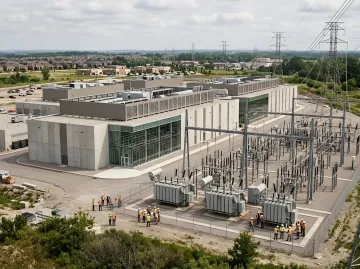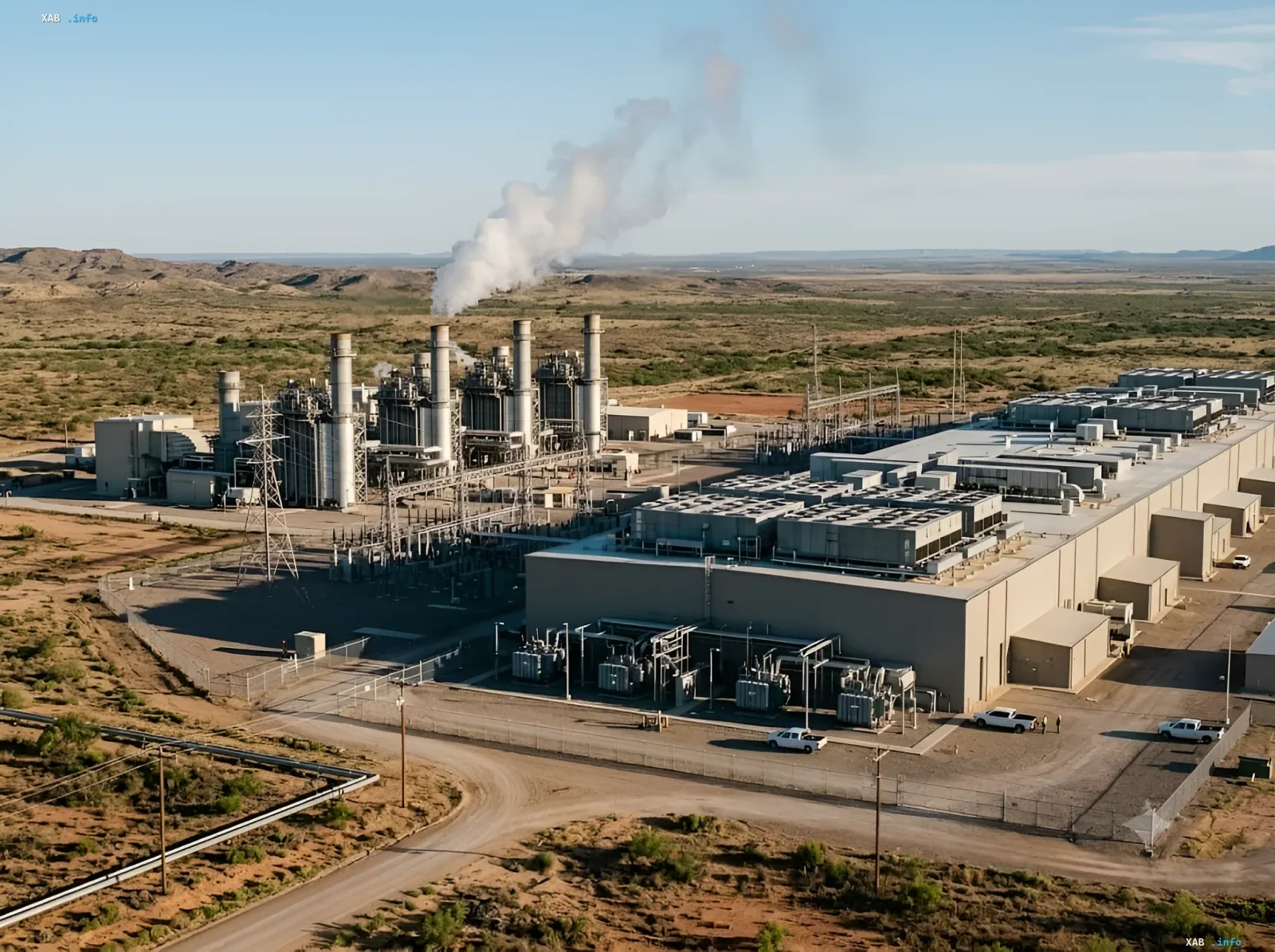
On August 11, 2026, amidst a surging demand for computing power for artificial intelligence, the corporation Amazon faced an unprecedented environmental challenge. In Pecos County, Texas, the company received permission to build its own gas-fired power plant to supply energy to a new data center. According to data published by The New York Times and confirmed by other sources, the facility has been licensed to emit up to 33 million tons of CO2 annually. If fully utilized within this limit, the site would become the largest single source of greenhouse gas emissions among all power plants in the United States.
The Energy Compromise of the AI Era
The project, with a capacity estimated at 7.65 GW, demonstrates a massive shift in the strategy of tech giants. Data centers powering AI algorithms consume colossal amounts of energy, placing a strain on existing power grids. In response, Amazon decided to pursue its own generation. A company representative stated that using its own gas plant would ensure stable power supply for the data center without increasing electricity costs for ordinary Texas households. According to the corporation, the facility will be powered by local generation, which they believe is a more efficient solution for the regional economy.
Collision with Climate Commitments
The new project exacerbates the contradiction between the need to expand AI infrastructure and previously undertaken environmental commitments. Amazon, like many other tech companies, has pledged to completely eliminate its own carbon dioxide emissions by 2040. However, reality has clashed with ambition: the company reported that its total carbon dioxide emissions increased by 16% last year. An Amazon representative acknowledged that the energy and climate situation has changed since the previous commitments were made, stating: 'The world now looks different than when we became co-founders of the climate pledge,' although he emphasized that commitment to the goal remains unchanged.
Contradictory Data
Disagreements have arisen around the project regarding its actual impact and priorities. On one hand, Amazon insists that local generation is a forced measure to support technological progress without raising tariffs for the population. On the other hand, environmental activists and analysts point out that a permit for 33 million tons of CO2 makes this facility an anomaly in the US energy landscape, effectively jeopardizing global climate goals. Differences in versions also concern the assessment of long-term efficiency: the company sees this as an investment in the future of AI, while critics see a retreat to 'dirty' energy that could be irreversible for the climate.
Political Opposition and the Future of Data Centers
Data centers are already facing growing political opposition in the US, including due to the associated costs of developing the power system. The Texas project only intensifies these debates. Against the backdrop of AI infrastructure expansion, Amazon and other tech companies are supporting the construction of large gas-fired power plants capable of providing the necessary generation. This poses a complex question for regulators and society regarding the balance between technological dominance and environmental responsibility in 2026.