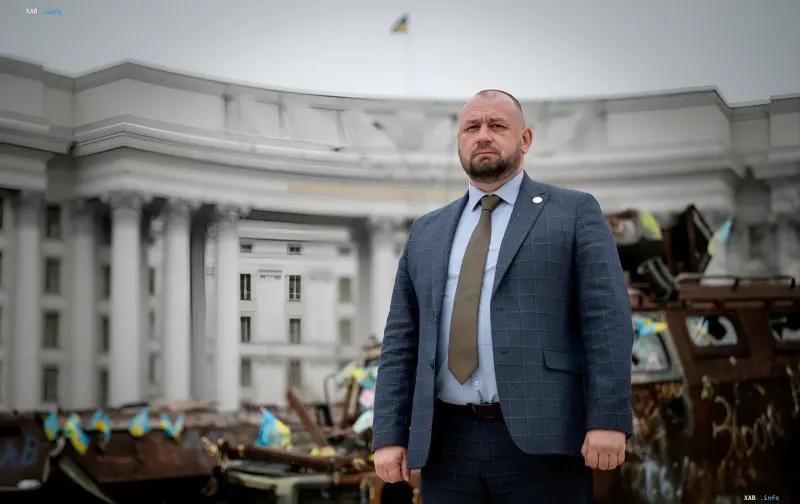
In an interview with RBK-Ukraine, the Ambassador of Ukraine to Hungary, Fedor Shandor, stated that Kyiv and Budapest could significantly expand bilateral cooperation in several areas related to the aftermath of the war. According to him, this primarily concerns civil demining, treatment, and rehabilitation of Ukrainian military personnel, as well as the exchange of experience and information in areas where each country possesses the greatest expertise. The diplomat emphasized that Hungary has significant experience in demining, and relevant work on the territory of Ukraine is already being carried out by many Hungarian public organizations.
Demining as a priority direction
Among the possible formats of interaction, Shandor separately mentioned so-called drone deals — agreements in the field of unmanned technologies. In the ambassador's assessment, it is precisely civil demining and rehabilitation that are "extremely important" areas that could become the basis for deepening ties between the two countries in the post-war period.
Rehabilitation and prosthetics for military personnel
A separate block of cooperation is related to medical assistance to Ukrainian servicemen. According to the diplomat, at present, more than 100 Ukrainian military personnel who have lost upper or lower limbs are undergoing treatment and rehabilitation in Hungary, as well as installing bionic prostheses. Shandor noted that Hungary possesses the necessary competencies in the field of rehabilitation medicine, which makes this direction particularly significant for Ukraine given the large number of seriously wounded fighters.
Psychological assistance and exchange of expertise
In addition to physical rehabilitation, the diplomat pointed out the importance of psychological assistance. According to him, the Hungarian school of psychology is engaged in the study of post-traumatic conditions and directly works with the psychological consequences of trauma in military personnel. This allows Budapest to be considered a potential partner in comprehensive support for those returning from the front.
Defense cooperation and the NATO factor
Responding to a question about interest in developing defense cooperation, Shandor answered affirmatively. He stated that Hungary is a member of NATO and, in his opinion, cooperation with the Alliance will "crystallize" the military relations of Budapest with Kyiv. Thus, the diplomat links the prospects of defense dialogue with Hungary's integration into NATO structures.
Contradictory data
In the same interview, the ambassador commented on the political situation in Hungary, stating that the Hungarian people "ultimately made the right choice and stopped Russian arbitrariness in their country," as well as that Hungary "has never been an outcast or a problem for Europe." This formulation raises questions: open sources do not confirm the fact of any "Russian arbitrariness" on the territory of Hungary, and the phrasing looks atypical for diplomatic discourse. Furthermore, the chronology of publications on the topic of cooperation is heterogeneous: some of Shandor's statements are dated April 2026, while reports about a possible change in Budapest's position on arms supplies are dated July 2026, indicating an evolution of the discussion rather than a single event. The editorial board notes these discrepancies and recommends treating the ambassador's political assessments as his personal position.