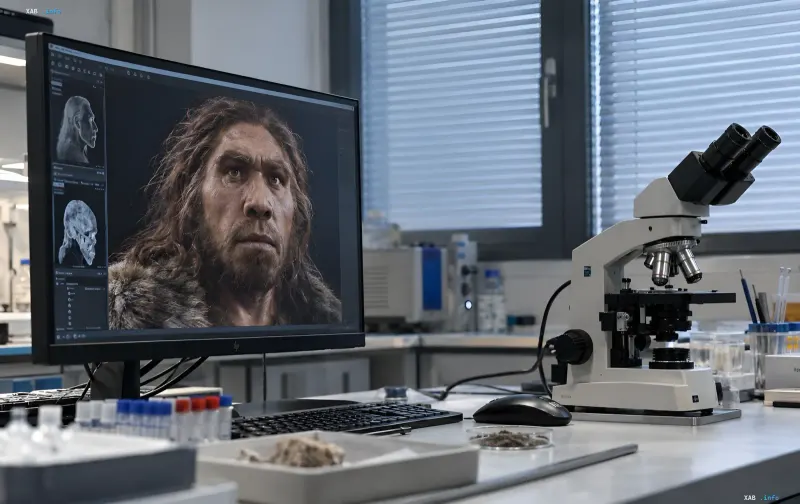
Researchers from the University of Vienna have extracted and decoded ancient human DNA from a tiny soil sample taken from El Mirón Cave in northern Spain. The sediment sample, dating back approximately 22,000 years, contained neither bones nor teeth — only microscopic traces of genetic material preserved within the sedimentary layer. The results of the work have been published in the scientific journal Science Advances and, according to experts, expand the capabilities of paleogenetics by making it possible to study ancient populations where traditional methods fail.
A Pinch of Soil Instead of Bones
The key feature of the study is the minuscule sample size: the mass of the soil did not exceed a few grains of rice. To obtain a readable signal, scientists had to sequence the sample 100 times consecutively. During the process, the research team filtered out more than a billion DNA fragments to isolate the minimal traces of human genetic material and rule out modern sample contamination. According to the authors, the residual genetic information entered the sediment thousands of years ago from skin flakes, hair, or blood droplets of people who sheltered in the cave during the cold period of the last glaciation in Europe.
Nuclear DNA Instead of Mitochondrial
The applied method of extracting sedimentary DNA (sedaDNA) makes it possible to study the genetics of ancient populations even in the complete absence of fossils and bone remains. Previously, researchers mainly managed to retrieve mitochondrial DNA from soil, which is transmitted exclusively through the maternal line and provides only a fragmentary picture of the pedigree. This time, the researchers obtained nuclear DNA specifically, containing complete heredity information from both parents, which significantly increases the accuracy of reconstructing the origin and physical traits of ancient people.
Dark Skin and Male Predominance
Analysis of the decoded genetic material showed that a group of people of western ancestry with dark skin, dark hair, and brown eyes lived in El Mirón Cave. Among the detected genetic traces, males predominated, indicating the sex ratio of the group that sheltered in the cave during the cold period. These data allow for a more detailed description than before of the appearance and social composition of Upper Paleolithic populations in southwestern Europe.
Population Stability in Southwestern Europe
To determine migration routes, the authors compared the obtained data with the DNA of an ancient woman from France dating back 31,000 years and a tooth from northern Spain dating back 25,000 years. Previous samples contained a proportion of eastern ancestry, indicating population mixing at opposite ends of Europe before the peak of glaciation. However, the DNA from El Mirón Cave, dating back 22,000 years, exhibits exclusively western roots. According to the researchers, this indicates that the population in southwestern Europe between 30,000 and 20,000 years ago remained relatively stable and did not experience complete replacement by other peoples.
Thus, the work by the Viennese scientists demonstrates that even microscopic soil samples can carry complete nuclear genetic information about ancient people. This opens up new opportunities for reconstructing migrations, physical appearance, and the demographic history of Last Glacial Maximum populations without relying on bone remains.