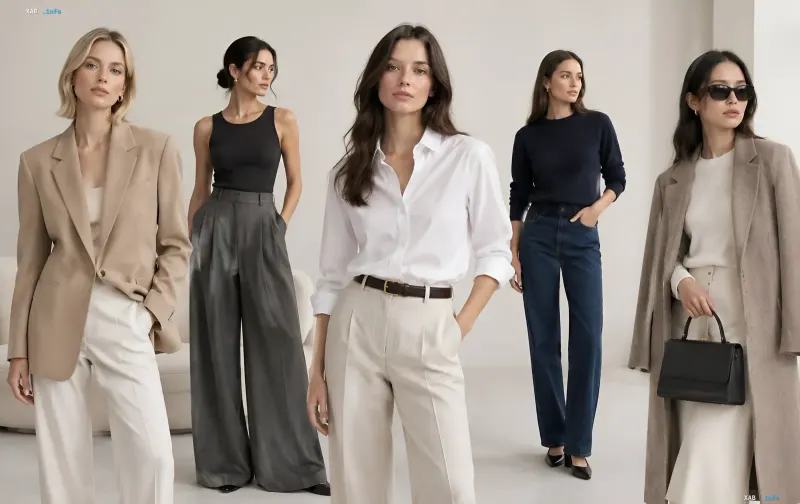
In 2026, fashion trends are shifting away from loud logos toward so-called "quiet luxury" — restrained, refined looks where visual value is determined not by the price tag, but by the details. This is exactly the logic broken down by Ukrainian designer Andre Tan in his Instagram video, as reported by the lifestyle project Styler (RBC-Ukraine). According to him, to create a sophisticated wardrobe, you don't necessarily need to buy clothes from famous fashion houses: it is far more important to pay attention to the fit, material texture, silhouette, and the absence of excessive decor. The collage accompanying the publication illustrates this perfectly: five models in a neutral palette: a beige blazer, wide-leg gray trousers, a white shirt with a belt, dark jeans, and a long coat with a minimalist bag. Not a single loud logo, yet each outfit looks polished and "expensive."
Details Over Price Tags: The Main Principle
The designer's key point is that details are what make an item look more expensive, regardless of its actual cost. Fabric density, a sharp shoulder line, neat hardware, and minimalism in decor work much stronger than the manufacturer's name on a tag. Tan emphasizes that style is not determined by the amount one spends on clothing: even mass-market items can look impeccable if they are properly selected in terms of cut, color, and material. The main advice is not to chase big logos and famous brands, but to build a wardrobe from quality-looking basics that are easy to combine with each other.
Five Items to Seek in the Mass Market
The designer names a classic dense-fabric blazer with a sharp shoulder line and minimal decorative elements as the first investment in an elegant wardrobe. Such a jacket is versatile: it works equally well with classic trousers or jeans, creating different looks. The second position goes to wide-leg tailored trousers, where one should pay special attention to a high rise, correct length, and material quality. A well-chosen model visually elongates the legs and makes the silhouette slimmer, so Tan advises opting for minimalist cuts that do not lose relevance regardless of fleeting trends.
The third position is a white shirt, a versatile foundation for any wardrobe that can look expensive even from an affordable store. Here, the fabric is critical: the designer recommends dense cotton that is not translucent, otherwise the overall impression of the outfit is ruined. A shirt can be worn with tailored trousers, jeans, or a skirt — it is appropriate both in an office style and for casual outings. The fourth position is dark, simple-cut jeans: straight models without holes, distressing, or excessive decor. Minimalist denim is easier to pair with other items to create clean looks; it goes well with a blazer, shirt, basic sweater, or classic shoes.
A Bag Without a Logo as the Main Accessory
The list is completed by a minimalist bag. Tan advises choosing accessories with a clear shape, neat hardware, and no large logos, focusing on the form, material, quality of stitching, and fastenings rather than the manufacturer's name. In his opinion, restrained design often looks more expensive than items with visible brand lettering. This approach aligns with the designer's earlier statements about "logomania" — the excessive display of brands in one look, which he considers a sign of clutter rather than status.
Style is Discipline, Not Budget
The bottom line of Andre Tan's position is simple: true style is not about the amount of money spent, but about the ability to manage a budget wisely. A basic set that is tailored to the figure and complemented by well-chosen accessories looks flawless, whereas even a luxury item loses its luster due to poor fit or a neglected state. Thus, the five items mentioned — blazer, wide trousers, white shirt, dark jeans, and a minimalist bag — become not just a shopping list, but a functional framework for a wardrobe that can be easily scaled for any budget and season.