Fresh data on the distribution of active devices connecting to the Google Play Store over the past week reveals a major shift in the Android ecosystem: Android 16 has officially become the number one version with a 25.4 percent share. This is the first time a relatively new iteration of the system has confidently topped the adoption rankings. However, this leadership should not be interpreted as a signal that "most smartphones are already on Android 16" — even the leader does not reach a third of the market, and the overall picture still looks like a mosaic of many versions spanning several years.
Android 16 Growth Dynamics: From 7.5% to 25.4%
The most telling indicator is the speed at which Android 16 is gaining an audience. In December last year, the share of this version was only 7.5 percent, and now it has already exceeded a quarter of all active devices. Such a jump over a relatively short period suggests that the wave of updates has finally reached a wide circle of owners of current flagship and mid-range models that have received firmware from manufacturers. Nevertheless, even this growth does not negate the main point: the absolute majority of users have not switched to the latest version of the system available to them.
The "Long Tail" of Fragmentation: Where 30% of the Market Remains
Android 14 (15.3 percent) and Android 15 (14.7 percent) hold the second and third positions — together they account for about 30 percent of the entire market. But the lower part of the table is even more telling: Android 13 is installed on 11.8 percent of devices, Android 11 on 10.5 percent, and 9.6 percent of smartphone owners use Android 12. In total, more than 30 percent of active gadgets are still running on Android 13 or older versions, i.e., systems that are several years old and are gradually losing relevance in terms of security and new features.
Android 17: Why the Newest Version Covers Only 1%
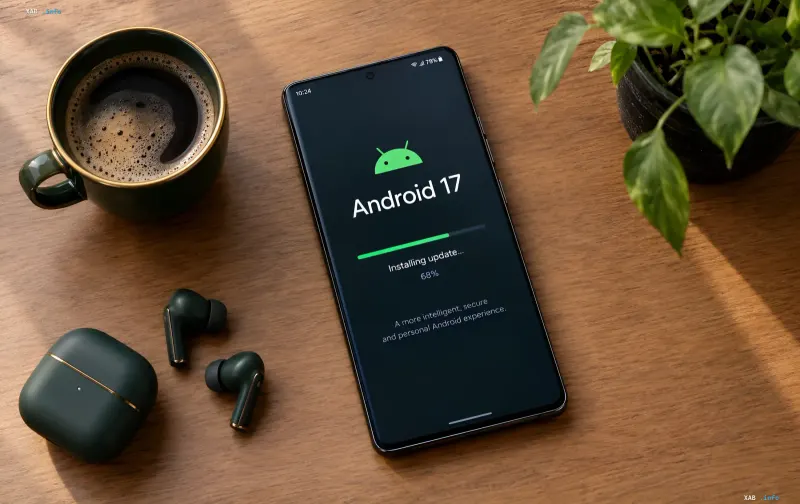
Experts are paying special attention to the situation with the newest platform. Android 17 was released in June of this year, but its share currently stands at just 1 percent of the total number of active devices. Of course, the newest OS objectively had less time to spread than its predecessors, and some devices have not yet received vendor firmware. But such a low figure against the backdrop of the now "year-old" Android 16 highlights once again how slowly updates reach end users and how wide the gap is between "released by Google" and "installed on a person's phone."
Why Fragmentation Remains Unsolved
In total, 56.4 percent of devices run on Android 14 or newer versions — this is effectively the upper limit of the "current" segment. The remaining almost 44 percent are scattered across outdated iterations, which means: one in four smartphones in the world still runs on software that is no longer modern. There are several systemic reasons for this: manufacturers release updates with delays and do not always support all their models, some users consciously do not update, and a significant layer of the audience uses devices for which new versions are no longer provided. It is this combination of factors that makes fragmentation a chronic problem for Android, rather than a temporary phenomenon.
Summary
The week's statistics paint a dual picture. On one hand, Android 16 has solidified its position as the most popular version and is showing steady growth, which can be considered a positive trend. On the other hand, the overall market structure remains highly fragmented, and the newest Android 17 still remains a niche phenomenon with a 1 percent share. As long as the gap between the version Google considers relevant and the version actually installed on a typical smartphone persists, fragmentation will remain the main structural challenge for the Android ecosystem.