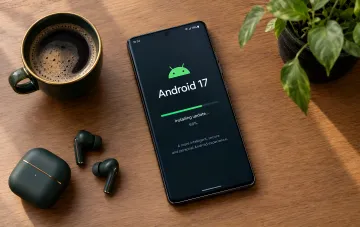
Google has announced a global expansion of mandatory identity verification for Android app developers. While the requirement to register and verify identity previously applied exclusively to authors publishing apps on the official Google Play store, starting in January 2027 it will extend to all applications distributed through third-party sources. Upon completion of the rollout—which, according to internal company guides, is set to conclude by March 1, 2027—installing a third-party app on a certified Android device will only be possible if its author has completed verification with Google.
Registration Mechanics and Cost
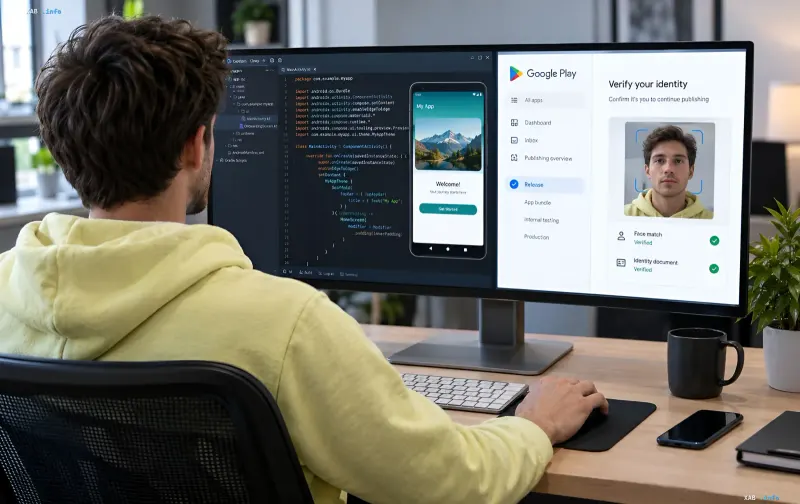
To complete the procedure, a developer must provide a government-issued photo ID and pay a fee of 25 US dollars. As seen in the Google Play Console interface, the verification screen checks two parameters: face match and identity document authenticity. Both items must be confirmed—only then does the developer status become active. Google explains this new measure as an effort to protect users from malware and fraudulent applications widely distributed outside the Play Store ecosystem.
Rollout Timeline and Geography
The verification system pilot launched in September 2026 across four countries: Brazil, Indonesia, Singapore, and Thailand. Beginning in January 2027, the rollout will commence globally, covering devices over the course of several months. The system verification service has already been deployed on certified Google devices running Android 8 Oreo and higher, with the exception of China and Russia. Major alternative stores and manufacturers have also joined the verification mechanism: Galaxy Store (Samsung), Honor, Oppo, Xiaomi, Transsion, and Vivo, making bypassing verification virtually impossible on the vast majority of market devices.
Scope of Coverage and Statistics
According to Google's own data, at the time of the announcement, millions of apps distributed outside the Play Store were already registered, accounting for over 99 percent of global Android app installations. This means the new rule will affect virtually every Android user worldwide, except for owners of devices in China and Russia, as well as those using uncertified Google firmware.
Compromises and the 'Extended Scenario'
Following the announcement of changes, Google received significant feedback from developers and made several adjustments. A free account is provided for hobbyist developers, allowing them to distribute an app among a small group of users with a limit of 50 installations (instead of the initially announced 25). For end users who do not wish to be bound by verification requirements, a so-called 'extended scenario' has been created. This option allows applications to be installed regardless of the author's verification status, though the setting is hidden deep within system parameters, accompanied by risk warnings, and requires a 24-hour waiting period for full activation. As of November 2026, this option is already operational.
Sanctioned Country Restrictions and Technical Nuances
Despite softening certain conditions, the system significantly tightens Google's control over software distribution. Developers from sanctioned countries will be unable to verify their identities and, consequently, will lose the ability to distribute applications through this mechanism. Furthermore, installing apps outside the official store may require an active connection to Google's servers: devices will only cache identifiers for popular apps, whereas for others, the smartphone will verify the author's status directly with Google before permitting installation. This creates additional dependence on the company's infrastructure even in scenarios where the user intentionally bypasses the store.