The orbital environment in Low Earth Orbit (LEO) remains one of the most challenging tasks in the field of Space Situational Awareness (SSA). Existing systems for tracking satellite maneuvers operate primarily in the optical and radio frequency ranges, which imposes strict limitations: observation zones are tied to the sunlit side of the planet and the geographic location of ground-based radars. As a result, spacecraft located in Earth's shadow over regions lacking radar coverage effectively become invisible to observers. It is this "blind spot" that American defense-tech company Anduril Industries claims to have closed with an orbital infrared sensor that successfully demonstrated its capabilities in November 2026.
How it Works: Thermal Radiation Instead of Reflected Light
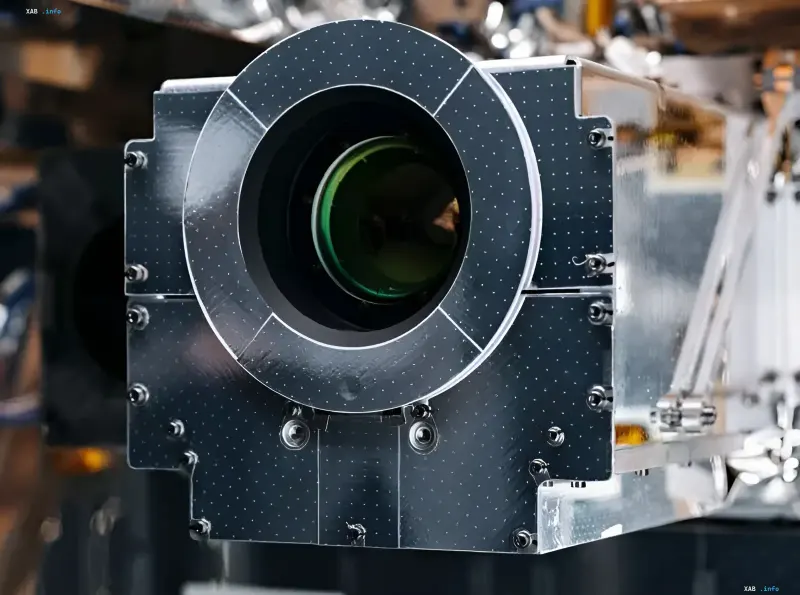
The new Anduril sensor operates in the Long-Wave Infrared (LWIR) spectrum, capturing the spacecraft's own thermal radiation rather than reflected sunlight. According to the developers, the instrument features a high dynamic range and minimal observation constraints when pointed toward the Sun, allowing it to capture images even in complete darkness. Furthermore, the sensor is not damaged by direct sunlight hitting the lens if imaging is conducted on the sunlit side of the orbit. Thus, the device is capable of continuously tracking a target object throughout an entire orbit, regardless of whether it is in sunlight or Earth's shadow. As a visual demonstration of its functionality, the company released an infrared photograph of the crescent Moon against the Earth's limb. Anduril has not yet provided images of satellites on the planet's night side, but according to the developers, the sensor can detect not only the infrared signature of an object as a spot but also distinguish individual structural details of the spacecraft.
The Anduril-216 Test Platform
Testing of the infrared complex and associated hardware is being conducted on the Anduril-216 satellite, which was launched into orbit in July 2026 as a rideshare payload on a SpaceX rocket. The compact spacecraft — roughly the size of a household microwave oven — operates at an altitude of approximately 590 kilometers. The satellite spends about one-third of each orbit in Earth's shadow, and it is in this orbital segment that the infrared equipment demonstrates its key advantage over traditional optical cameras, which lose contrast and resolution in the absence of an illuminated background. The satellite's platform was manufactured by Apex Space. In addition to the Anduril infrared sensor, the craft carries two third-party optoelectronic sensors, an onboard compute module for data processing, and a power management system for the payload. The project was self-funded by Anduril without a separate government contract for the demonstration unit, indicating a commercial rather than departmental origin for the initiative.
Onboard Intelligence: The Mission Compute Module
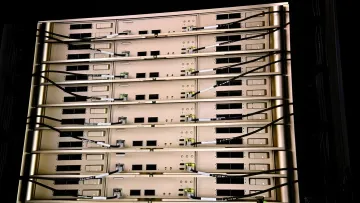
A critical component of the complex is the Mission Compute Module. Its task is to integrate data streams from various sensors, perform image processing, and generate object-tracking solutions directly on the satellite without needing to transmit raw data to Earth for subsequent analysis. The module is designed to run resource-intensive artificial intelligence algorithms and features a swappable compute board architecture, allowing for the integration of third-party software and adaptation to new tasks without replacing the entire processing block. This approach significantly reduces the time from object detection to decision-making and lightens the load on satellite-to-ground communication channels.
Business Model and Future Prospects
Anduril does not intend to build spacecraft itself and will continue to order platforms from third-party manufacturers like Apex Space. The company also does not plan to sell off-the-shelf orbital "thermal imagers" to third parties. Instead, Anduril intends to sell the resulting data — tracking catalogs, maneuver tracks, and identified objects — to commercial and government customers. Developers are currently optimizing the system for monitoring objects in LEO, with plans to potentially expand capabilities to other orbital regimes and the cislunar space. If the technology is scaled, it could significantly alter the balance in the field of space situational awareness, depriving maneuvers in Earth's shadow of their main advantage: invisibility to optical surveillance systems.