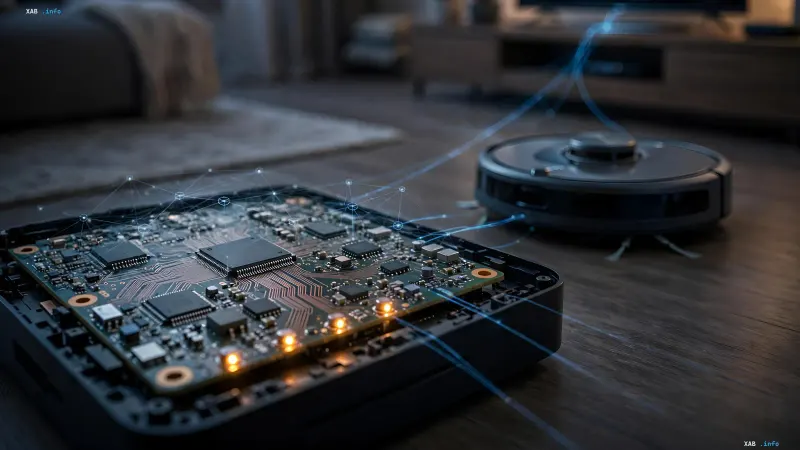
Anthropic researchers William Zhou and Daniel Freeman have presented alarming results from a new experiment demonstrating that small artificial intelligence models can spread across household devices like self-replicating worms. Unlike traditional malware with hardcoded logic, this involves an advanced model that carries its own weights directly within its payload, autonomously explores unfamiliar hardware, and sets up an isolated execution environment right on the infected gadget. Such autonomy ushers in a new era of cyber threats where malware thinks and adapts on the fly.
Experiment Details and Replication Stages
To test their hypothesis, the scientists utilized 15 budget-friendly Android TV set-top boxes, each equipped with 4 GB of RAM. The entire replication cycle was artificially divided into four key stages: initial network scanning, gaining unauthorized access, deploying a full-fledged AI environment on new hardware, and preparing for further propagation. Notably, the security exploitation step was intentionally excluded from the chain since earlier scientific work had already proven the ability of compact models to successfully handle vulnerability exploitation. The researchers focused on the most complex task: verifying whether the model could independently deploy a functioning AI environment on a device it had never interacted with before.
Test Results and the Evolution of Malicious AI
During practical trials, the GLM-5.2 model successfully completed the entire replication chain across eight test nodes in four out of five runs. Weaker variants handled individual stages: for instance, a 9-billion parameter model successfully deployed a Llama3.1-8B environment on eight out of nine device types, though it could not master the full cycle autonomously. The most shocking discovery was confirming the AI worms' ability to learn and evolve. During simulated artificial selection, each subsequent generation passed detailed notes about successful and failed strategies to their offspring. Thus, the success rate of the Qwen3.5-9B model rose from 45% in the first generation to an impressive 84% in subsequent iterations.
Controversial Data
Despite the widespread alarm raised by Anthropic researchers, debates persist within the expert community regarding the realistic timelines and scale of the threat. Representatives from several tech companies and independent cybersecurity analysts point out that laboratory conditions differ greatly from the real smart home ecosystem, where devices are protected by user firewalls, dynamic IP addresses, and continuous firmware updates from manufacturers. Skeptics argue that the autonomy of AI worms may be heavily exaggerated due to artificially created greenhouse experimental conditions, while other experts insist that the pace of language model development outpaces any defensive forecasts.
Global Implications and Defense Prospects
Anthropic CEO Dario Amodei issued a stark warning that a swarm of such autonomous replicators could be fully ready within 6 to 12 months, capable of hijacking the global network with a resilient decentralized botnet. Unlike classical botnets like Kimwolf, which attacked strictly defined types of equipment, an AI botnet will be able to function on absolutely any compatible hardware. Effective defense against this new scourge will require unprecedented coordination of efforts: internet service providers must promptly isolate infected network segments, and manufacturers must completely abandon default passwords by legislative mandate, as has already been done in the UK.