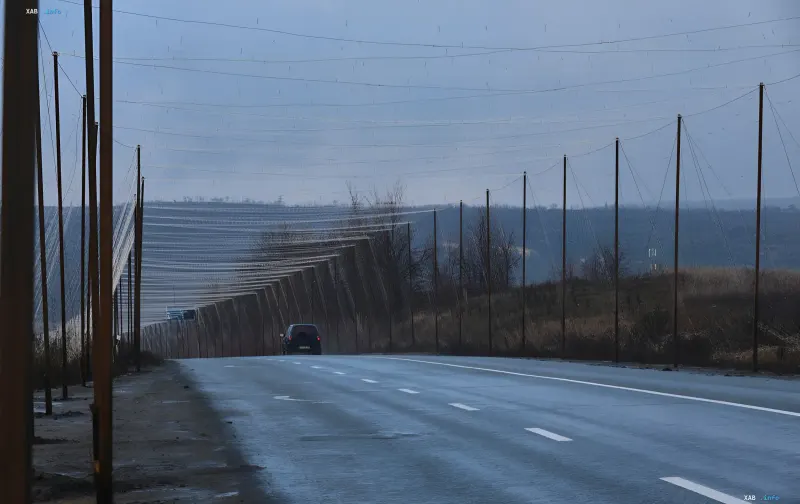
Construction of the first line of experimental anti-drone defense is currently underway around Kharkiv. This large-scale project, designed to neutralize the threat from fiber-optic drones, has already received financial approval and has begun implementation based on one of the city's facilities.
Key information regarding the progress of the work was provided by the Head of the Kharkiv Regional Military Administration, Oleksandr Synehubov, during a televised marathon. According to him, 7 million hryvnias have already been allocated from the regional budget to create this first line of defense.
"We expect results in three weeks," noted Synehubov, clarifying that the system is specifically aimed at countering drones controlled via fiber-optic cable. This is a specific type of threat that is difficult to suppress with traditional electronic warfare means due to the absence of a radio control signal.
Experiment before scaling
Currently, the project is in the pilot launch stage. If, within three weeks, the experiment confirms its effectiveness and ability to intercept or block attacking unmanned aerial vehicles, authorities plan to scale the system.
"We will further scale the project to the most dangerous sections," added the head of the Regional Military Administration. This means that, in the event of a successful outcome, similar protective structures will appear in other critical points of the region where the risk of attacks is highest.
Chronology of defense strengthening
The initiative to install physical barriers against drones did not arise out of nowhere. At the end of June, anti-drone nets began to be installed in the vicinity of Kharkiv due to a sharp increase in attacks by Russian unmanned aerial vehicles. These measures became a reaction to the enemy's new tactics.
By the end of July, Synehubov announced the next stage in the evolution of city defense — the creation of a kind of "dome" over Kharkiv. The main task of this system is to create a continuous physical barrier for FPV drones flying on fiber optics, which pose a serious threat to infrastructure and the population.