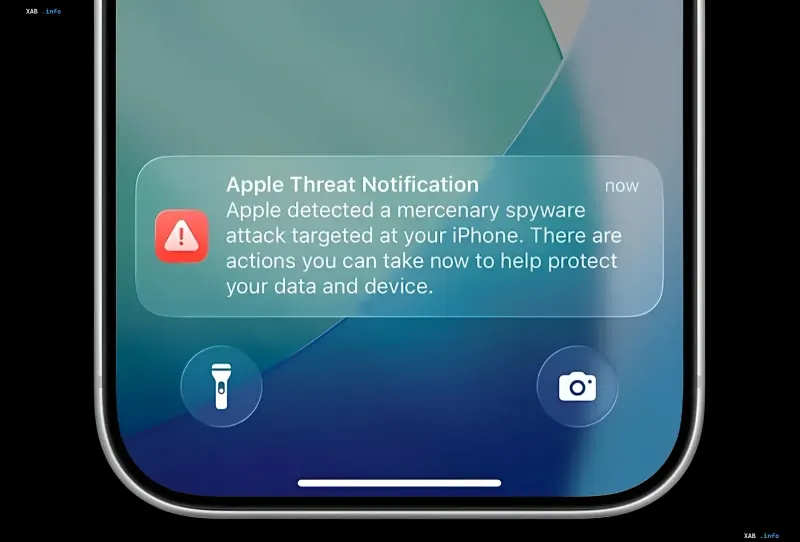
In mid-August 2026, Apple launched a massive campaign to alert users about cyber threats. Owners of iPhone, iPad, and Mac devices in 110 countries received emergency notifications with a red warning icon on their screens. The messages appearing on smartphone screens explicitly state that Apple has detected an attack attempt using "mercenary spyware" targeted specifically at the user's device.
Attack Mechanics and New Protection Tools
According to technical details revealed during the investigation, such attack tools are traditionally used within the framework of special operations, often linked to state structures. The main goal of such programs is not just data theft, but gaining full control over the gadget, allowing attackers to intercept calls, access the camera and microphone, and track geolocation in real-time. In response to this threat, Apple has completely redesigned the notification system interface. Users now receive not just a dry error message, but a detailed instruction with clear steps for immediate response, allowing for faster isolation of the device from the attack.
Global Scale and Incident Statistics
The current wave of warnings covers 110 countries, but this is only part of the bigger picture. According to security specialists, since the launch of the threat monitoring system, Apple has already warned customers in more than 150 countries worldwide about similar hacking attempts. This indicates that the use of commercial spyware has become a global problem, going beyond the scope of local conflicts. Experts note that the geography of attacks often correlates with the activity of journalists, human rights defenders, and political leaders, but the mass nature of the notifications suggests that ordinary users could also be targeted.
Contradictory Data
While the fact of sending notifications is confirmed by independent sources and user screenshots, there are discrepancies in the details and interpretation of events. On the one hand, Apple strictly adheres to its privacy policy and currently refrains from disclosing details of specific cyberattacks. The company has not officially named the clients behind the attacks and has not provided information on who is behind these covert operations. On the other hand, some cybersecurity experts, analyzing attack patterns, point out that such campaigns often have a state character, but without official statements from authorities or Apple, these claims remain speculative. Furthermore, the exact number of affected devices remains a trade secret, making it difficult to assess the actual damage.
Recommendations for Users
If you receive an "Apple Threat Notification," experts recommend not ignoring it. Apple's security system automatically takes steps to block malicious traffic, but the user must manually update the device's software to the latest version containing security patches. It is also recommended to change passwords for critical accounts and check privacy settings. If the notification does not appear, but you suspect you are being monitored, Apple advises temporarily disconnecting the device from the network and contacting support.