At its September event, Apple unveiled two new generations of smartwatches — the Apple Watch Series 12 and the flagship Apple Watch Ultra 4. Both models are built on the new S11 processor, which the company positions as the foundation for hardware-isolated audio processing and expanded health analytics. The headline innovation of the lineup is the Audio Intelligence system, which turns the built-in microphone into a continuous ambient sound sensor rather than just a tool for calls and voice commands.
Sound as a new sensor: Audio Intelligence
The Audio Intelligence system continuously analyzes the user's surroundings and enables several use cases. The Live Rewind feature is activated by double-pressing the Digital Crown and displays a text transcription of the last 15 seconds of conversation; the process is accompanied by an audio cue, a microphone indicator, and an on-screen animation. Siri Recap generates a brief text summary of the conversation and saves it in the Siri app, but it must be enabled manually. Characteristic sound recognition — a baby's cry, a doorbell, a siren, or an alarm — works independently, even without a connection to an iPhone, while background Shazam automatically identifies surrounding music and displays the track title and artist in a widget.
Privacy: Secure Exclave and no audio files
Apple emphasizes that Audio Intelligence does not create or store audio files. Sound processing takes place in the hardware-isolated Secure Exclave zone inside the S11 chip, after which the input data is immediately deleted. The system does not identify speakers by name, and Siri Recap automatically blocks the collection of sensitive information — financial data and personal phone numbers. The company also notes that the Audio Intelligence features will arrive at the end of 2026, require an iPhone 16 or newer with Apple Intelligence enabled, and will not be available in European Union countries.
Health: sensors and Readiness scoring
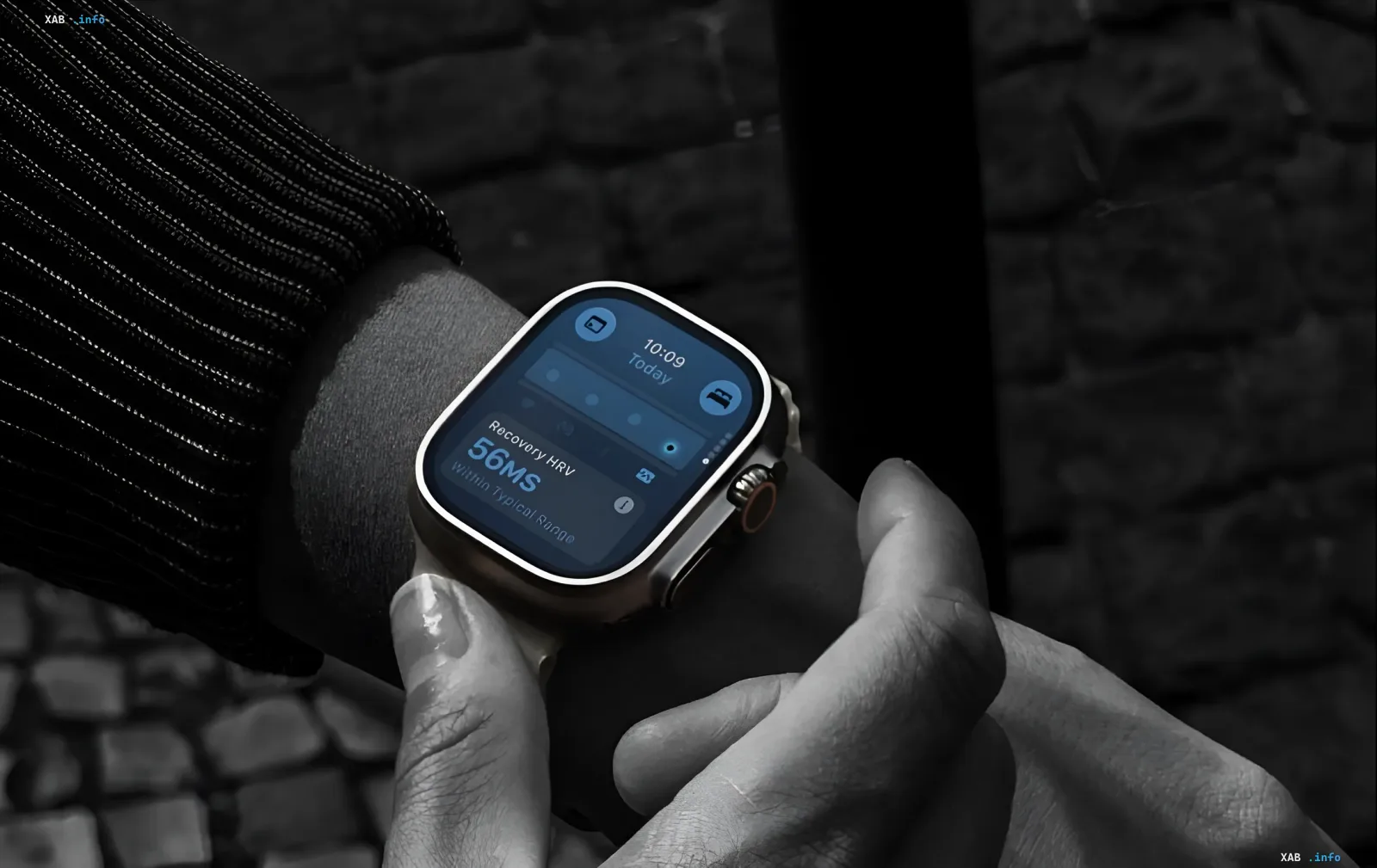
Both watches received an updated sensor platform: a larger ECG electrode, larger PPG-sensor photodiodes, and energy-efficient LED emitters. Based on analysis of activity, resting heart rate, and sleep quality, the watches generate a daily Readiness score — a measure of the body's readiness on a scale from 0 to 10 — with recommendations on exercise intensity. The device screens, as seen in the demonstration footage, display recovery metrics, including Recovery HRV.
Materials and battery life: Series 12 vs. Ultra 4
The Apple Watch Series 12 is aimed at everyday use and, according to the company, has brought back premium case materials. The flagship Ultra 4 is designed for extreme conditions, long workouts, and standalone operation: up to 84 hours in power-saving mode, up to 50 hours in normal mode, and up to 25 hours in Extended Workout mode. Among the Ultra 4's features are support for a new VO2 Max test, AI-powered health analytics in the Health app with an Insights tab, a titanium case in natural and black finishes, and a Hermès version with a titanium Grand H bracelet and an adjustment mechanism that works over a wetsuit.
Contradictory data
In the introductory part of the announcement, both devices are described as having "ceramic cases," however in the detailed specification ceramic is linked to the return of premium materials specifically for the Series 12, while the Ultra 4 is equipped with a titanium case. Thus, the phrasing about "ceramic cases" for the entire lineup appears generalized: ceramic applies to the Series 12, while the flagship Ultra 4 uses titanium. It is also worth noting that the announced Audio Intelligence capabilities were not yet available to users at the time of the presentation and will be released at the end of 2026, creating a gap between the announced and the actually working features.