In August 2026, a significant shift in the hierarchy of trust towards public figures was recorded in the Ukrainian public consciousness. According to the latest data from the Kyiv International Institute of Sociology (KIIS), citizens are increasingly turning their attention to defense professionals, preferring them over traditional politicians. A survey conducted amidst the ongoing conflict revealed that military personnel and representatives of law enforcement agencies hold leading positions in authority ratings, while political elites demonstrate lower levels of support.
Rating Leaders: Zaluzhny, Fedorov, and Budanov
The absolute leader in the trust list is the former Commander-in-Chief of the Armed Forces of Ukraine and current Ambassador to the UK, Valeriy Zaluzhny. He is trusted by 66% of respondents, which is 42 percentage points higher than the level of distrust (24%). Zaluzhny maintains the status of the most authoritative figure, symbolizing military resistance and diplomatic resilience. In second place is the former Minister of Defense, Mykhailo Fedorov, with a trust rating of 63%. Notably, Fedorov shows the best balance between trust and distrust — a plus of 47 percentage points (16% do not trust). Sociologists note a significant rise in his popularity compared to May figures, which is linked to his active stance and role in reforming the security sector.
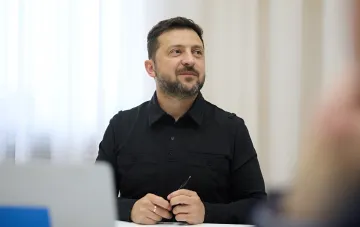
Completing the top three is the head of the Military Intelligence Directorate (HUR), Kyrylo Budanov. He is trusted by 61% of respondents, while 22% expressed distrust. Budanov's high positions confirm the thesis that in wartime, Ukrainians value the efficiency and decisiveness of security forces more than political promises. In contrast, President Volodymyr Zelenskyy takes fourth place with a trust rating of 56% and a distrust level of 38%. The head of state's trust balance is plus 18 points, indicating stable but not absolute support for his course.
Political Rift and Low Ratings
Figures associated with traditional party politics ended up at the bottom of the rating. The group with a negative trust balance includes volunteer Serhiy Prytula, Speaker of the Verkhovna Rada Dmytro Razumkov, Deputy Oleksiy Honcharenko, and the fifth President of Ukraine, Petro Poroshenko. Petro Poroshenko has the lowest rating: only 20% of Ukrainians trust him, while 76% do not. His trust balance is minus 56 points, the lowest among all surveyed public figures. This indicates a deep rift in society and a lack of trust in political figures from the past associated with the pre-war period.
The survey also polled Kharkiv Mayor Ihor Terekhov (47% trust) and Commander of the 3rd Army Corps Andriy Beletsky (37% trust). However, in Beletsky's case, a significant portion of respondents (40%) stated they did not know this person, indicating insufficient media activity of some military leaders compared to top defense sector managers.
Territorial Integrity Question: Public Stance
Besides personal ratings, sociologists recorded a hardline stance of Ukrainian society regarding territorial concessions. Six out of ten respondents (60%) consider the transfer of all of Donbas under Russian control in exchange for security guarantees to be categorically unacceptable. The share of those willing to take such a step is 33%, which shows a decrease compared to April 2026. This suggests that despite war fatigue, the demand for full territorial integrity remains dominant.
Sociologists paid special attention to Kyiv residents. Even after massive missile attacks, the capital's readiness for territorial concessions dropped from 34% to 26%. At the same time, the share of categorical opponents of concessions in the capital rose from 62% to 69%. This indicates that the immediate threat to security does not weaken patriotic sentiments but, rather, consolidates society around the idea of defending borders.
Contradictory Data
When analyzing the data, one must consider differences in methodology and interpretation that arise when comparing various sources. While KIIS records the stability of Zelenskyy's rating (56%), a number of other analytical centers and independent observers indicate that against the backdrop of protest sentiments and economic difficulties, the real support for the president may be lower. For example, some sources (ID 2, ID 3) note that trust in Zelenskyy has "practically not changed," but at the same time emphasize the growing gap between societal expectations and government actions. Furthermore, there is a discrepancy in publication dates: some data refers to May 2026, while others to August, requiring caution when comparing dynamics.