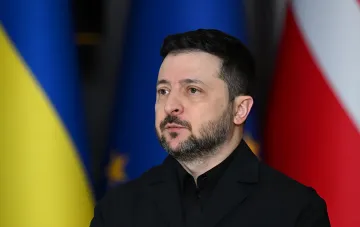
The Kiev International Institute of Sociology (KIIS) has published the results of a telephone survey conducted from October 8 to 16, 2026, which record a noticeable increase in Ukrainians' trust in President Volodymyr Zelensky against the backdrop of pressure from the US and the so-called "diesel deal." In the first two days of data collection, October 8–9, 43% of respondents trusted the president, while 52% expressed distrust. In the subsequent period, October 10–16, the figures shifted: trust reached 57%, and distrust fell to 39%. Sociologists attribute this dynamic to the "rally 'round the flag" effect—a steady sociological phenomenon where external pressure strengthens support for the national leader.
Methodology and Two Data Collection Periods
The survey was conducted by phone across all regions under the control of the Ukrainian authorities among 1,031 adult respondents. The total sampling error does not exceed 4%. At the same time, the two data collection periods covered different numbers of participants: October 8–9 included 274 people (7.7% margin of error), and October 10–16 included 757 people (4.6% margin of error). KIIS notes that in previous polls, trust in the president during the first days of collection was also slightly lower than in subsequent days, but previously the differences between periods were significantly smaller. Residents of territories temporarily not controlled by the Ukrainian authorities, as well as citizens who left abroad after February 24, 2022, did not participate in the survey. The respondents include internally displaced persons from occupied territories. When asked, respondents were read four response options—ranging from "completely distrust" to "completely trust"—without specifying that the question referred to the president.
"Rally 'Round the Flag": Sociological Explanation of the Dynamics
The authors of the study conclude that the recorded jump in trust is most likely due to the "rally 'round the flag" effect following pressure from the US. This mechanism suggests that under conditions of external pressure, citizens tend to strengthen their support for their leader. KIIS emphasizes that the methodological factor—the difference in sample sizes between the two periods—partially explains the difference, but historically such inter-period fluctuations have been substantially less pronounced, allowing current dynamics to be interpreted as a reaction to specific political events rather than a methodological artifact.
General Balance of Trust and Response Structure
According to the aggregate results of the poll, 54% of Ukrainians trust the president, while 41% do not. The balance of trust and distrust stands at +13 percentage points. Among the 54% who trust him, 22% chose "completely trust" and another 32% chose "tend to trust." In the group of those who do not trust him, 24% answered "completely distrust" and 17% "tend to distrust." KIIS points out that in late August and early September 2026, the figures were comparable, meaning that over the past month the overall level of trust has remained virtually unchanged, and the intra-poll fluctuation reflects a reaction to events in mid-October.
Context: Attitude Toward Concessions and Comparative Ratings
In the same study, KIIS records the hardline stance of the majority of Ukrainians on the issue of territorial concessions: 61% of respondents called the transfer of Donbas in exchange for security guarantees from the US and Europe a categorically unacceptable condition. By comparison, according to a Rating Group poll, the highest level of trust among politicians and public figures in Ukraine was held by former AFU Commander-in-Chief Valery Zaluzhny at 64%. Zelensky was trusted by 53% of respondents in that study, while 40% distrusted him.
Interpretation Limitations and Dynamics
Sociologists draw attention to a number of limitations: the survey does not cover residents of temporarily occupied territories or Ukrainians permanently residing abroad after February 2022, which narrows representativeness for a portion of the population. Furthermore, the difference in sample sizes between the two periods (274 versus 757) means that the statistical error of the first period is nearly twice as high as that of the second, requiring caution when directly comparing absolute values. Nevertheless, the totality of the data—including the historical dynamics of inter-period fluctuations and the overall balance of +13%—allows KIIS to qualify the recorded growth as a probable reaction to external pressure rather than a methodological artifact.