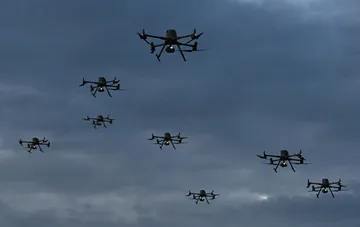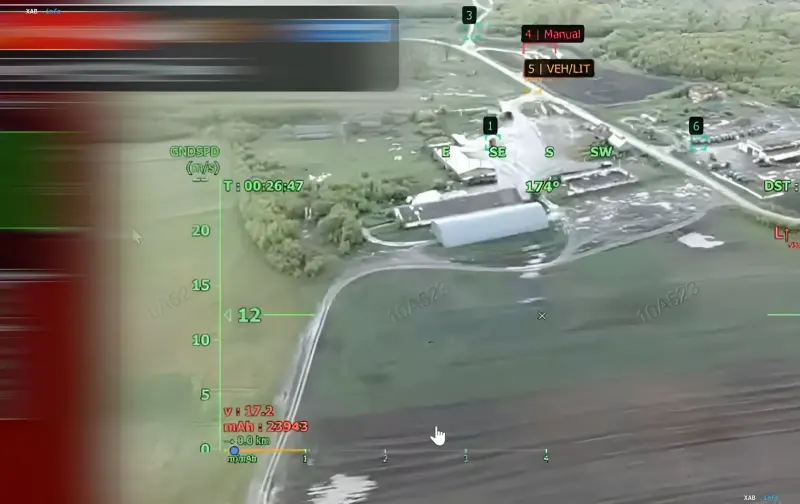
The 'Artan' special unit of the Main Directorate of Intelligence of the Ministry of Defence of Ukraine has hit more than 2,300 targets in the border zone over several months of FPV crew operations. According to RBC-Ukraine, this was announced in a unit press release by 'Artan' commander, military intelligence colonel Viktor Torkotyuk, call sign 'Titan'. Among the intelligence officers' priorities are the Russian military's fuel infrastructure, as well as ammunition depots, armored vehicles, and artillery systems.
FPV Crews and the Priority of Fuel Infrastructure
According to the unit, one of the key areas of work for FPV crews has been facilities supplying fuel to the occupation forces. The intelligence officers carried out attacks on gas stations and fuel depots used by the Russian army to supply its units. In 'Artan''s logic, hitting such objects complicates fuel supplies and, consequently, all enemy logistics in the border zone.
What Targets Were Hit by Intelligence Officers
In addition to fuel depots and infrastructure facilities, the list of hit targets includes ammunition depots, armored vehicles, and artillery systems of the Russian troops. FPV drones, according to the unit commander, make it possible to flexibly strike various types of military targets — from equipment and artillery to rear support facilities. Such strikes, 'Artan' emphasizes, are aimed at complicating the supply and provisioning of the occupation forces.
Enemy Logistics as a Target
The unit emphasizes that fuel is necessary for the Russian army to operate military equipment, move units, and transport ammunition and other cargo. That is why attacks on gas stations and fuel depots are viewed as a tool to disrupt enemy logistics. Strikes on fuel infrastructure, according to the intelligence officers' design, should limit the mobility and combat capability of Russian troops in the border zone.
Ground Robotic Complexes
Earlier, RBC-Ukraine reported that 'Artan''s ground robotic systems covered about 4,258 km during the summer of 2026, providing logistics, wounded evacuation, and prisoner transportation. According to the publication, these systems rescued 45 Ukrainian servicemen from under enemy fire and delivered more than 41 tons of cargo 'to zero'. Thus, along with FPV drones, robotic equipment remains an important element of the unit's work.
Zaporizhzhia Direction and Stepnohirsk
The main direction of the special unit's work, according to its official resources, remains Zaporizhzhia. On May 18, HUR reported that 'Artan' fighters, in coordination with adjacent units, carried out a series of assault operations in Stepnohirsk, after which key locations in the settlement came under the control of the Ukrainian Defense Forces. The totality of these operations, in the unit's own view, demonstrates its role in the border zone — from targeted rear strikes to ground assault operations.