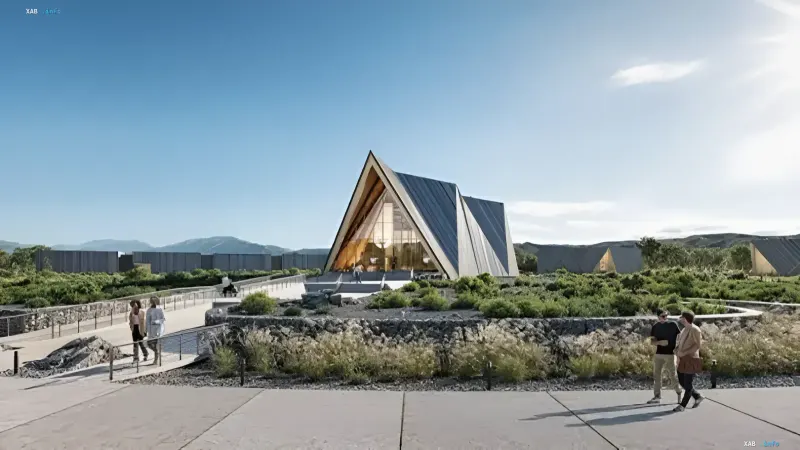
One of the most heavily advertised companies on the energy market today is Oklo — a nuclear energy startup backed by OpenAI CEO Sam Altman. In 2025, the company secured a 30-year contract from the US Air Force to design, build, own, and operate a microreactor at Eielson Air Base (Alaska) to provide a clean, safe, and grid-independent energy source. In parallel, Oklo is collaborating with the US Department of Energy's Idaho National Laboratory to build a power plant based on next-generation small modular reactor (SMR) technology, Aurora. This project marks an important step toward Oklo's first major commercial partnership with Meta Platforms, aimed at supplying clean electricity to the AI data centers owned by Facebook's parent company.
Aurora and 1.2 GW for Data Centers
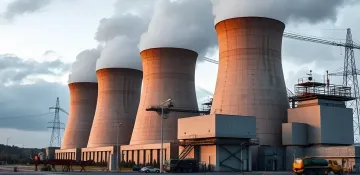
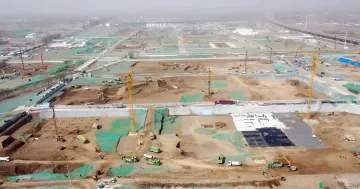
According to plans, Oklo will build around 16 reactors at a nuclear power plant spanning more than 80 hectares, with a target capacity of 1.2 gigawatts (GW). According to the Third Way Institute, the Oklo nuclear power plant site in Idaho is among a list of 22 promising reactor projects that have already been commissioned or are in active implementation in the United States. Oklo's ambitions, like those of its competitors overall, are aimed at reviving nuclear energy and fueling the artificial intelligence revolution, which is forecast to drive the American economy for decades to come.
Tech Giants Bet on Atomic
Many American startups developing small modular reactors are now receiving support from major technology companies to power their data centers. This is one of the most challenging aspects of the AI boom, where electricity consumption can rival that of an entire city. In addition to the deal with Oklo, Meta plans to purchase electricity from TerraPower — a nuclear reactor developer founded nearly 20 years ago by former Microsoft board chairman Bill Gates. In 2024, Google signed an agreement with startup Kairos Power to build seven small modular reactors in the US, with the first reactor to be commissioned by 2030. That same year, Amazon invested about $500 million in X-energy to support the development and licensing of SMR technology, aiming to bring more than 5 GW of nuclear energy into the US power grid by 2039.
Political Engine and Government Ties
In 2025, US President Donald Trump signed four executive orders aimed at restoring the country's global leadership in nuclear energy, with the goal of quadrupling US nuclear power capacity — to 400 GW by 2050 — and meeting the enormous electricity demands associated with artificial intelligence. Beyond political incentives, a number of companies benefit from political connections: US Energy Secretary Chris Wright once served on Oklo's board of directors, and in March 2026, Oklo CEO Jacob DeWitt was appointed to the President's Council of Advisors on Science and Technology alongside other tech company leaders — Jensen Huang, Sergey Brin, Michael Dell, and Mark Zuckerberg.
Contradictory Data
Primary sources contain a number of inconsistencies that are important to note. First, PitchBook statistics materials include the phrase about investments "in companies engaged in nuclear weapons," which is an obvious error: the discussion concerns private financing of nuclear energy, not the defense sector. Second, there is a sharp gap between declared ambitions and the actual pace of construction: with target timelines (Kairos's first reactor by 2030, 400 GW by 2050), Westinghouse Electric's two newest AP1000 reactors at the Vogtle nuclear power plant were only commissioned in 2023–2024, with their cost exceeding the budget by roughly $20 billion and the schedule slipping by seven years. Thus, the optimistic forecasts of tech giants and authorities clash with the industry's long history of cost overruns and delays.
Investments, Timelines, and Labor Shortage
According to PitchBook statistics, venture investment in nuclear energy companies grew from $103 million in 2020 to $2.9 billion in 2025; many enterprises that previously struggled to raise capital turned to the public stock market. Nevertheless, despite significant private financing and tens of billions of dollars in government support, the timelines for building new reactors and reaching real commercial profitability remain quite distant. An additional barrier is the labor shortage: the US has not built new large reactors in over 30 years, creating a deficit of qualified specialists amid a new construction boom.