The surge in electricity consumption driven by artificial intelligence workloads and data center operations has triggered a process in global nuclear energy that industry observers call a "renaissance." According to the latest data from the World Nuclear Association (WNA), as of October 16, 2026, 79 nuclear reactors are simultaneously under construction in various countries—a record high over the past forty years. A comparable number of power units under construction was last recorded in 1986, when there were 91. It was then that the Chernobyl accident became a turning point, leading to a multi-year decline in nuclear power plant construction worldwide. The negative momentum was further compounded by the 2011 Fukushima accident in Japan, which cooled investor interest in nuclear energy even further. However, the energy crisis caused by military conflicts in Europe and the Middle East, combined with the soaring electricity needs of data centers and AI, have pushed radiation safety concerns into the background.
A Construction Portfolio of Hundreds of Units
According to the latest WNA database, out of the 79 reactors under construction, 38 are in China, eight in India, and seven in Russia. In addition to units already being built, another 122 reactors are in the planning stage, and over 300 are being considered as prospective projects. The total electrical capacity of the units under construction is approximately 78.9 GW. These are predominantly large power units: China's Hualong One and CAP1000 projects have a capacity of about 1.1–1.25 GW each, while Russia's VVER-1200 units are around 1.2 GW. Small modular reactors (SMRs) are also present in the plans but currently hold a small share of the portfolio. At the same time, transitioning from plans to actual construction will require significant financing, licensing, and manufacturing preparation, making these large portfolio figures more of a guideline than a guarantee of deployment.
AI as a New Demand Driver
The key catalyst for acceleration has been the demand for electricity from data centers and artificial intelligence computing power. According to WNA estimates, construction of eleven new nuclear reactors began or will begin in 2026, and 201 reactors are scheduled to be commissioned over the next 15 years. Currently, 443 nuclear reactors are in operation. Even taking into account the decommissioning of certain units due to aging equipment, projections indicate that more than 600 reactors could be operational worldwide by 2040. Such a trajectory requires the industry not only to launch new projects but also to sustain growth in fuel supplies, directly impacting the uranium market.
Small Modular Reactors: Speed Versus Safety
The greatest interest in small modular reactors comes from the United States, where SMRs are seen as the most promising in terms of investment return speed. Building a large reactor takes 10 to 15 years, whereas AI infrastructure demands do not allow for such long waiting periods; small modular reactors can theoretically be manufactured in five years. However, experts point to a significant risk: SMR developers often push operational safety issues to the background. There are currently around 70 different designs of such reactors under development worldwide, while a unified approach to their safety assessment and licensing has yet to be established, creating a regulatory gap between development paces and regulatory requirements.
Europe and Japan Return to Nuclear
Europe is also joining the trend, as bans on the construction of new reactors and nuclear plants are gradually being lifted in countries that previously phased out "peaceful atom." In March, the European Union announced a policy of actively using nuclear energy to decarbonize energy supply and ensure energy security, and European Commission President Ursula von der Leyen stated that Europe's rejection of nuclear energy was a "strategic mistake." France, for instance, is considering the construction of 14 new reactors. Japan, having experienced the Fukushima tragedy, is also moving back toward nuclear power: the country plans to replace two to five reactors by the 2040s and add another nine by the 2050s, resulting in a total of 11 to 14 new reactors built.
Uranium Prices Surge to All-Time High
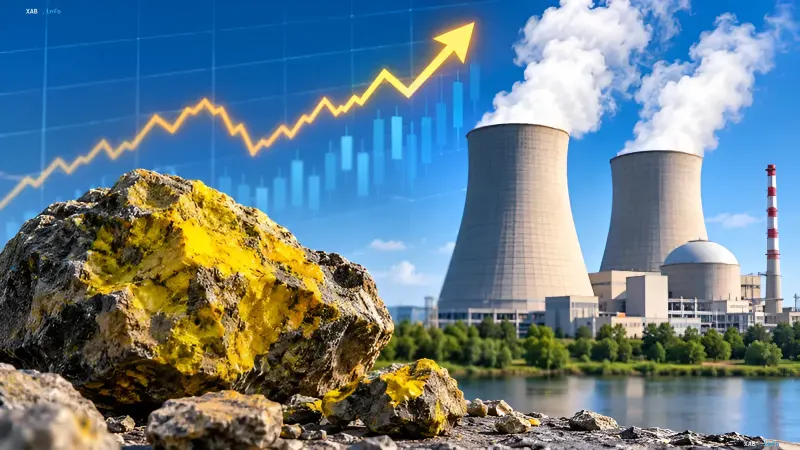
The expansion of nuclear energy is already impacting uranium prices, which serve as reactor fuel. According to US research firm TradeTech, the long-term contract price at the end of September 2026 was $214 per kilogram of uranium, surpassing the historical peak of $209 per kilogram reached in 2007–2008. The rise in quotations increases the global nuclear industry's dependence on Russia, which remains a major player in the market for fuel assemblies and the raw materials needed to produce them. Against this backdrop, the industry is preparing alternative supply sources—at least for fuel, if not raw materials themselves—which will become a key factor in shaping price dynamics in the coming years.