On the night of November 26, 2026, the Main Directorate of Intelligence (HUR) of the Ministry of Defense of Ukraine stated that long-range unmanned aerial vehicles had struck an oil refinery in Slavyansk-on-Kuban, Krasnodar Krai, Russia. This was reported by RBC-Ukraine, citing an official statement from the agency. According to HUR, the attack took place while the facility was in the process of recovery following previous strikes, which, according to intelligence representatives, would force the Russian military machine to "lose time and momentum."
What was damaged: facilities, reservoirs, and pipelines
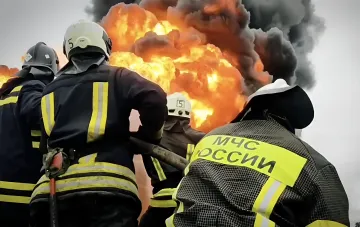
According to the HUR statement, the drones hit key production facilities of the plant, the tank farm, and transportation pipelines. As a result of the shelling, a fire broke out on the territory of the enterprise. The specific scale of the damage, as well as information about casualties, is not provided in the materials; information about the nature and extent of the damage is based on the statement from Ukrainian intelligence.
Significance of the Slavyansk Refinery
The Slavyansk oil refinery, according to the data provided, processes up to 5.2 million tons of oil annually. The enterprise produces gasoline, diesel fuel, and fuel oil, which, the HUR claims, are used to supply the Russian army. It is this role in fuel supply that makes the refinery a target for strikes on energy infrastructure, according to the logic of the Ukrainian side.
A series of strikes on oil refining
The attack on the Slavyansk refinery is part of a series of strikes on oil refining facilities in southern Russia. It is worth noting that on the night of November 23, the Defense Forces of Ukraine, according to their data, hit the "Novoshakhtinsk Petroleum Products Plant" in the Rostov Region. The next morning, the regional governor reported that the plant had ceased operations following a massive night-time combined drone and missile attack.
Context and assessment
The HUR statement emphasizes that the strike on the Slavyansk refinery occurred while the plant was being restored after previous damage. The agency interprets this as an attempt to slow down the recovery of the enemy's fuel and energy potential. There is no independent confirmation of the extent of the damage or the actual cessation of production in the provided sources, so information regarding the consequences of the attack should be viewed as a statement from one side of the conflict.