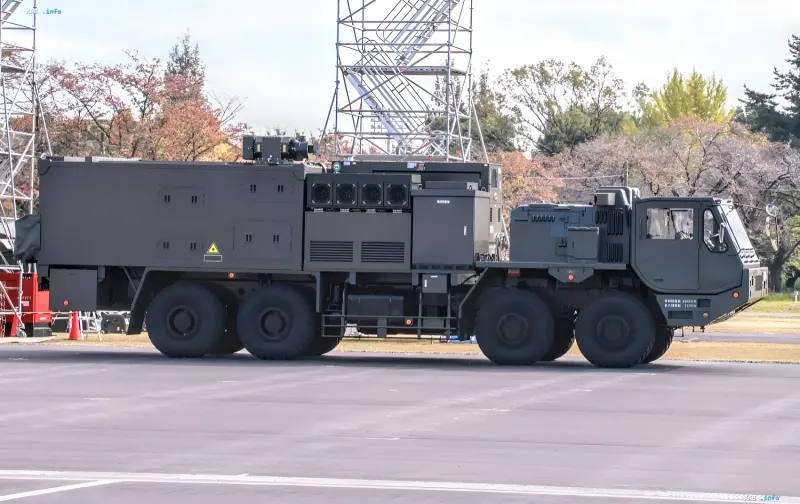
In August 2026, it was announced that successful field trials of the Boobook high-energy laser system had been completed. This project marked a historic milestone for the defense industries of both nations: for the first time, Australia and Japan jointly developed and tested a combat laser installation. The trials were conducted at a range in South Australia and at facilities of the Defence Science and Technology Group (DSTG), confirming the technology's operational viability in real-world conditions.
Technological Breakthrough and Strategic Partnership
The Boobook system is built upon more than 20 years of experience by the Australian scientific agency DSTG in the field of laser technologies. The key partner in the project was the Japanese corporation Mitsubishi Electric. This collaboration allowed for the integration of advanced developments from Tokyo and Sydney, creating a complex that, according to the Australian Department of Defence, is designed to enhance surveillance and protection capabilities. Minister for Defence Industry Pat Conroy described the project as a practical example of the growth of defense-industrial partnership, going beyond simple technology exchange.
Production Localization and Investments
The success of the trials led to concrete economic decisions. Mitsubishi Electric Australia announced the construction of a new factory in the city of Rydalmere (New South Wales state). Investments in the project are estimated at $70 million. The new facility will house the MEA Defence Division, allowing for the scaling of laser system production directly in Australia and expanding the Australian Defence Force's access to Mitsubishi Electric's technology portfolio.
Geopolitical Context and Development Plans
The implementation of the Boobook project takes place against the backdrop of deepening bilateral relations between Canberra and Tokyo. In May 2026, Prime Ministers Anthony Albanese and Sanae Takaichi reached agreements to expand defense cooperation. At the same time, analysts note that Japan's activity in the field of laser weaponry correlates with changes in regional security, including a new Defense White Paper where Russia is defined as a critical threat. While Australia and Japan are already demonstrating working prototypes, other players, including Ukraine, are also announcing plans to create similar systems in the coming years.