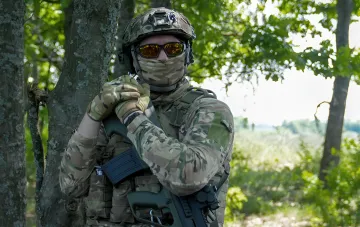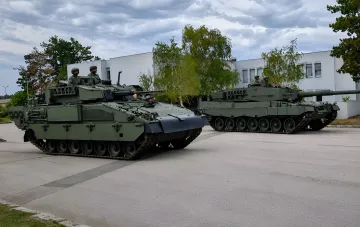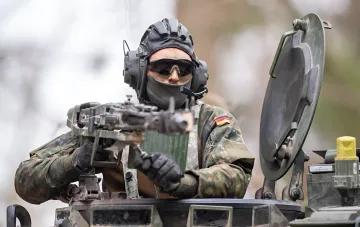
The Austrian government has announced a major reform of the country's defense system. In light of the changing geopolitical situation and the ongoing war between Russia and Ukraine, Vienna has decided to extend the term of mandatory military service. As of January 1, 2025, it will be extended from 6 to 9 months. This decision is a response to the fact that, according to Chancellor Christian Stocker, "the dream of a solid peace in Europe has collapsed".
From civil protection to real threat
For decades, the Austrian army, based on the principle of neutrality, performed the functions of civil protection forces. The main tasks of conscripts were to assist emergency services during natural disasters: fighting fires, dealing with the aftermath of floods, or patrolling borders to prevent illegal migration. The army was not oriented towards repelling the invasion of foreign troops.
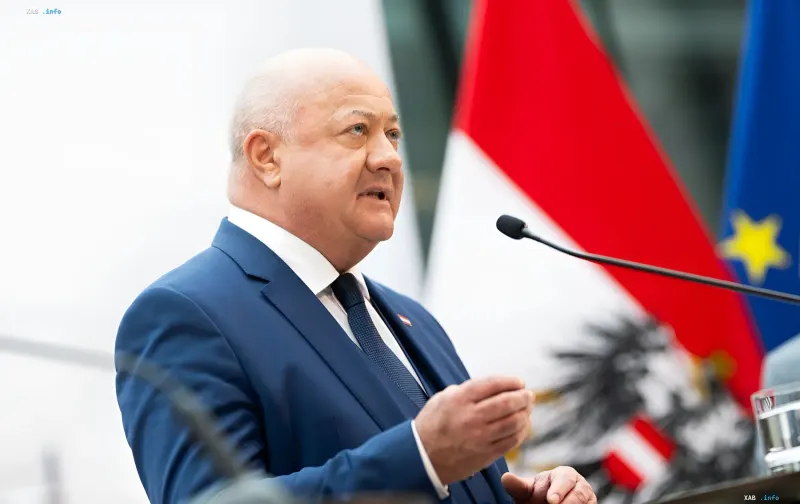
However, Chancellor Stocker, speaking at a press conference in military barracks near Salzburg, emphasized that the security situation has changed radically in recent years. In addition to traditional threats, new challenges have emerged: hybrid attacks and cyber warfare. "These events clearly show that Austria must take greater responsibility for its own capabilities in terms of self-sufficiency and population protection," the head of government stated.
New service conditions and benefits
Currently, Austrian men who have reached the age of 18 can choose between military service and a nine-month civilian alternative. As part of alternative service, they work in ambulance services or nursing homes. The government plans to provide the opportunity to voluntarily extend civilian service by an additional two months.
To increase the attractiveness of military service in the country, significant benefits are being introduced:
- Conscripts' salary will almost double and amount to about 1000 euros per month.
- A system of additional days off is being introduced.
- A transition to a reservist model is planned, under which conscripts will have to undergo repeated exercises for 10 years after completing basic service.
Political struggle for reform
Introducing changes to the military service law will require the support of two-thirds of the votes in parliament. To do this, the government needs to secure the support of opposition forces — either the "Green" party or the far-right Freedom Party of Austria. This makes the reform process complex and dependent on the political situation.
Exactly a year ago, the Austrian Minister of Foreign Affairs, Beate Meinl-Reisinger, stated that neutrality no longer guarantees the country's security and called for open debates on possible accession to NATO. Although an official decision to join has not yet been made, steps to strengthen the army indicate a serious review of national security strategy.
In March of this year, the Mayor of Kyiv, Vitali Klitschko, met with the Austrian Minister of Economy, Energy and Tourism, Wolfgang Gattmannsdorfer. As a result of the meeting, it was announced that Austria would assist in the reconstruction of Kyiv, which suffered from the war. This highlights Austria's growing role in supporting Ukraine and its readiness to take on more responsibility in the region.