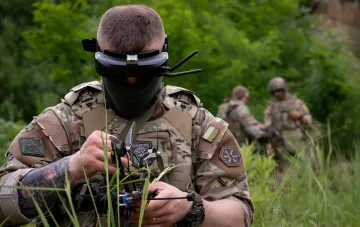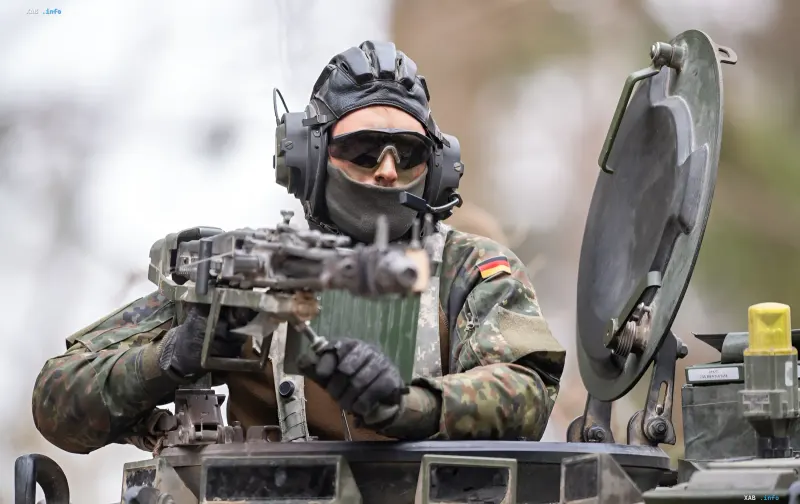
In August 2026, the Armed Forces of Ukraine are witnessing a significant update in personal equipment. Ukrainian servicemen have begun to massively use new elements of combat clothing, which were previously developed and implemented as part of a large-scale modernization program of the Bundeswehr. This refers to the products of the German company Hexonia, which has become a key supplier for the new modular equipment system of the German army. This process testifies to the deep integration of Ukrainian military standards with advanced NATO technologies.
KBS SK Modular System: The German Army Standard
The basis of the new equipment is the Kampfbekleidungssatz Streitkräfte (KBS SK). This system was created taking into account the harsh requirements of modern warfare and the principle of layering. This allows a soldier to flexibly adapt his wardrobe to specific weather conditions, season, and the nature of the combat task. The kit includes not only basic combat trousers and shirts, but also field jackets, insulating layers, thermal underwear, and specialized gloves.
The main advantage of the KBS SK system is its modularity. Even when wearing several layers of insulating or protective clothing, the serviceman retains free access to equipment placed on the body armor or waist system. This is critical for operational actions on the battlefield, where every second counts. In total, as part of the modernization program, the Bundeswehr received more than 100 new equipment items, covering everything from field knives to complex backpack systems.
Personnel Assessment: Quality vs. Functionality
According to data from the "Military" portal, Ukrainian soldiers who have already received the new German uniform in their arsenal evaluate it extremely positively. Soldiers note the high quality of materials, the convenience of the cut, and the wear resistance of the products. "I am satisfied with the uniform. It is high quality, comfortable, and wears well," noted one of the servicemen who underwent training and received a Hexonia kit.
However, despite the enthusiastic reviews of the textile part of the equipment, the situation with other protective elements looks different. According to the same soldiers, Bundeswehr body armor has not become the main element of aid arriving at the front. Ukrainian units more often use clothing elements and auxiliary equipment, while body armor arrives in smaller volumes or has other priorities in distribution.
Comprehensive Modernization: MOBAST and New Helmets
Along with updating the uniform, Germany is implementing a modernization program for individual protective equipment called MOBAST (Modulare ballistische Schutz- und Trageausstattung). This system provides for the use of modular body armor, which allows installing additional protection in critical areas: neck, shoulders, groin, and hips. Such flexibility allows minimizing the weight of equipment when performing tasks that do not require maximum protection, and strengthening it when necessary.
Also, as part of the update, the Bundeswehr is receiving new combat helmets adapted to modern technologies. They are equipped with mounts for night vision devices, modern communication means, and active headphones, which significantly increases the survivability and situational awareness of the fighter. These technologies, being implemented in Germany, are gradually becoming available to Ukrainian units as part of military aid programs.
Financial Scale of NATO Support in 2026
Equipment deliveries are part of a much broader context of support for Ukraine by Alliance countries. In 2026, NATO countries provided Ukraine with 70 billion euros for military equipment, aid, and training. According to preliminary plans, a similar amount will be allocated in 2027 as well. This unprecedented financing allows not only to purchase equipment but also to equip personnel with modern equipment corresponding to the standards of the world's leading armies.
Contradictory Data
Although the delivery of German uniforms is confirmed and actively discussed in expert circles, there are discrepancies regarding aid priorities. On the one hand, Ukrainian soldiers confirm the receipt and active use of Hexonia clothing. On the other hand, open sources note that the delivery of heavy body armor (body armor) is less intensive than the delivery of small arms and artillery. This creates a situation where "soft" equipment is updated faster than "hard" protection, which may be related to logistical difficulties or donor priorities.