Siemens Mobility and Lufthansa Technik Defense have signed a memorandum of understanding outlining the joint development of a specialized railway train for military medical evacuation. RBC-Ukraine reported this citing the Lufthansa press service. The project is being implemented in Germany to meet the needs of the German Armed Forces and their NATO allies. The signing of the document marks the transition from the conceptual stage to practical engineering work on creating a train that is set to become a key element of the alliance's logistical infrastructure in tactical and strategic medicine.
Composition and Technical Architecture
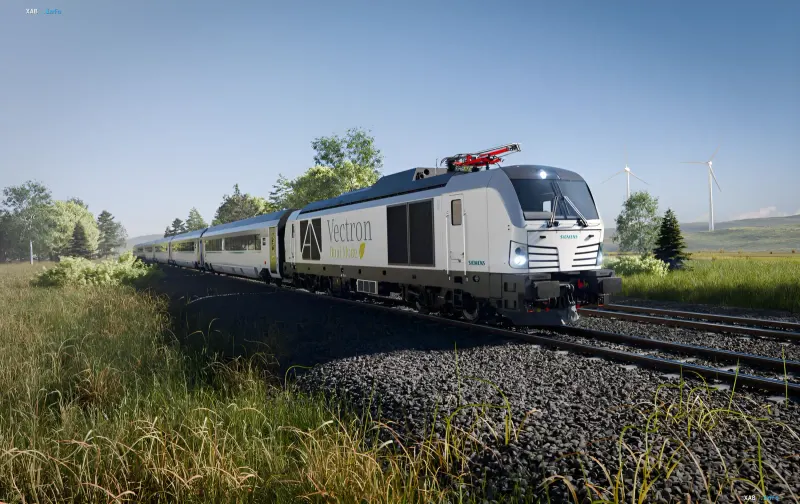
The project is based on already certified and operating Siemens platforms. Vectouro passenger cars intended for international travel will be modified for medical purposes. Traction is provided by the Siemens Vectron X locomotive or its variant, the Vectron X Dual Mode. The Dual Mode locomotive gives the train additional flexibility: it can operate from an overhead electrical grid or on diesel fuel, ensuring continuous movement on non-electrified sections or during power outages. The airtight design of the cars allows them to be used on high-speed lines without losing sealing and patient comfort.
Medical Capabilities and Equipment
According to the partners, the train is designed for the simultaneous transportation of over 150 wounded or sick individuals, providing medical care directly en route—from basic care to intensive therapy. Lufthansa Technik Defense handles the outfitting of the cars: depending on the section configuration, systems ranging from simple stretcher frames to full intensive care beds are installed. Up to 90 workstations are provided for medical and support personnel, ensuring continuous patient accompaniment throughout the entire evacuation route.
International Compatibility and Logistics
A key advantage of the concept is the elimination of the need to transfer patients at borders. Thanks to standard European wheelsets and compatibility with the infrastructure of multiple countries, the train can travel major transcontinental rail routes without stopping. As Steffen Bobzien, Head of Locomotives at Siemens Mobility, noted: "Our Vectron X locomotives and Vectouro passenger cars are distinguished by a high level of reliability and the ability for seamless deployment across various European countries. Together with Lufthansa Technik Defense, we are creating a highly efficient solution for medical evacuation." This means a wounded soldier can be transported from a conflict zone to a specialized hospital in an allied country on a single train without wasting time on reloading.
30-Year Lifespan and Strategic Context
The project is designed for a service life of over 30 years, during which the train will undergo phased modernization and adaptation to new tactical and technical requirements. Such a lifespan is typical for strategic platforms and emphasizes that this is not a temporary fix, but a long-term element of NATO's military infrastructure. The development context is no coincidence: it was previously reported that Germany and the UK are actively seeking additional air defense assets for Ukraine amid limited supplies of Patriot systems and missiles from the US. A plan to involve other partners in joint air defense provisions is slated for the Ramstein meeting on November 17. In this logic, creating a dedicated medical train with a multi-year service horizon becomes part of a broader strategy to strengthen the logistical and medical autonomy of the alliance's European wing.