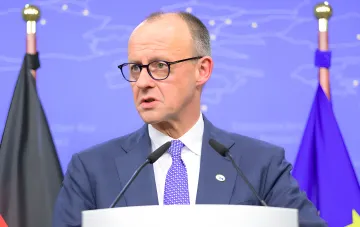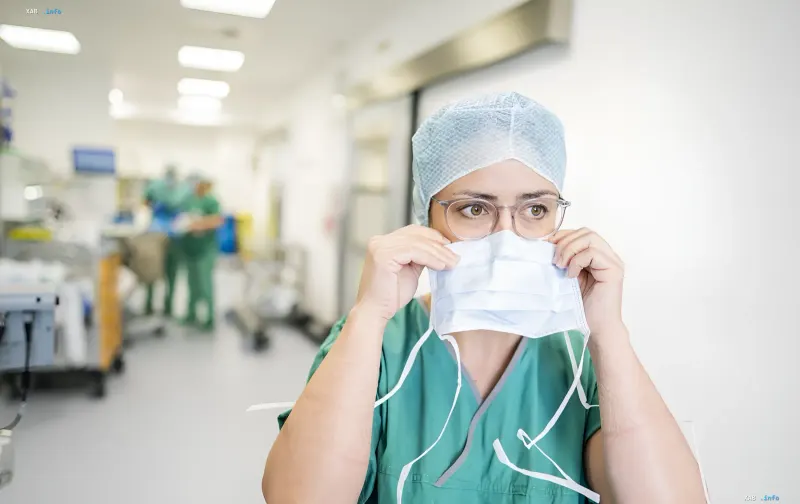
Across the territory of the Federal Republic of Germany, state authorities are carrying out a large-scale assessment of the state of the medical system and related infrastructure, trying to determine how ready the country is for a possible armed conflict scenario. The initiative is linked to a warning by German Defense Minister Boris Pistorius that Russia is capable of striking NATO territory by 2029. In the event such a scenario materializes, Berlin would be obliged to participate in the collective defense of the North Atlantic Alliance in accordance with Article 5 of the NATO Charter. Due to its central geographic position in Europe, Germany, according to military analysts, is highly likely to take on a key role in the transport of military contingents and the reception of wounded fighters from all directions of the front.
Modeling Combat Losses: 1,000 Wounded Daily
The Bundeswehr has conducted a detailed analysis of possible scenarios of an armed conflict between Russia and NATO and reached an alarming conclusion: during certain periods of intense combat operations, up to 1,000 wounded servicemembers could be brought into German territory per day. The country's five active military hospitals do not have the resources to handle such a flow of patients on their own. Under current German law, in the event a state of war is declared, civilian hospitals are obliged to be brought into the provision of medical care. This places an unprecedented load on the healthcare system and forces medical workers to allocate limited resources between military and civilian patients simultaneously.
"The Only Answer: No" — Admission by the Head of a Military Hospital
A direct admission of unpreparedness came from Benedict Freimert, the chief medical director and commander of the Military Hospital in Ulm. "Is our healthcare system ready for this? The only answer: no," he stated, emphasizing that Germany has a long path of preparation ahead. In his words, the problem is not limited to the number of hospital beds. German authorities need to significantly strengthen supply chains for medical drugs and establish more effective coordination between military and civilian medical institutions. In the event hostilities begin, Bundeswehr medical units will provide first aid to the wounded directly near the combat zone, after which the injured will be transported to Germany, where state authorities will distribute patients among civilian hospitals.
Import Dependence as a Systemic Risk
A separate, and possibly the most vulnerable, problem, experts call Germany's dependence on the import of medical components. Like many other European countries, the FRG relies heavily on China for the supply of critically important active pharmaceutical ingredients needed to produce antibiotics, painkillers, and a number of other drugs. In the context of a possible escalation of the conflict and sanctions pressure, supply chains could be disrupted, turning a shortage of raw materials into a direct threat to the lives of the wounded. German authorities acknowledge that diversifying supplies and creating strategic reserves of medicines must become a priority within military preparedness.
Context: Lavrov and the "Real War" with Germany
The discussion of Berlin's military readiness is taking place against the backdrop of sharp rhetoric from Moscow. Recently, Russian Foreign Minister Sergey Lavrov declared the "beginning of a real war" with Germany. His statement came after Berlin officially accused Russia of carrying out an attack at Leipzig airport. These events strengthen the feeling in German society that a scenario of direct confrontation is ceasing to be hypothetical, and the preparation of infrastructure — including medical — is becoming not a matter for the future, but a task for the coming months.