Call for Preemptive Defense: The Debate on Intercepting Missiles Over Ukraine
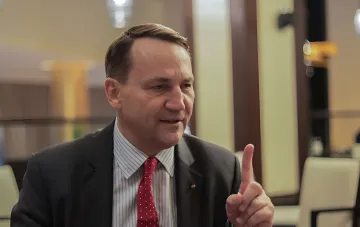
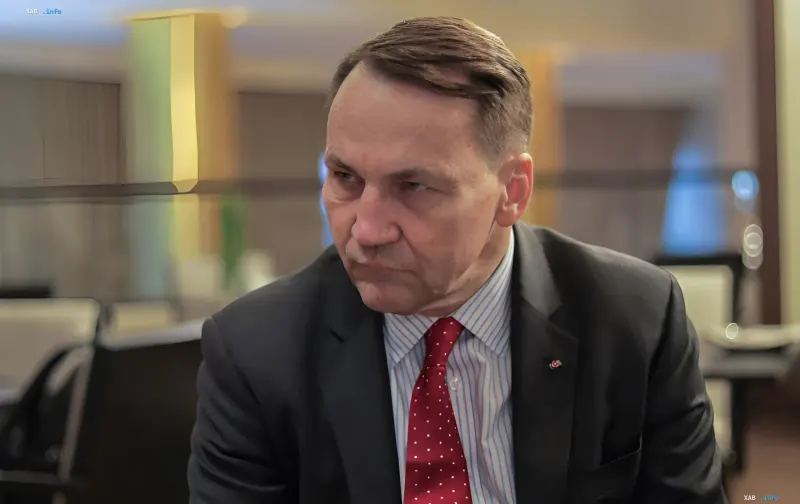
Amid the escalation of Russian missile attacks on Ukrainian territory, the Polish leadership is raising the issue of the need to change air defense tactics. In an interview published by RBC-Ukraine citing the PAP agency, Polish Deputy Prime Minister and Foreign Minister Radosław Sikorski stated that allies must seriously discuss the possibility of intercepting Russian ballistic missiles directly over Ukrainian territory, without waiting for them to approach the Polish border. According to the diplomat, the current strategy, where missiles fly over Ukraine for several days in a row, causing damage to civilian objects and people, requires a review.
Sikorski emphasized that the discussion on interception should be free from domestic political intrigues and party strife. 'The question of whether we can be sure that it would be better to shoot down these Russian missiles over Ukraine, and not possibly later over Poland, is a topic for a very serious discussion that should not become a hostage of party rivalry,' noted the head of Polish diplomacy. This statement resonates with NATO countries' concerns that missile debris or their unintended impact could cause incidents affecting neutral territories.
Escalation of Strikes and Air Defense Load
Sikorski's statement came against the backdrop of unprecedented intensity of Russian attacks. On the night of August 6, 2026, Russia launched 4 ballistic missiles and 101 attack drones at Ukraine. Ukraine's air defense forces managed to intercept 66 drones, however, ballistic missiles, possessing high speed and maneuverability, place a colossal load on the defense system. As a result of the strikes, dozens of hits on critical infrastructure were recorded.
The situation is exacerbated by data from the previous 24 hours. On August 5, the enemy used 28 missiles and 115 drones. On that day, Ukrainian air defense forces failed to shoot down any of the ballistic missiles, although most UAVs were destroyed. Experts note that Russia is capable of maintaining a high intensity of strikes for a long time, systematically attacking production facilities, warehouses, and business objects, which threatens the country's economic stability.
Diplomatic Pressure and the Graham Bill
Commenting on the prospects for a ceasefire, Radosław Sikorski stated that the US should exert pressure specifically on Moscow, not on Kyiv. As one of the effective tools, he named the adoption of the bill named after Senator Lindsey Graham. The Minister reminded that special customs duties have not yet been imposed on Russia, while for many allied countries they amount to 10–15%. 'It would be good if negotiators visited Kyiv for the first time, and not only made a pilgrimage to Moscow,' added Sikorski, calling for a change in the vector of Western diplomatic activity.
Contradictory Data
In the context of the discussion on intercepting missiles over Ukraine, there are various points of view regarding the technical feasibility and political risk. On the one hand, Polish and Ukrainian officials insist on the need to expand the range of allies' air defense systems to protect civilian objects on Ukrainian territory. On the other hand, the expert community voices concerns that expanding the interception zone could be interpreted by Moscow as direct military participation of NATO countries in the conflict, which carries escalation risks. In addition, data on the number of ballistic missiles shot down varies: official air defense reports indicate gaps in the system, while independent analysts note that some missiles may have been shot down at the terminal stage but were not counted in the statistics due to the difficulty of identification.
Forecast for August 2026
According to experts, Russia may launch up to 100 ballistic missiles at Ukraine monthly. This indicates that the conflict has entered a phase of systematic depletion of the enemy's resources. In conditions where Ukraine continues to repel massive attacks, the question of intercepting missiles over the country's territory becomes not only a technical but also a geopolitical challenge for Western partners.