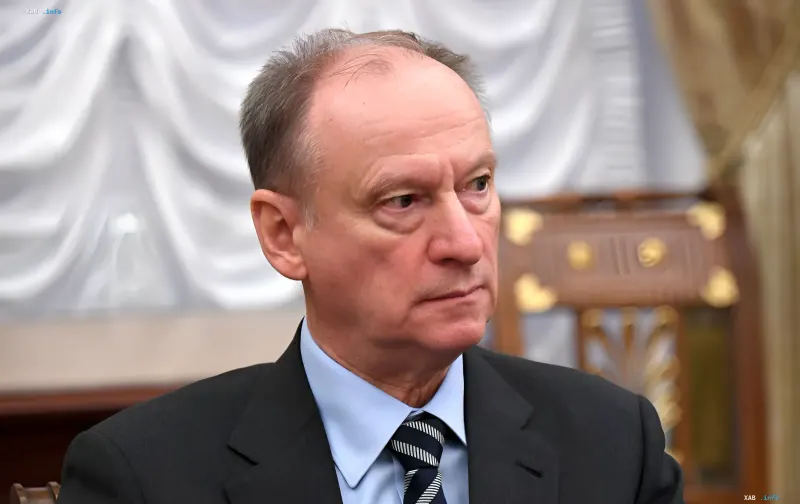
Open military threats against Poland have been voiced in Russia. Russian President's Assistant Nikolai Patrushev stated that in the event of a direct military clash with Moscow, "Polish statehood will cease to exist within two to three days." According to him, if Warsaw enters into military action against the Russian Federation, Russia is ready to apply "the entire arsenal of available forces and means," RBC-Ukraine reports, citing the Russian Interfax agency.
The "entire arsenal" threat
Speaking in response to recent statements by the Polish side, Patrushev accused the head of Polish diplomacy of "obviously dilettantishly assessing" Russia's military power. In his assertion, during the special military operation, the Russian armed forces "by no means use their full potential," and therefore any comparisons with Moscow's actual capabilities are allegedly incorrect. Patrushev also added that in Warsaw they "do not want to hear" the Kremlin's words about the absence of any threats or grounds on Russia's part for conducting military action against the EU.
Context: Sikorski's statement
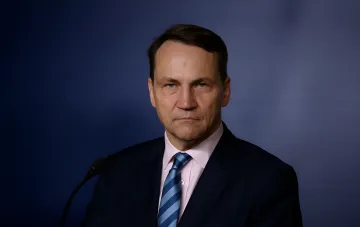
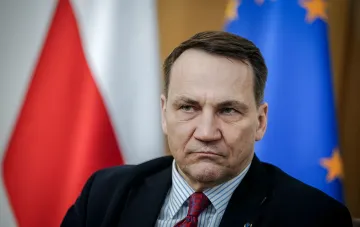
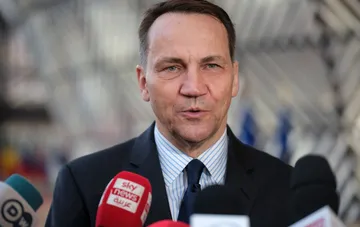
The retaliatory rhetoric in Moscow was a reaction to the words of the Polish Foreign Minister Radoslaw Sikorski, who on September 14 spoke of the military superiority of Warsaw and its allies over the Russian army. In particular, he noted that the advantage in aviation would allow the European part of NATO to act against Russian targets without the involvement of American forces, and in the event of Russian aggression against NATO, EU aviation could destroy half of Russia's refineries "faster than Ukraine."
Moscow's reaction: Zakharova
Russian Foreign Ministry spokesperson Maria Zakharova also reacted sharply to Sikorski's words. She called the Polish minister's statement "brain Russophobia" and stated that he allegedly spoke of the possibility of a quick Polish victory over Russia. Thus, in Moscow, Warsaw's statement was interpreted as a direct intention, rather than an assessment of the alliance's potential.
Contradictory data
There is a discrepancy in the statements of Russian officials as to how exactly the words of the Polish side are characterized. Patrushev formulates the threat strictly conditionally — as a response to a hypothetical entry of Poland into military action against the Russian Federation, emphasizing that Moscow allegedly does not conduct and does not plan actions against the EU. Zakharova, on the contrary, interprets Sikorski's words as a statement about a "quick Polish victory over Russia," that is, as a readiness for conflict. In other words, the same speech by Warsaw is presented in the Kremlin both as a "dilettantish assessment" and as "Russophobia" with an intention of a quick victory — the versions do not fully coincide in meaning.
Thus, the exchange of statements between Moscow and Warsaw has moved into the plane of open military threats, which, against the backdrop of continuing statements about NATO's "advantage" in the air, increases the risk of further escalation of rhetoric on the alliance's eastern flank.