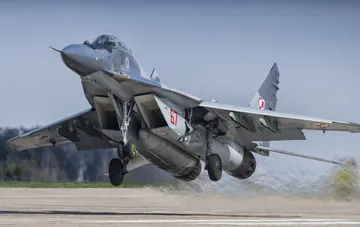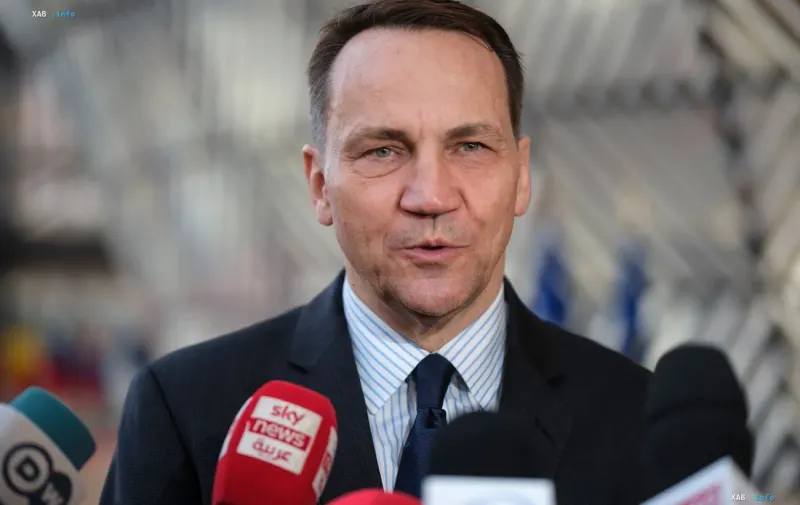
Radosław Sikorski, Poland's Foreign Minister, stated in a post on the social network X that in the event of Russian aggression against NATO, the Alliance's European air force, relying on air superiority, is capable of destroying half of Russia's oil refineries even without direct US involvement. According to him, such an operation would be carried out "faster than Ukraine," which has been carrying out precision strikes on refineries using drones for several years. The statement was made following Sikorski's visit to Kyiv and was interpreted as a demonstration of the readiness of European Alliance countries to independently deter Moscow.
Context: the state of Russian oil refining
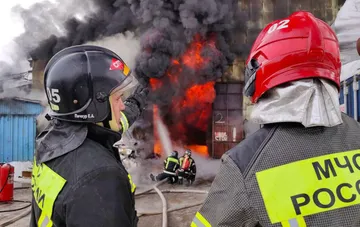
The Polish minister's statement came against the backdrop of worsening forecasts by the International Energy Agency (IEA) regarding oil refining in Russia. According to IEA data, the total refining output for the next 18 months is estimated at approximately 4 million barrels per day — 30% below the pre-war level. The agency notes that the industry is facing growing difficulties due to regular strikes by Ukrainian drones, while the restoration of damaged facilities is proceeding in a piecemeal manner and does not allow for compensating the losses. The combined impact of the attacks and prolonged repairs is gradually weakening the entire oil refining system in the Russian Federation.
Moscow's reaction: "cerebral Russophobia"
At the Russian Ministry of Foreign Affairs, the official spokesperson Maria Zakharova commented on Sikorski's statement. She criticized the words of the Polish minister, calling them "cerebral Russophobia," and asserted that Sikorski allegedly spoke about the possibility of a quick Polish victory over Russia. Thus, at the Russian foreign policy department, the interpretation of the statement was significantly narrowed: instead of a potential conflict between Russia and NATO, the focus was placed on a hypothetical bilateral war between Moscow and Warsaw.
Contradictory data
There is a fundamental discrepancy in interpretation between the original source and the Russian reaction. According to RBC-Ukraine and Polish media, Sikorski discussed exclusively the scenario of a direct conflict between Russia and NATO as a whole, emphasizing the role of the Alliance's collective air force and its air superiority. None of the European sources citing his post mention the thesis of a "quick Polish victory." At the same time, Russian media — life.ru, vz.ru — and Zakharova's statement build a narrative in which Sikorski allegedly called for a war precisely between Poland and Russia. Thus, one side speaks of NATO's collective deterrence, while the other — of a hypothetical bilateral confrontation, creating a notable information gap in the presentation of the same statement.
Broader context: NATO's activation on Russia's borders
Sikorski's statement fits into the broader course of Polish diplomacy aimed at strengthening the Alliance's military presence in Eastern Europe. As "Vzglyad" reports, citing data from September 13, 2026, Poland's Foreign Minister previously called on NATO to intensify exercises near the Russian borders. The totality of these signals indicates that Warsaw is consistently working to create the impression in Moscow of Europe's readiness for an independent military response in the event of escalation, not limiting itself to the framework of the American security umbrella.