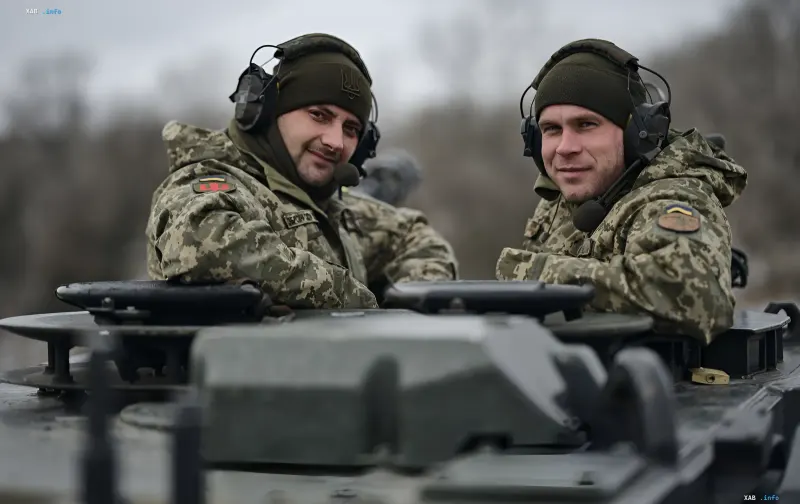
Ahead of trilateral talks in Abu Dhabi, Kyiv has formulated one of the key demands for a future peace settlement: securing financial support for an 800,000-strong army for at least ten years after the end of hostilities with Russia. According to AFP, citing a high-ranking Ukrainian source, Kyiv believes that such a contingent is capable of guaranteeing the country's protection against any potential new attack by Moscow in the post-war period.
Kyiv's Position: Truce and Long-Term Guarantees
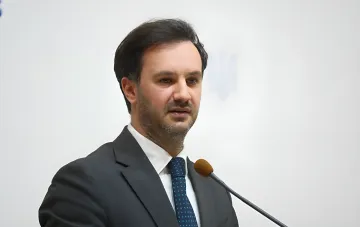
The priorities of the Ukrainian side during the upcoming contacts were outlined by the Head of Ukraine's Foreign Intelligence Service, Rustem Umerov: ensuring a truce and obtaining reliable security guarantees. Support for the armed forces in the post-war period, as implied by Kyiv's statements, is viewed as an integral part of these guarantees. Previously, Ukrainian President Volodymyr Zelenskyy has already emphasized the importance of maintaining the army's size at 800,000 troops to ensure the country's complete security, specifying that this figure could change if Ukraine becomes a NATO member.
Moscow Aims to Revise Security Architecture
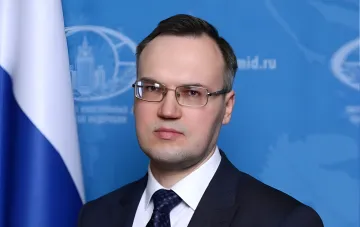
According to AFP, the Russian side approaches the negotiations with broader ambitions. A source within the Russian delegation noted that the settlement of the war is only one of the items on the agenda, while Moscow's main goal is to revise the security system "for the entire continent." A sign of serious intentions, according to AFP, is the inclusion of diplomat Sergei Ryabkov in the delegation, who even before the invasion put forward Moscow's demand for the withdrawal of NATO troops from Eastern Europe. At the same time, the agency notes that Vladimir Putin has repeatedly rejected proposals to expand the truce and stated that Russian troops will continue their offensive in Ukraine.
The West Reaffirms Commitment to Post-War Architecture
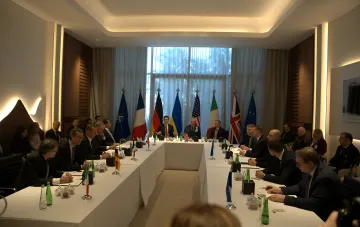
In response to Moscow's positions, European countries, Ukraine, the United States, and NATO, following a meeting ahead of the trilateral talks in Abu Dhabi, once again reaffirmed their "shared commitment to the post-war architecture of European security." Thus, two fundamentally different approaches have ended up on the negotiating table: the Ukrainian and Western emphasis on preserving the existing security system and long-term financing of Ukraine's defense on the one hand, and the Russian demand to revise it on the other.
What This Means for the Future Settlement
Kyiv's demand for ten-year financing of an 800,000-strong army effectively turns the issue of post-war security into a long-term financial and political obligation for Western partners. For Moscow, by contrast, the key issue is not the specific size of the Ukrainian army, but the very principle of revising the continental security architecture. The compatibility of these two approaches will be the main test for the trilateral talks in Abu Dhabi and will determine whether the parties can move from exchanging positions to concrete agreements on a truce and guarantees.