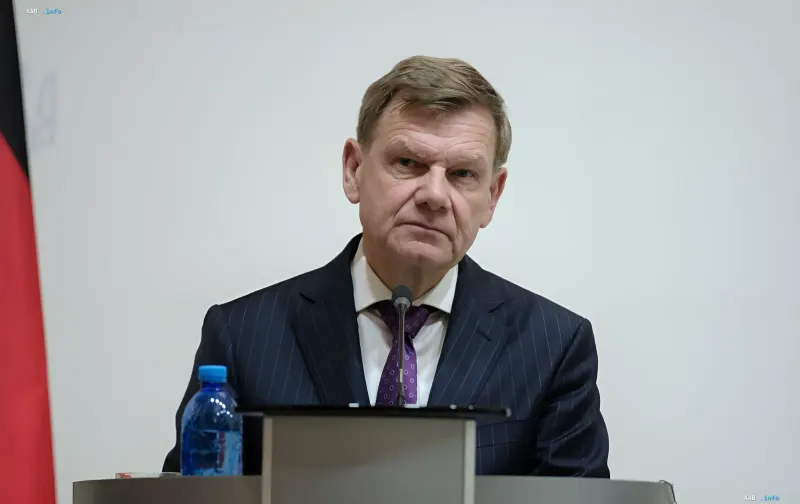
German Federal Foreign Minister Johann Wadephul, speaking at the NATO Parliamentary Assembly in Berlin, criticized Russian calls to return the alliance's architecture to its 1997 configuration. According to him, such demands from Moscow are "nonsensical," because by the same logic, Russia would be obligated to return Ukraine's seized eastern territories and Crimea. The statement comes against the backdrop of ongoing negotiations on conflict resolution and new Russian demands regarding NATO positions in Europe.
The '1997 Logic' and Moscow's Readiness
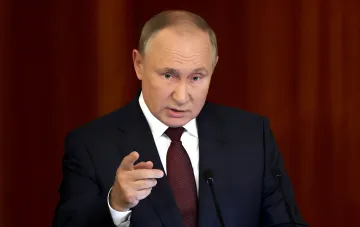
Wadephul directly linked Russia's rhetorical demands to its actual actions on Ukrainian territory. "Of course, it was nonsense when Putin spoke about returning to the 1997 situation, because for him that would mean having to return all the currently occupied territories of Ukraine in the east and Crimea. So, is Russia really prepared to do that? I don't think so. So let's be serious," the German Foreign Minister declared. Thus, in his assessment, the call for the alliance's "old borders" has no practical meaning as long as Moscow is not ready to relinquish occupied Ukrainian lands.
Europe's Established Security Architecture
The Minister emphasized that Europe already possesses an established security architecture, the foundations of which are set and not subject to revision under pressure from Moscow. According to him, Russia must adhere to the international legal obligations it has undertaken. "They must respect these legal frameworks that they themselves signed. This is the foundation of European security, and we will always defend it," stated Wadephul, defining legal norms as an unyielding condition for stability on the continent.
'Despite Russia, Not With Russia'
Separately, the German Foreign Minister outlined what he called a sober analysis of the situation: peace and stability in Europe, he declared, will be achieved "despite Russia, not with Russia." That is why, Wadephul emphasized, NATO states must strengthen both the alliance itself and their own defense capabilities. This statement marks a shift in Berlin's public rhetoric: European security is increasingly openly described as a structure built in conditions of long-term confrontation with Moscow, rather than in cooperation with it.
Solidarity with Poland and a Warning to Putin
Against the backdrop of Russian provocations, Wadephul expressed solidarity with Poland and assured that NATO allies are ready to defend their territory. "We will always defend every inch of NATO territory. That is absolutely clear. So, Mr. Putin, make no mistake. We are a defensive alliance, but we are ready to defend ourselves, our countries, and our alliance," the minister stated. This direct address to Moscow serves as a warning that any attempts to revise the alliance's borders will be met with a collective response.
Context: NATO's Position and the Abu Dhabi Talks
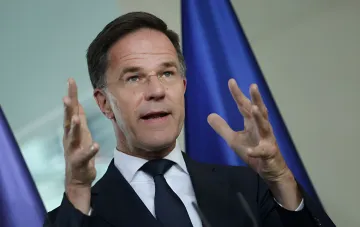
Wadephul's statement fits into a broader context. Earlier, NATO Secretary General Mark Rutte called Russia's calls to return to the European security system that existed before 1997 "unacceptable." During the Abu Dhabi talks on ending the war against Ukraine, Russia reportedly demanded that the alliance withdraw troops to the positions NATO held in 1997. Against this backdrop, the chairman of the US Senate Intelligence Committee, Republican Tom Cotton, stated that further negotiations with Russia on ending the war are pointless. These collective positions demonstrate that a unified line is forming within the Western political class: Moscow's demands for "de-escalation" through a rollback of NATO borders are viewed as incompatible with reality and the alliance's commitments.