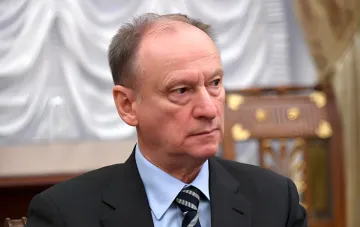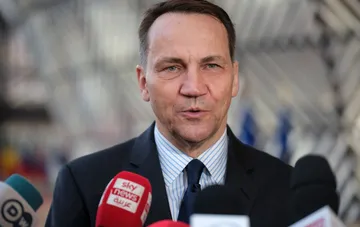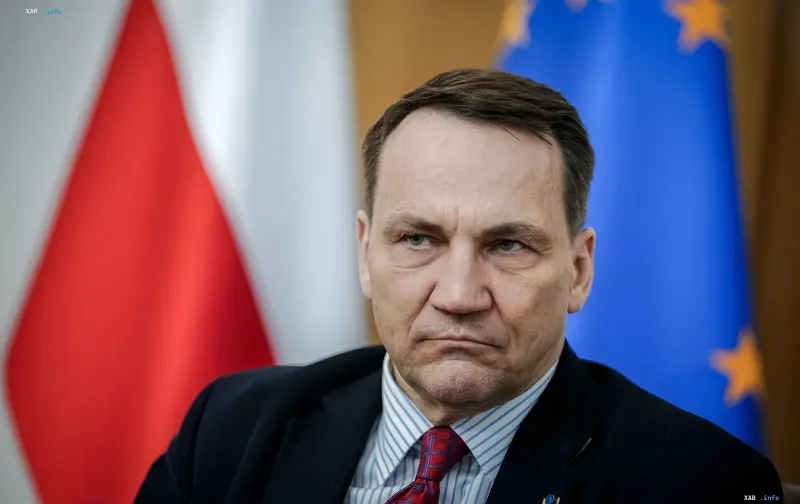
The head of Poland's foreign ministry, Radosław Sikorski, publicly commented on the resonant statements made by Nikolai Patrushev, an aide to the Russian leader, who in a recent speech claimed that Moscow could "destroy" Poland "in 2–3 days" in the event of a war between the two countries. According to Sikorski, Warsaw has no intention of reacting to such outbursts with panic: the diplomat emphasized that Russian generals have been threatening Poland with nuclear war for several decades, and that "Kremlin propagandists do so without ceasing." "The Soviet, and now Russian, comrades should realize the balance of power. They, too, must understand what they are getting into when they threaten us," the minister warned, speaking against the backdrop of the Polish and European flags.
Acknowledging the Advantage and Its Limits
In his speech, Sikorski publicly acknowledged that nuclear weapons are one of Russia's main trump cards and a significant strategic advantage in a hypothetical conflict with Poland. At the same time, he insisted that Moscow is in fact unable to make use of this instrument. "As Russia has learned from the example of Ukraine, this advantage is difficult to use. If Russia had been able to settle this war through nuclear blackmail, it would already have done so," declared the head of Poland's foreign ministry, pointing out that nuclear blackmail has proved an ineffective lever of pressure in the ongoing conflict in Ukraine.
Contradictory Data
When comparing the versions reported by different outlets, minor discrepancies are noted in the wording of the timeframes and the speaker's status. In some sources, Patrushev's threat is conveyed as the destruction of Poland "in 2–3 days," while in others it is described as the end of the country's existence "in three days." In addition, a number of publications refer to Patrushev as an "aide to the Russian dictator," whereas in official Russian terminology he holds the post of assistant to the president. These differences concern the precision of the wording rather than the substance of the statement: in every version, the issue is a public threat of a rapid military defeat of Poland and Warsaw's response to that threat.
A Broader Context: Lavrov's Rhetoric
Sikorski's speech fits into a broader context of the escalation of Moscow's public rhetoric toward Europe. Earlier, according to Ukrainian media, Russian foreign minister Sergey Lavrov publicly threatened Europe with a "very short" war with Russia, and also spoke of the "start of a real war" with Germany. Against this backdrop, Warsaw's position—combining an acknowledgment of Moscow's nuclear superiority with the assertion that it cannot be applied—appears as an attempt simultaneously not to escalate tensions and to delineate for the Kremlin the limits of acceptable pressure.
Thus, the key message of Poland's foreign ministry is that, in Sikorski's assessment, nuclear deterrence does not turn into a working instrument of waging war, and threats of a rapid defeat of Poland do not correspond to the real balance of power in Europe. The further dynamics will depend on whether Moscow maintains its course of nuclear blackmail rhetoric and how Poland's allies within NATO and the EU respond to it.