The future of combat operations in Ukraine is directly linked to the development of robotics and artificial intelligence. The key factor that will determine the advantage on the battlefield in the coming years will not simply be the number of unmanned aerial vehicles (UAVs), but their ability to operate autonomously and in coordination with one another.
This was stated by Brigadier General Andriy Lebedenko, Deputy Commander-in-Chief of the Armed Forces of Ukraine, in an interview with RBC-Ukraine journalists. According to him, the army is already moving towards the creation of fully integrated systems where human influence on the control process is minimized, while the speed of decision-making increases.
From Manual Control to Full Autonomy
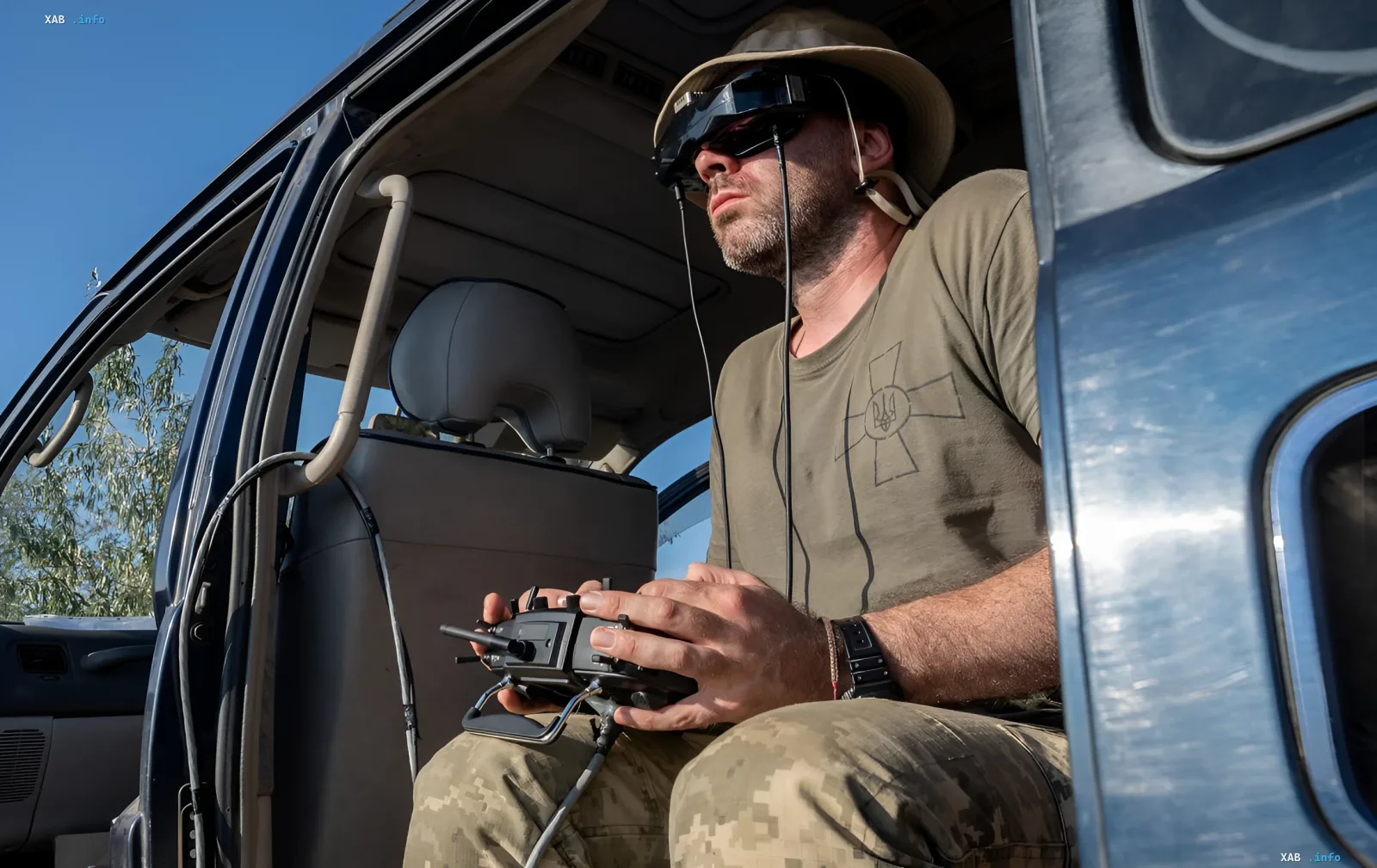
Today's war has already demonstrated the effectiveness of drones; however, General Lebedenko emphasizes that the real breakthrough will occur when UAVs learn to interact within a single network. This refers to a transition from tactics where an operator manually controls each device to a system where drones independently coordinate their actions and perform assigned tasks.
"I see that a huge increase in efficiency will be provided by the integration of drones on the battlefield, when they become more autonomous and can perform tasks in interaction with each other and with systems," noted the Deputy Commander-in-Chief.
At the tactical level, this means that each individual drone must possess intelligence that allows it to be part of a complex system. This will accelerate operations and reduce the load on personnel, allowing them to focus on strategic issues.
The Role of Situational Awareness and AI
A critically important aspect of the new doctrine is the scaling of situational awareness. General Lebedenko emphasizes that without high-quality target detection, the effective application of assets is impossible. This is where integration with artificial intelligence comes to the fore.
"This is a very important story, because if I do not detect, I cannot effectively work against these assets. I see very big advantages in autonomy and in integration with artificial intelligence," Lebedenko concluded.
The system must be configured to automatically process huge arrays of data received from drones and instantly transmit them to the necessary command points or combat vehicles.
Global Interest in Ukrainian Developments
The experience accumulated by the Ukrainian army in the use of unmanned vehicles is already attracting interest from global arms manufacturers. Thus, American companies are preparing to launch the production of Magura sea drones, which were developed and first tested specifically during the war in Ukraine.
Furthermore, Ukrainian engineers continue to improve strike complexes. A bright example is the "February" drone, which was modified into a missile carrier. This novelty was first presented to the general public at an international exhibition in the UK, confirming Ukraine's status as one of the leaders in the field of tactical robotics.