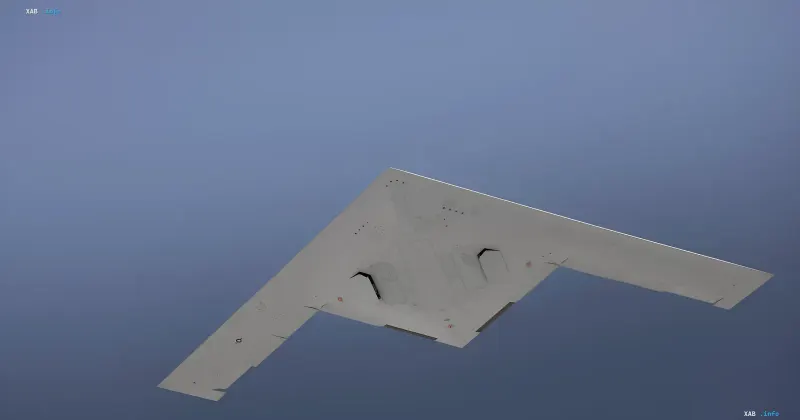
The United States has initiated a massive expansion of its key defense manufacturing facility to dramatically accelerate the production of the advanced B-21 Raider strategic bomber. The US Air Force command, alongside Northrop Grumman, officially broke ground on a new final assembly line located at the renowned Plant 42 in Palmdale, California. This decisive move comes amid rapidly rising global geopolitical tensions and the pressing need to swiftly modernize the American strategic triad.
Infrastructure Project Scale and Financial Investment
According to official statements from the US Air Force press service, the current project involves the construction of over 90,000 square meters of brand-new manufacturing space. This initiative is part of a comprehensive agreement between the United States Department of Defense and Northrop Grumman. The provisions entail a 25 percent increase in the annual production rate of the B-21 Raider stealth bomber. To ensure uninterrupted funding and expedite the delivery of the planned 100-aircraft fleet, the Pentagon has formally requested an additional $4.5 billion budget from Congress.
Technical Features and Ongoing Flight Testing
The next-generation B-21 Raider strategic bomber represents the pinnacle of modern stealth aviation technology. The aircraft is specifically engineered to defeat the most sophisticated enemy air defense systems and deliver devastating precision strikes across intercontinental ranges. The aircraft is capable of carrying both conventional ordnance and nuclear weapons. Currently, the innovative bomber is undergoing rigorous flight testing, with the first operational aircraft slated to arrive at Ellsworth Air Force Base in South Dakota by 2027.
Contradictory Data
Amid official plans for a fixed production run of 100 aircraft, experts and military circles are actively debating whether this volume will suffice. Recently, US Strategic Command chief Admiral Richard Correll told lawmakers that, in his view, the planned number of B-21 bombers should be increased to at least 145 to ensure a decisive advantage over potential adversaries such as Russia and China. Although military leadership advocates for expansion, the baseline defense budget currently focuses on the procurement of the initial 100 units.
Expert Analysis and Long-Term Implications
Accelerating the construction of the Palmdale assembly line marks a pivotal turning point in American military-industrial policy. Analysts note that the Pentagon is shifting away from the bespoke creation of expensive technology prototypes toward building scalable serial deterrence capabilities. The success of the B-21 Raider program will shape the strategic balance of power for decades to come, while significantly impacting US defense expenditure structures and global technological competition.