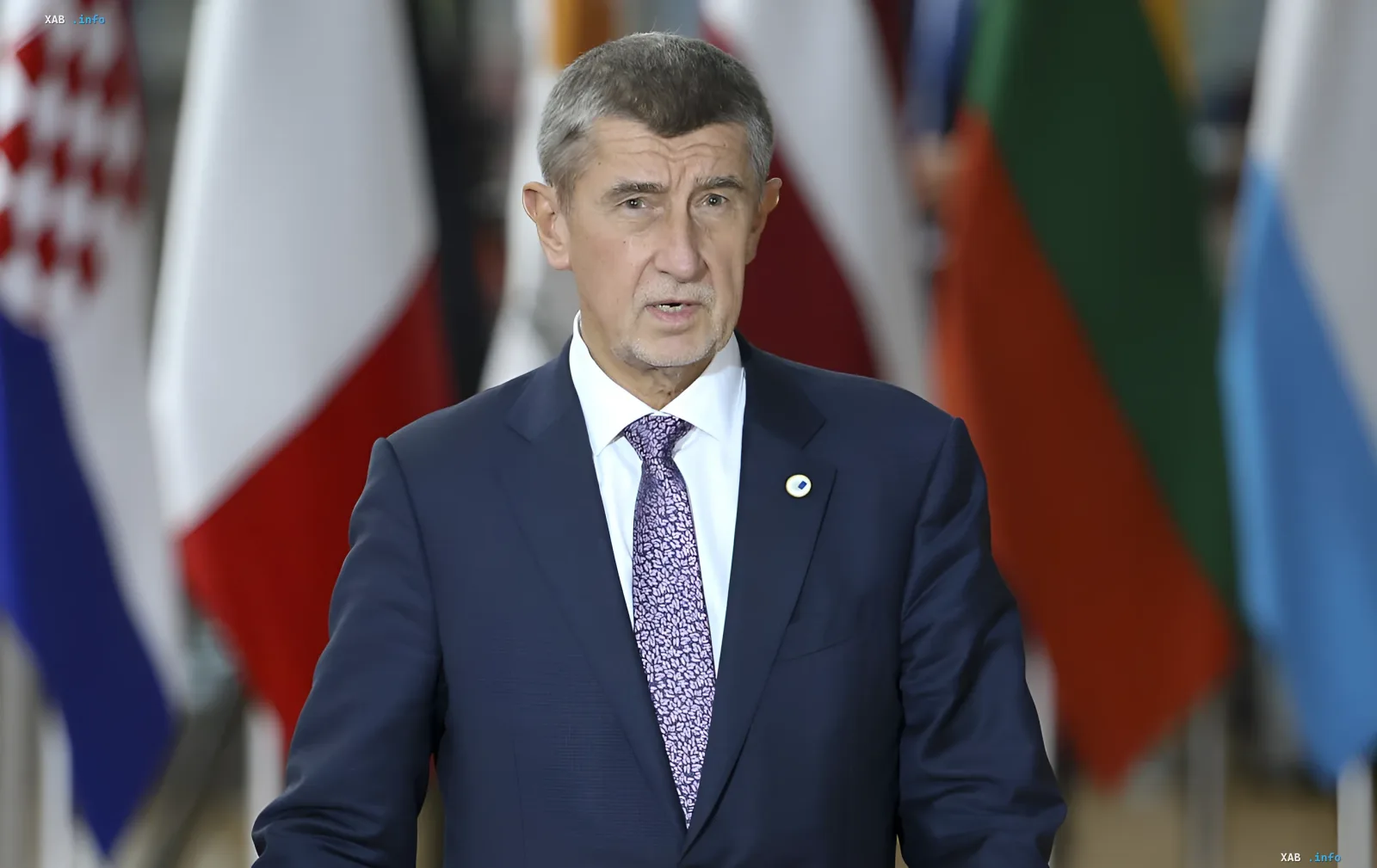
Prime Minister of the Czech Republic Andrej Babiš made a sharp call for a diplomatic settlement of the Russian-Ukrainian conflict at the Prague Defense Summit. In his words, an agreement on ending Russia's war against Ukraine must be reached for the sake of the security of all of Europe, and to that end the leaders of the countries concerned must be "forced to sit at the negotiating table." This was reported by RBC-Ukraine, citing a statement by the head of the Czech government, as relayed by Ukrinform.
"Diplomacy Is Not Weakness"
At the heart of Babiš's speech was the thesis that Europe and the US are obliged to stop the war by diplomatic means. "We must stop this war. It is clear that Putin is the aggressor; he is truly doing something unacceptable… Europe, together with the US, must force both President Zelensky and President Putin to sit at the negotiating table. Diplomacy is not weakness. It is the only way forward," he stated. Thus, the Czech prime minister explicitly included not only the Russian leader but also the President of Ukraine among those who need to be "forced" to negotiate.
Criticism of European Passivity and a Signal from Trump
Babiš also commented on Washington's position, stating that US President Donald Trump is sending a "clear signal": this war is, above all, a European problem. At the same time, he described Europe itself as "pathologically passive, wholly unable or unwilling to act." The Czech prime minister emphasized that the full-scale Russian war against Ukraine has lasted 99 days longer than World War I, and called on the countries of the world to prevent a global conflict. "We need strong European leadership… The price of our current wavering is destructive… I am not afraid to say it out loud: the path the world is currently on does not lead to security. It leads straight to the gates of hell. It is leading us to a Third World War," he declared.
Context: a Common European Air Defense System and the "Carpathian Eight"
The speech was delivered against the backdrop of other initiatives in which Prague is involved. It had previously been reported that Babiš supported the idea put forward by Ukrainian President Volodymyr Zelensky to create a common European air defense system, which, according to Kyiv's assessment, would strengthen Europe's contribution to NATO. In addition, Ukraine has formed a new cooperation format called the "Carpathian Eight" (C8), designed to strengthen cooperation among the region's countries in the fields of security, energy, and economics; the Czech Republic has joined this format as well. Thus, Babiš's call for negotiations is voiced in parallel with his support for defense and regional projects linking Prague with Kyiv.
Contradictory Data
There are notable inconsistencies in the statements of the parties and in the chronology of the sources that should be taken into account. On the one hand, Babiš insists that both Zelensky and Putin must be "forced" to sit at the negotiating table, calling diplomacy the only way. On the other hand, according to previously recorded statements by Kyiv (including those reflected in materials on Ukraine's position on negotiation formats), Ukraine does not recognize negotiation formats that do not correspond to its interests and do not guarantee its security. This creates a contradiction between Prague's rhetoric of "forced negotiations" and Kyiv's diplomatic line. In addition, open sources record different "references" to the days of the war (for example, day 1090 in February 2025 and day 1250 in July 2025), which corresponds to a chronology starting from February 24, 2022, but shows that different outlets count the date of the conflict differently; Babiš's claim that the war has lasted 99 days longer than World War I is also his assessment, not a neutral fact.