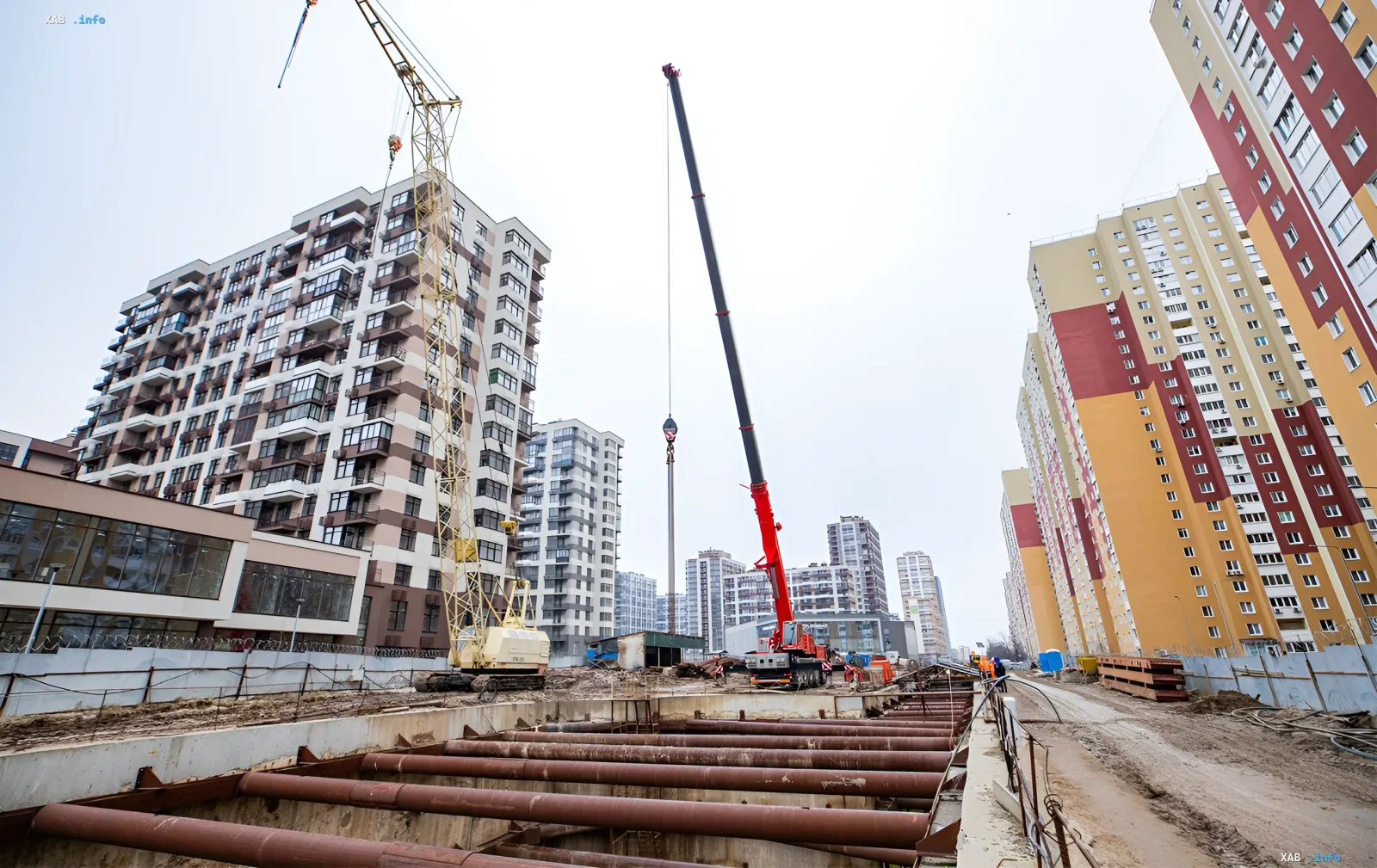
In August 2026, the Ukrainian real estate market faced a fundamental shift in financing logic. The traditional model, where banks financed developers in the early stages, effectively ceased to work. Under strict risk management, financial institutions refused to issue loans for projects at the 'zero cycle' or excavation stage. This forced leading developers to seek alternative sources of capital, and the market's response was the mass creation of their own investment funds.
Why banks fear the 'zero cycle'
The key problem lies in risk assessment. As Elena Dmitrieva, First Deputy Chairman of the Board of 'Globus Bank', explained to RBC-Ukraine, objects in the early stages of construction remain the most risky assets. The banking sector, recovering from crises, has revised its priorities: lending is now available primarily for objects with a high degree of completion — from 50%.
For banks, not only the physical parameters of the construction site are critical, but also the transparency of documentation and the impeccable reputation of the developer. In the absence of 'bank support' at the start of projects, developers have to seek external resources to avoid stopping work. It is this financing vacuum that has become the catalyst for the emergence of new financial instruments.
Market transformation: from bonds to REIT
The real estate market has followed the path previously taken by international players. As Vladislav Svistunov, Asset Manager at ICU Investment Group, noted, after the rapid development of the corporate bond market, the next logical step was the development of the REIT (Real Estate Investment Trust) model. Most investors perceive real estate as an understandable and reliable asset, making this model attractive.
Leading market players, such as Taryan Group, blago, and system developer RIEL, have already launched their own investment funds. This allows them to attract citizen capital directly, bypassing the banking filter, which at this stage blocks access to financing for new projects.
How Ukrainian 'REITs' work in reality
It is important to understand that classical REITs (Real Estate Investment Trusts) do not legally exist in Ukrainian legislation. Their role is performed by Joint Investment Institutions (JII) in the form of corporate (CIF) and mutual (MIF) investment funds. The activities of these structures are under the supervision of the National Commission for Securities and Stock Markets (NCSSM).
Data from the Ukrainian Association of Investment Business (UAIB) confirms the trend: by the end of 2025, out of 1,892 active funds, over 93% were closed corporate and mutual funds. This form is most adapted to the long cycle of construction and real estate implementation, allowing funds to be accumulated for years.
Economic pros and cons for the investor
The main advantage of JIIs is tax optimization: the fund's profit is not taxed until dividends are paid to depositors. This allows developers to direct all accumulated capital directly into the construction process without losing funds to intermediate taxation.
The entry threshold for such funds varies depending on the type of real estate. In the commercial real estate segment, participation is possible from 1,000 hryvnias, while for residential projects, the minimum check starts at approximately 150,000 hryvnias. However, experts warn of risks: in crisis periods, exiting an investment may be accompanied by a significant loss in value. Moreover, success depends on the quality of the business model of the specific object and the expertise of the management company.