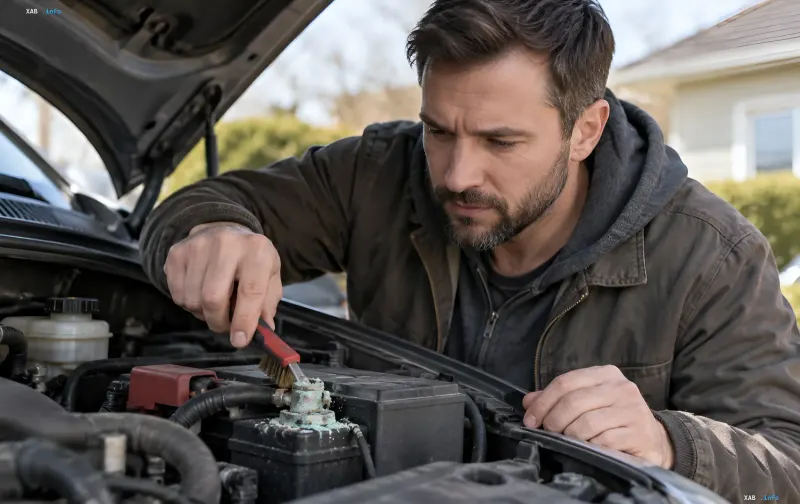
White, blue, or greenish buildup around car battery terminals is not just a cosmetic defect, but a sign of active corrosion. According to Styler (a RBC-Ukraine project), such a film forms as a result of chemical reactions involving metal, electrolyte vapors, and gases released by the battery during operation. Hydrogen and electrolyte vapors settle on metal contacts and trigger oxidation processes, while the color of the buildup depends on the alloy from which the terminals and clamps are made.
Why contact corrosion is dangerous
The main problem of oxidation is the deterioration of the electrical contact between the battery and the car's wiring. Current flows less effectively, making engine startup difficult, causing headlights to flicker, and discharging the battery faster. As Interstate Batteries notes, such symptoms are often mistaken for a discharged or worn-out battery, so it is recommended to check the condition of the battery itself after cleaning the contacts — especially if starting problems persist.
What you will need and safety rules
For DIY cleaning, baking soda, water, a small brush (a specialized battery terminal brush works well), a clean rag, protective gloves, and safety glasses are sufficient. Before starting, turn off the engine and ignition, wait for the engine compartment to cool down, and choose a well-ventilated area. Smoking, open flames, and sparks are strictly prohibited: explosive hydrogen may be released during battery operation. Interstate Batteries' recommendations emphasize that the solution should be applied only to contaminated areas, rather than poured over the entire battery.
Step-by-step DIY cleaning
The procedure takes about 15 minutes and requires no expensive tools. First, disconnect the terminals (following the manufacturer's instructions — vehicles with start-stop systems and complex electronics may require a special procedure and subsequent settings), then wash off the buildup with a baking soda solution using a brush and dry the contacts with a clean rag. After this, a special battery terminal protector can be applied to the outer surfaces of the contacts to slow down re-oxidation. It is important not to apply the compound between the metal contact surfaces: the clamp must fit snugly against the battery post. An alternative, simpler protection method is a thin layer of petroleum jelly, as advised by pravda.ru.
When it's time for a service center
Regular battery inspection and checking clamp security help avoid recurring problems. If the buildup returns too quickly, the battery casing is damaged, or the car continues to start poorly, diagnostics at a service center are necessary: a mechanic will check the condition of the battery, alternator, and charging voltage. Cleaning the contacts will not fix the issue if the root cause of the corrosion lies in charging system problems.