
In conditions of economic instability and seasonal price fluctuations, the topic of creating household food reserves remains relevant for millions of households. However, simply accumulating products in store-bought bags often leads to regrettable results: the appearance of pantry moths and weevils, and grain spoilage. Experts and experienced cooks, including blogger Dasha Yevtukh, share proven methods that allow grains to be kept in perfect condition for a long time.
Thermal Treatment: Cold or Heat?
The key stage in preparing grain for long-term storage is the destruction of insect larvae, which may be present in the grain even at the production or transportation stage. There are two main methods of treatment, each with its own advantages. The first method is shock freezing. The product must be placed in the freezer for two to three hours, or better yet, left there overnight. This guarantees the destruction of pests.
The second method involves using an oven. The grain should be dried at a moderate temperature and then allowed to cool completely. It is important to note that after any thermal treatment, the product must be absolutely dry before being placed in storage containers. Residual moisture is the main enemy, capable of causing mold even in the absence of insects.
Packaging Rules: Airtightness and Bay Leaves
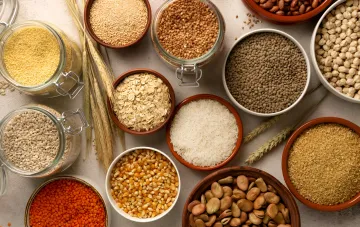
After treatment, the grain must be transferred from the factory packaging into clean, dry glass jars. Glass is the preferred material as it does not absorb odors and does not allow moisture to penetrate inside. For additional protection against insects, it is recommended to place 1-2 bay leaves inside the jar. The sharp smell of bay leaves acts as a natural repellent, driving away pests. After this, the container must be tightly closed with a lid. It is precisely airtightness that ensures protection from external moisture and re-entry of insects.
Economic Feasibility of Reserves
Despite the popularity of the idea of creating large reserves, experts call for a rational approach. Mass purchasing of products out of fear of shortages or sharp price increases can lead to part of the products spoiling before use. The optimal strategy is to gradually replenish supplies in small batches—one or two packs at a time. This allows maintaining the necessary level of food security without unnecessary financial costs and the risk of product spoilage.
Contradictory Data
While the method of freezing and drying in the oven is generally accepted and safe, there are disagreements within the expert community regarding the duration of storage. Some sources claim that if all conditions are met (airtightness, dryness, treatment), grains can be stored for years without loss of quality. Other specialists point out that even under ideal conditions, grains have a shelf life, and long-term storage (more than 1-2 years) can lead to a loss of taste and nutritional properties, as well as oxidation of fats in the grain composition. Thus, while methods of protection against weevils work flawlessly, the question of how long processed reserves can be stored remains debatable.