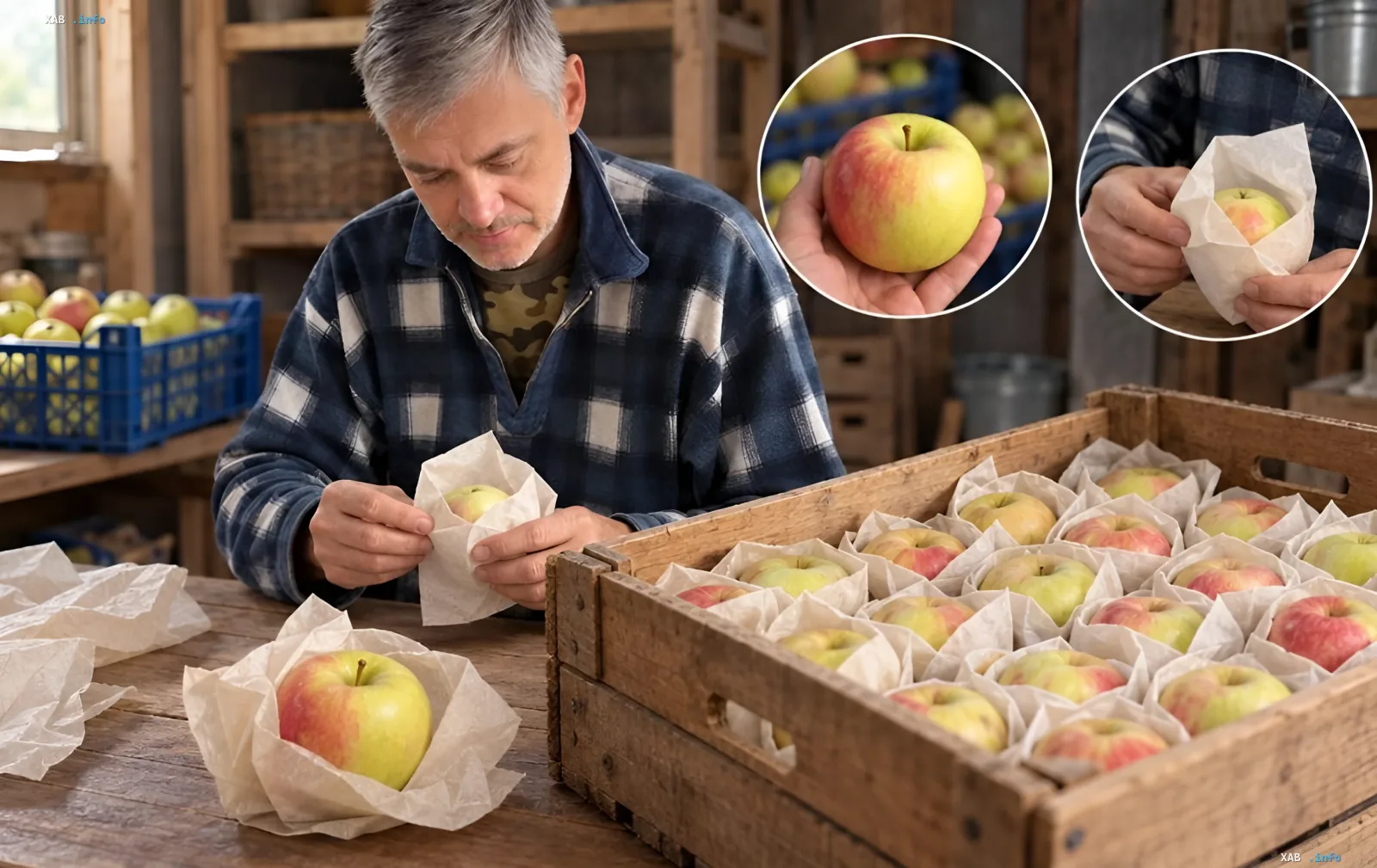
Autumn is the time when the apple harvest is put away for long-term storage, and whether the fruit will last until spring or have to be processed within a few weeks depends on how correctly it is stored. The Styler project (RBC-Ukraine), citing a video by an Instagram teacher and cook @iryna_yesman_food, broke down a simple "old-school" method: each apple is individually wrapped in thin paper and placed in crates. According to the video's author, this is exactly the approach that allows the fruit to stay fresh longer and retain its flavor.
Sorting and Selecting the Fruit
Before storing the harvest, the apples must be sorted: only whole, healthy fruits without cracks, dents, bruises, or signs of rot are kept for storage. Even a small damage to the skin can become the point from which spoilage begins. Late autumn and winter varieties are best suited for long-term storage. They should be handled carefully — not thrown into the crate and not squeezed with the fingers — so as not to create micro-injuries that are invisible at first glance.
Preparation Before Storing
Apples do not need to be washed before being put into storage: if the fruits are wet, they are first thoroughly dried. Then each apple is individually wrapped in thin, clean paper, placing the fruit stem-side up and carefully wrapping it on all sides. Ordinary thin paper or parchment will do; if newspaper is used, it is important that it has no colored printing. Individual wrapping isolates the fruit from its neighbors and reduces the risk of rot spreading.
Containers and Storage Conditions
The wrapped apples are placed in one or several layers in wooden or cardboard crates, without being packed tightly: a little space should be left between the fruits. The best place for the harvest is a cool, dry, well-ventilated room with a stable temperature: a basement, cellar, or suitable barn. The crates are not placed directly on the floor, in order to protect the bottom row from dampness and temperature fluctuations.
Monitoring and the Main Rule
During storage, the apples are inspected regularly: a fruit that has begun to spoil is removed immediately, otherwise the rot will quickly spread to the neighbors. The main rule of long-term storage remains simple — quality fruits, clean paper, the right containers, and regular monitoring of the harvest. Under such conditions, apples are kept noticeably longer, although the exact period always depends on the variety and the conditions in the room.