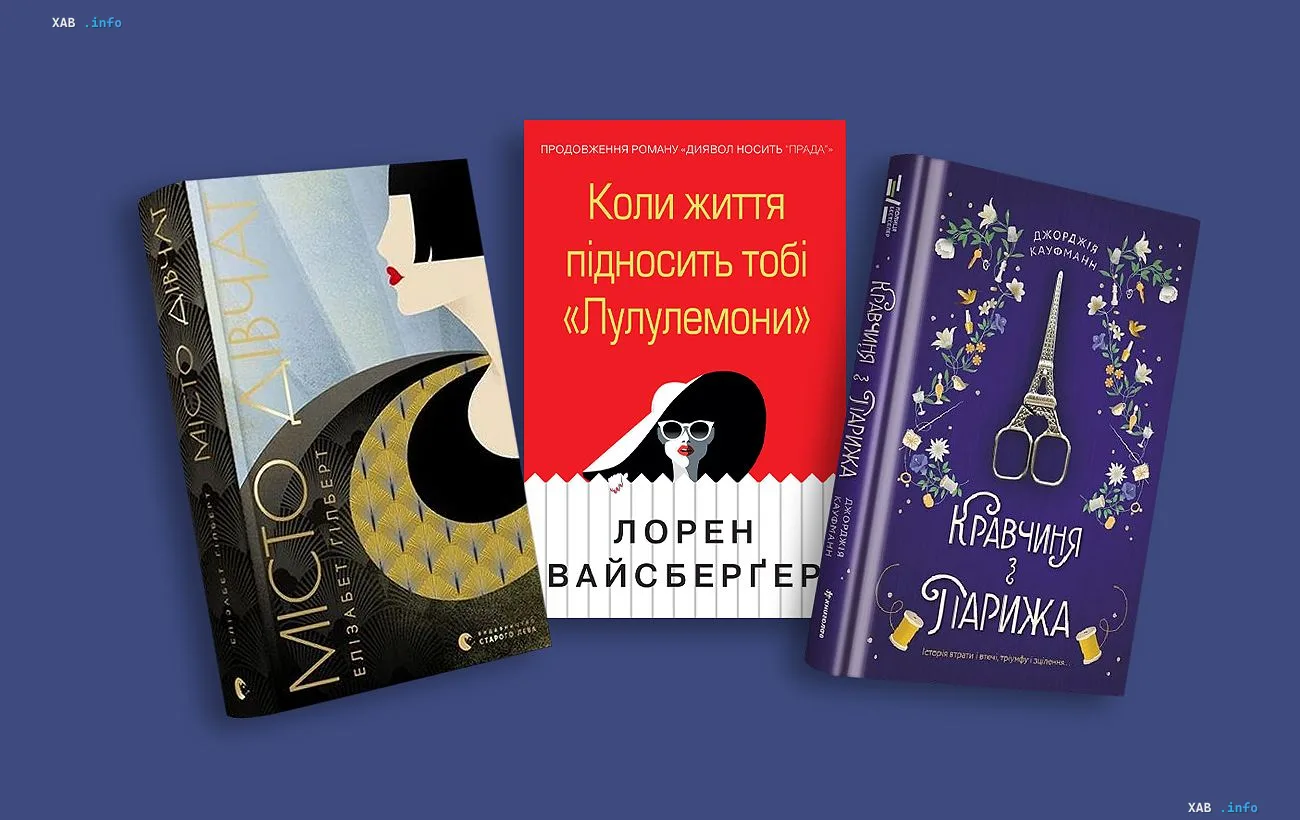
With the arrival of autumn, reading habits change: light summer stories give way to dense, atmospheric novels that you want to read with a cup of tea by the window. Among the many genres, a special place is occupied by literature in which fashion stops being a backdrop and becomes a full-fledged character — with its own personality, conflicts, and drama. It is precisely these books that allow you to leave the routine behind for a few hours and find yourself in the world of runways, Parisian ateliers, bohemian parties, and the backstage life of the theatre. The WAVE editorial team (the lifestyle project of RBC-Ukraine) has put together a selection of three fiction novels in which the fashion industry and style become not just a decoration, but a key element of the plot.
An Italian mountain village and the road to a fashion empire
The first novel in the selection tells the story of Rosa Kustacher — a woman who knows how to pick the perfect outfit for any occasion and turns this talent into the foundation of her own fashion empire. However, behind the shine of today's success lies a difficult past: Rosa was born in a small Italian mountain village, survived the German occupation, was forced to flee and move from country to country, each time starting life from scratch. The novel is structured as a confession: the heroine is finally ready to stop chasing success and tell the truth about herself. It is a story about how war, relocations, and the loss of a home shape a character, and how a sense of style becomes not just a profession, but a way to survive and assert oneself in a foreign world.
New York, 1940: freedom, theatre, and the first outfit
The second novel is a world bestseller about women's freedom, the right to be yourself, and living the way you want. The story begins in New York in 1940: nineteen-year-old Vivian is expelled from a prestigious college, and the girl is forced to move to Manhattan to live with her eccentric aunt, the owner of a small theatre. It is there that Vivian discovers the pre-war bohemian life: parties, stars, theatrical premieres, and the feeling of boundless youth. But the main discovery awaits in a practical dimension — Vivian finds her calling and begins creating costumes for performances and fashionable outfits for herself and her friends. It turns out she has a real talent: from any piece of fabric she is capable of making a masterpiece. The novel combines the lightness of New York bohemia with a deep plot about self-determination and creative awakening.
The legacy of Miranda Priestly: a new chapter of fashion drama
The third novel in the selection is a continuation of the cult story about fashion, runways, and the harsh work in the fashion industry. At the center of the plot is Emily Charlton, the former first assistant to the legendary Miranda Priestly, who today works as a successful image consultant and is used to serving superstars. However, lately she has been unlucky with clients, until fate brings her together with Caroline Hartwell — a world-famous model and the wife of an ambitious senator. The new story promises no less sharp conflicts and vivid characters familiar to fans of the original. It is worth noting that, as of now, there is no Ukrainian translation of the original novel 'The Devil Wears Prada,' however the sequel — 'When Life Gives You Lululemons' — is available to readers.
Why now: fashion as an antidepressant
All three novels are united not only by the theme of fashion, but also by a common emotional purpose: they help you escape the everyday and, for a moment, be transported to a world where beauty, style, and creativity matter most. In conditions of information overload and autumn melancholy, such books work as a soft 'anchor' — they do not require analytical thinking from the reader, but they offer atmosphere, character, and a sense of belonging to something greater than the daily routine. Whether it is mountain Italy of the occupation era, pre-war New York, or the modern fashion industry — in each of these worlds fashion becomes the language in which the heroines speak about themselves, their freedom, and their right to happiness.