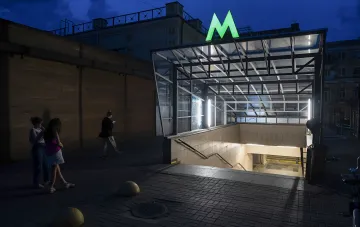
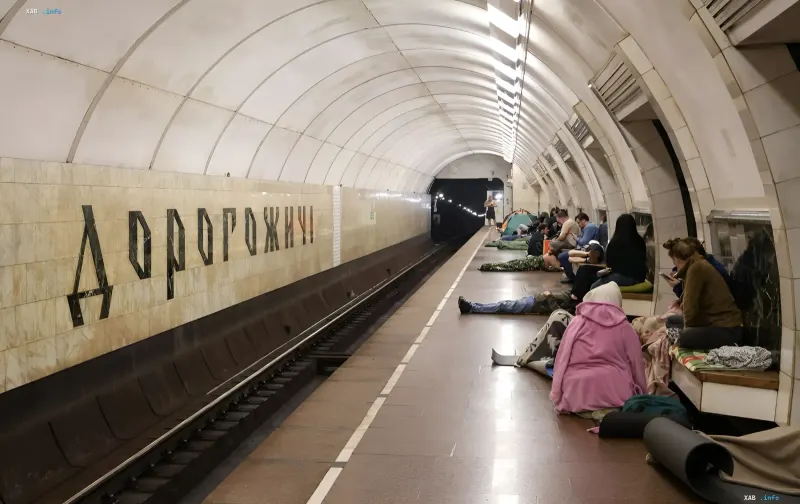
For many Kyiv residents, the metro has become not just a mode of transport, but a life-saving shelter amidst the war. Stations such as "Dorohozhychi" are often filled with people seeking protection from nighttime air raid alerts. However, looking at the empty tracks, passengers often wonder: why aren't trains parked at the stations when the city sleeps? The answer lies in the massive and invisible work that takes place underground while passengers are safe.
24/7 Operation and the Night "Window"
The Kyiv Metro operates on a 24-hour schedule. However, the nighttime hours are critical for maintaining its functionality. According to the press service of the Kyiv City State Administration (Kyiv City Council), citing the communal enterprise "Kyiv Metro," the 825 V voltage is disconnected from the third rail during the night. This creates a unique "technological window" necessary for carrying out work that is impossible while passenger trains are moving.
Every night, nearly 700 employees go on shift. Their task is to prepare the infrastructure for the new day so that trains can safely enter the line in the morning.
Safety on the Rails
One of the most complex and important tasks is the maintenance of the tracks and tunnel structures. Specialists from relevant services replace rails, sleepers, and switch points during the night. Without this work, safe train movement would be impossible.
A key stage is rail defectoscopy. This is a procedure to control the technical condition of the tracks, allowing for the timely detection of damage. During one night shift, a crew inspects about 3 kilometers of track. Any malfunction detected at this time is eliminated immediately, preventing accidents during rush hour.
Tunnel Surgery
Work is carried out not only at rail level but also within the tunnel structure itself. Specialists inspect the vaults, check the dimensions of artificial structures, and eliminate leaks. Eliminating "wet spots" and monitoring the condition of structures is routine but vital work that remains unnoticed by passengers but guarantees the integrity of the city's underground framework.
Logistics in the Dark
Executing such a volume of work requires complex logistics. At night, special technological transport—motorized railcars—travels along the tracks. They deliver the necessary equipment, tools, materials, as well as new rails and sleepers to the work sites.
It is precisely the need for free space for this utility transport that explains why passenger trains are not parked on station tracks at night. If trains were standing on the platforms, access for repair crews to the tracks would be blocked, and the metro would not be able to function the next day.
The Invisible Front
Most of this work remains off-camera. Passengers only see the result: clean carriages, working escalators, and smooth train movement. However, behind this uninterrupted service stands the hard work of hundreds of people who "heal" the underground every night so that in the morning it can again receive thousands of people seeking refuge from the war.