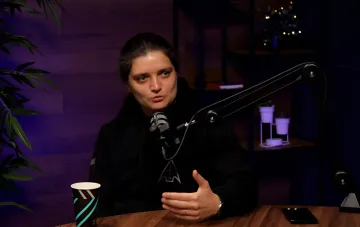
In the RBC-Ukraine podcast "TSE BAZA" (This is Base), volunteer, veteran, and head of the Victory Drones project Maria Berlinska proposed systematically recruiting foreign citizens to fill 25–30% of Ukraine's mobilization plan. According to her, while Russia is recruiting thousands of foreigners per month, in Ukraine, this work is only handled by individual units at the initiative of commanders. Two years ago, Berlinska said, she helped create a Foreigner Recruitment Center, designed to run information campaigns for foreign candidates, cover logistics, and facilitate contract signing.
A systemic approach instead of one-off initiatives
Berlinska emphasized that attracting foreigners requires not just recruitment, but training and support. She acknowledged that some foreigners who arrived left with negative feedback, complaining of rude treatment and being deceived due to their lack of knowledge of the language and culture. That is why, she argued, a centralized mechanism is needed to handle information campaigns, logistics, and legal contract processing.
Business is ready to cover transport costs
According to Berlinska's assessment, businesses in Ukraine are ready to "chip in" for the transport of foreign contractors. Bringing one person, she says, costs roughly $800–1000, after which they sign a contract and serve on general terms funded by taxes. Berlinska argued: if choosing between sending a qualified engineer to the front or replacing them with two citizens of Colombia, a businessman would likely choose to bring the two for $2,000.
Figures: five to eight thousand people per month
Berlinska stated that foreigners "fight great" and cited examples of units showing "striking results." On this basis, she questioned why the mobilization plan shouldn't be at least a third filled by foreigners. If, as she notes, 20,000 people are needed per month, she estimates that 5,000 to 8,000 could realistically be recruited from Africa, Latin America, and Asia.
Context: the debate on reservation and quotas
Berlinska's statement came amid an ongoing discussion about mobilization and military reservation mechanisms. Previously, RBC-Ukraine reported that the Ministry of Defense advocated for maximum reservation of defense industry workers, while the Ministry of Economy proposed reducing the industry quota from 100% to 85%. Also, the base reservation quota was lowered to 95%, and critical enterprises were granted an additional 31-day period to adjust the number of reserved personnel. In this context, the initiative to attract foreigners is being considered as one possible tool to reduce the burden on the domestic workforce.