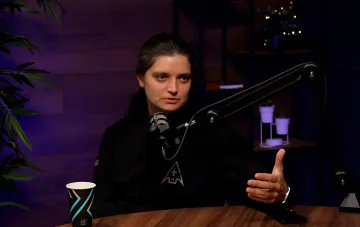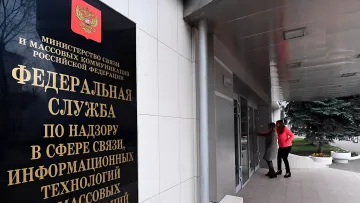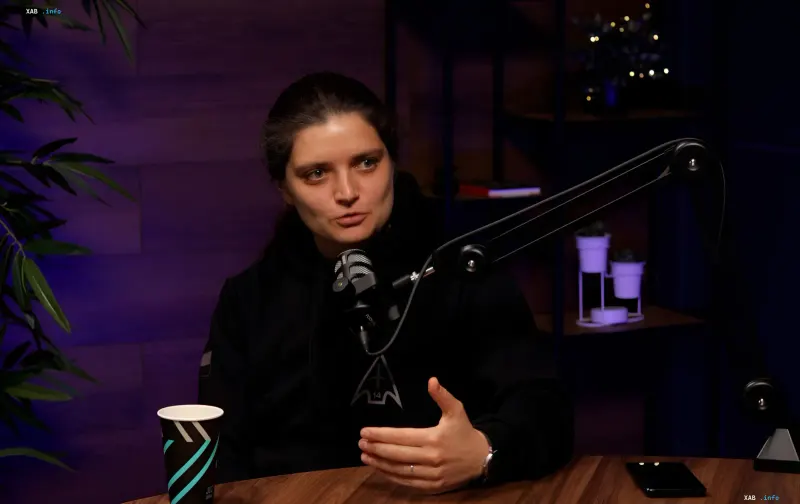
In the RBC-Ukraine podcast "TSE BAZA," the head of the Victory Drones project, volunteer, and veteran Maria Berlinska shared her assessment of Russia's current information policy. According to her, the isolation of the Russian internet and the blocking of VPN services is not a random phenomenon but a purposeful step: the Kremlin, in her view, prevents citizens from "returning to reality" because, for Vladimir Putin and his elites, such a return would mean, in her phrasing, physical death. Berlinska emphasizes that Roskomnadzor is blocking even VPNs to isolate what she calls the "collective mind" and the "software code" of the population, preventing Ukrainian information from getting through and stopping Russians from seeing the reality of what is happening in the world.
The End of the "Information Visa-Free Regime"
Berlinska recalls that there used to be an informal "information visa-free regime" between Ukrainians, Belarusians, and Russians: Russians freely accessed the Ukrainian information space, and Ukrainians accessed the Russian virtual one. Now, she assesses that this regime has been destroyed. She draws a parallel with the Soviet Union, where an "Iron Curtain" existed, and foreign broadcasts like "Voice of America" were listened to on pirate radio frequencies. According to her, the Kremlin is again isolating its own population from alternative sources of information and from understanding what is happening globally.
"Cognitive Drones" as a New Weapon
Returning Russians to reality, in Berlinska's opinion, is only possible through systematic work, and she sees the solution in cognitive technologies, which she calls "new drones." She explains the difference: an ordinary drone arrives, hits a target, and the result is visible in the FPV feed in 30 seconds, whereas cognitive weapons act in a more complex and long-term manner—over months and sometimes years—but, according to her, produce stunning results. Berlinska declares that she believes in these technologies just as she believed in drones 12 years ago.
A Proto-Industry and a Call for MilTech
However, she assesses that there is currently no systematic state-level effort in Ukraine in this area. She compares the situation to the drone sector in 2014: there were only a few dozen enthusiasts in the entire country, with no state strategy or funding for the industry. Berlinska calls on MilTech companies to "chip in for cognitive" and expresses hope that Brave1 will open a separate cluster and grant program for teams working in this field. As she observes, these topics are well understood by "The Cloud," Budanov, and Fedorov. She describes her team's task as creating a proto-industry: deregulation, assistance in developing a state strategy, fundraising, analytics for forming a common vocabulary, and partnerships with Western countries.
Ukrainian Advantage
Berlinska asserts that Ukrainians have an advantage in this sphere because they understand the Russian "software code" better than others. Earlier, RBC-Ukraine reported on how Russia is waging a cognitive war against Ukraine and Ukrainians, and aviation expert Anatoliy Khrapchynsky, in a column for the publication, explained why Russia is waging a cognitive war against Ukrainian long-range weapon manufacturers.