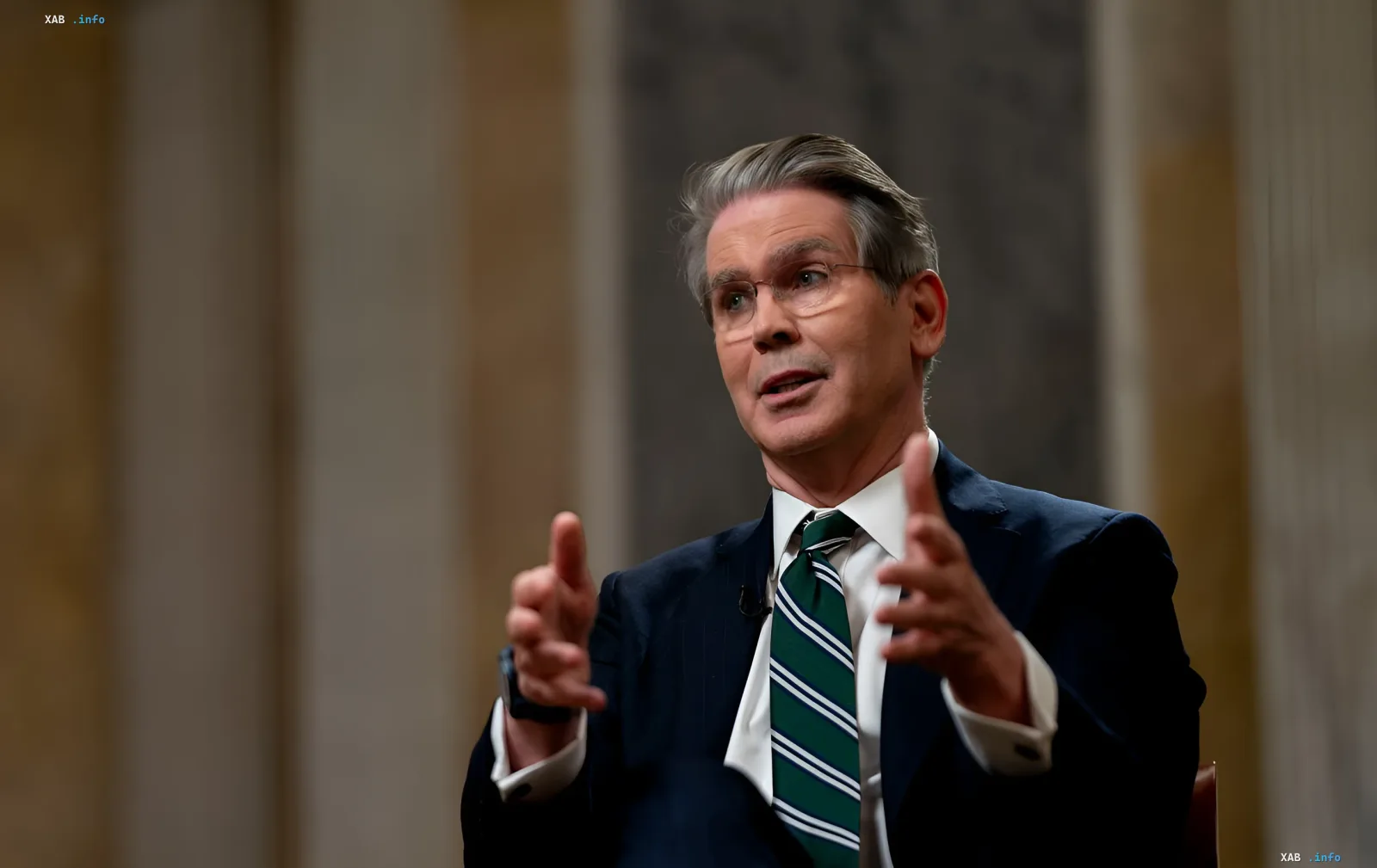
US Treasury Secretary Scott Bessent held a meeting with a Russian delegation during which the parties discussed a settlement of Russia's war against Ukraine. This was reported by RBC-Ukraine, citing Fox Business correspondent Edward Lawrence, who clarified that Bessent is promoting President Donald Trump's 28-point peace plan for Ukraine in the negotiations. In this way, the financial wing of the American administration is effectively included in the diplomatic track aimed at ending the conflict, underscoring the multi-level nature of US efforts around the Ukrainian settlement.
Contents of the 28-Point Plan
The US president's peace plan for Ukraine and Russia, according to the main texts, was already published last year. The 28 points proposed by Washington contained provisions that the Ukrainian side had previously called unacceptable. In particular, according to the document, Ukraine was to withdraw all of its military personnel from the Donetsk region, while Crimea, Donetsk, and Luhansk were to be recognized as "de facto Russian" — including by the United States. In addition, the American plan proposed freezing hostilities in the Kherson and Zaporizhzhia regions, which would effectively entrench the current lines of contact.
Kyiv's Position and ISW Assessment
Ukrainian President Volodymyr Zelenskyy has repeatedly emphasized that Ukraine will not "give away" its own territories to Russia, which directly contradicts the key points of the American document on recognizing the occupied regions as Russian. In parallel, the Institute for the Study of War (ISW) noted that since the start of the full-scale invasion, the Russian leadership has set 15 deadlines for the occupation of Donbas, and none of them has been met. According to analysts, this statistic casts doubt on Moscow's actual readiness for compromise, even against the backdrop of formal negotiations.
Contradictory Data
The available sources reveal a discrepancy between the format of the current contacts and the content of the proposed plan. On the one hand, the very fact of Bessent's meeting with the Russian delegation suggests the existence of a working dialogue and a willingness on both sides to discuss a settlement. On the other hand, the provisions of the 28-point document — the withdrawal of Ukrainian troops from the Donetsk region and the recognition of Crimea and Donbas as "de facto Russian" — directly contradict Kyiv's public position on the inadmissibility of ceding territories. In addition, ISW records Moscow's systematic failure to meet its own deadlines on Donbas, which contrasts with the rhetoric about readiness for peace. Thus, combining the "promotion" of the plan in negotiations with its content, which is unacceptable to Ukraine, remains the key contradiction that the parties have not yet resolved.
Context: Bessent's Public Statements
The public context surrounding Bessent's figure deserves separate attention. Previously, according to media reports citing The Guardian, he allegedly advised Trump not to allow Zelenskyy into the White House and also used the harsh formulation "Mr. Bean on drugs" in his address. At the same time, in other comments, Bessent stated that after the end of the conflict in Ukraine, Russia could return to dollar-denominated settlements. The totality of these statements forms a contradictory public image of a negotiator who, on the one hand, acts as a conduit for the peace plan, while on the other — publicly distances himself from the Ukrainian president, which may affect the perception of his role as a mediator.